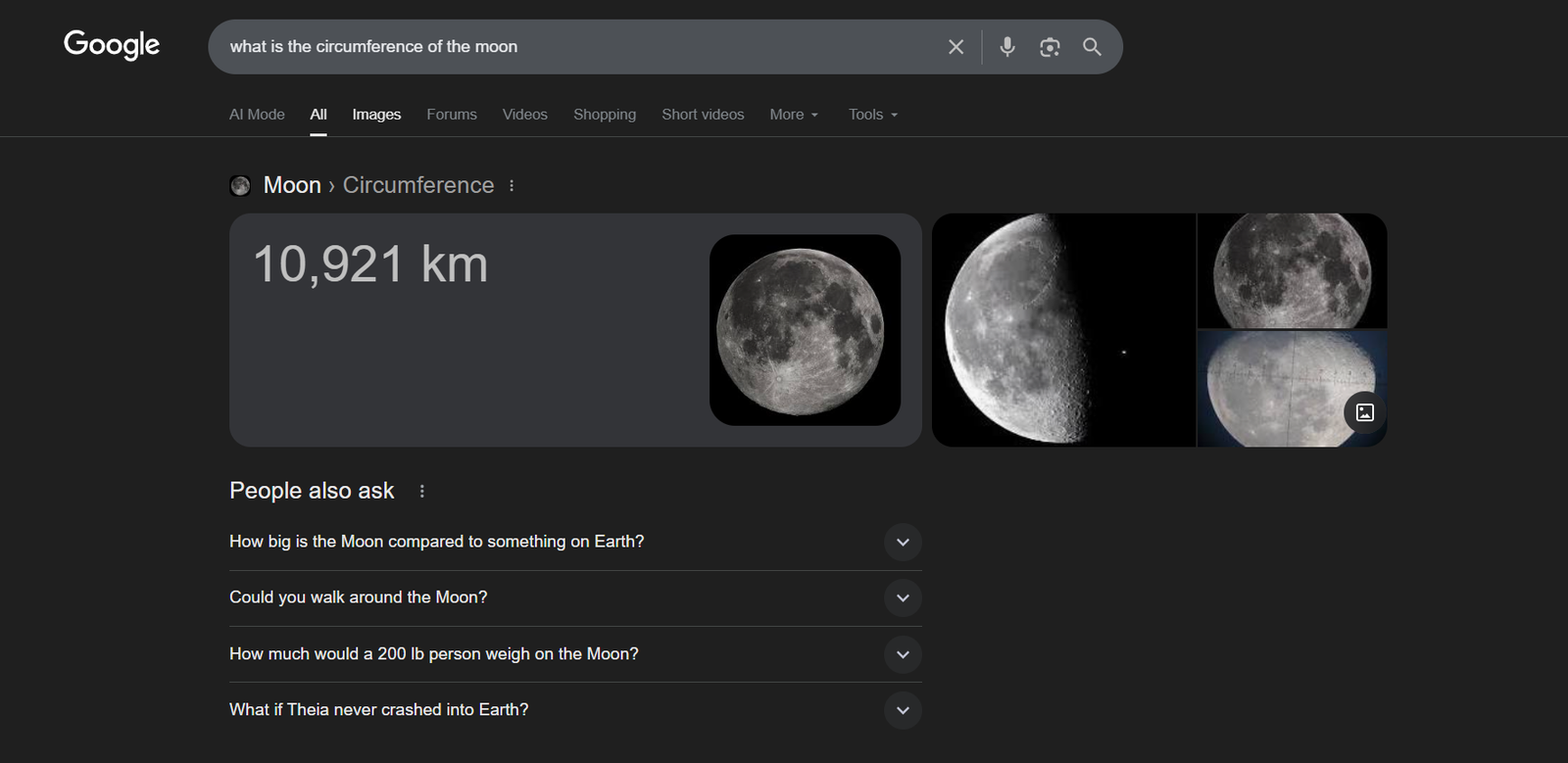
When you search for what is position 0, you’ll often see a result sitting above the usual rankings on Google. It appears before the standard number one listing and is designed to answer the question immediately.
This placement is known as Position 0. Google refers to it as a featured snippet, which is essentially a highlighted section pulled from a webpage that answers a question directly.
The idea behind it is simple. Instead of making users click through several pages, Google tries to surface the clearest answer straight away.
For businesses and site owners, Position 0 is still one of the most visible areas in search. It is not something you can pay for, and it does not always lead to the highest click-through rate, but it does place your content directly in front of people at the exact moment they are looking for an answer. That’s why it continues to sit firmly within most ongoing SEO services.
Summary
– Position 0 is the result that appears above the standard number one ranking on Google, usually shown as a featured snippet that answers a user’s question directly.
– Google pulls short sections of content from webpages that explain a topic clearly, helping users find answers quickly without scrolling through multiple results.
– For businesses, Position 0 increases visibility and trust because your content appears at the very top of the page without relying on paid ads.
– Featured snippets now sit alongside AI-generated search results, which means content needs to be structured clearly and written in a way search engines can easily interpret.
– The strongest Position 0 content usually answers the main question quickly, then expands naturally into supporting detail.
– Position 0 works best as part of a wider SEO strategy where content quality, structure, usability, and search intent all work together.
What Does Position 0 Mean?
Position 0 is simply the result that appears above the traditional number one ranking. It usually appears in a boxed layout and is designed to answer a question clearly and quickly.
That said, search results are changing.
In 2026, AI-generated overviews now take up a large amount of space for many searches, which means traditional featured snippets do not always dominate the top of the page in the same way they once did.
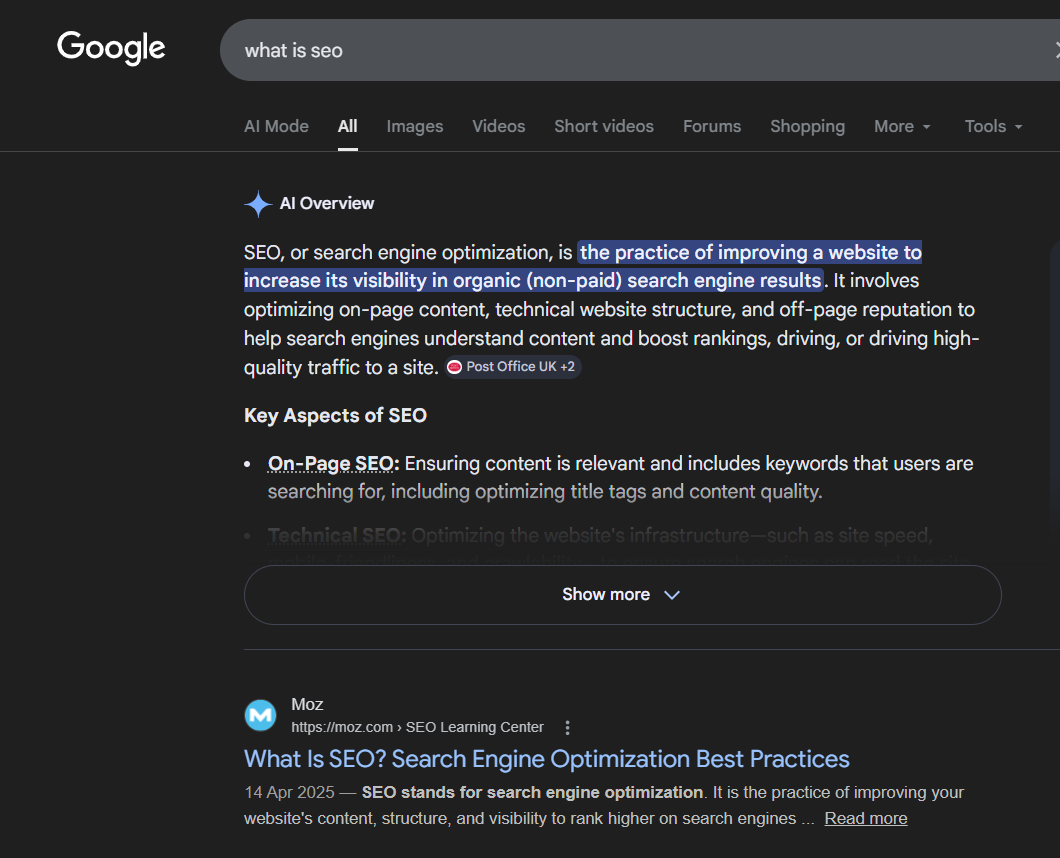
Google still pulls information from pages it believes provide the clearest and most useful answer. Sometimes that appears as a featured snippet. Other times, it becomes part of a wider AI-generated summary.
You might see a short definition, a practical explanation, a list of steps, or part of a comparison table. It depends entirely on the intent behind the search.
The goal, though, has stayed pretty consistent throughout all these changes. Google wants to give users the answer as quickly as possible.
What Does a Position 0 Result Look Like?
Position 0 does not always appear in the same format. Google adapts the layout depending on the type of query.
In some cases, it appears as a short paragraph explaining or defining something clearly. This is common for searches beginning with phrases like “what is”.
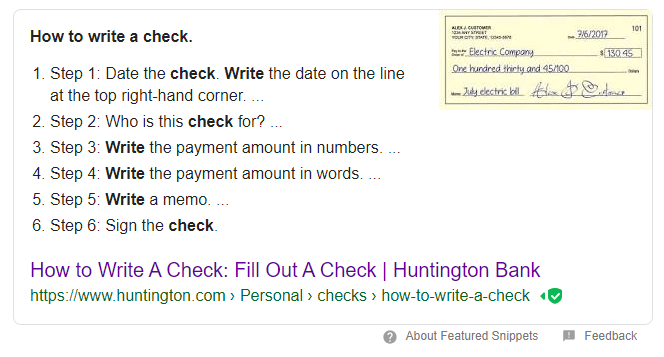
For more practical searches, Google may display a numbered list showing a process step by step. You’ll often see this for “how to” searches where users want instructions quickly.
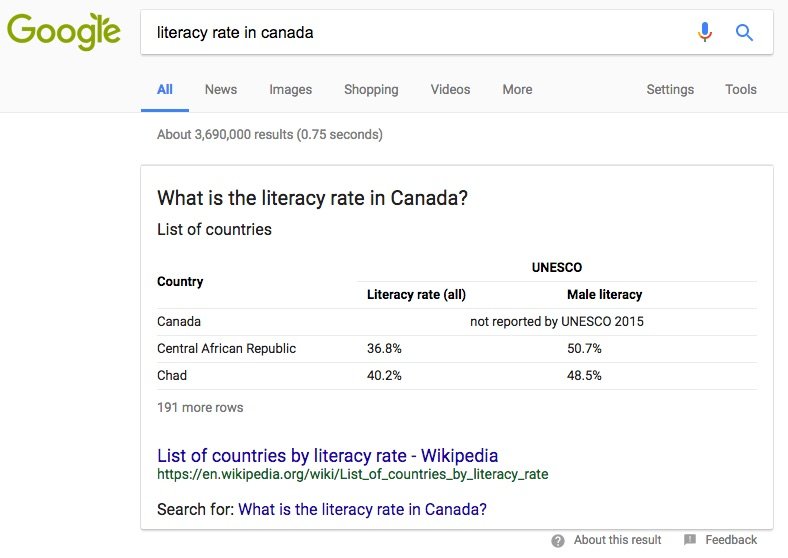
There are also situations where Position 0 appears as a table. This tends to happen when information needs to be compared side by side, such as pricing, specifications, timelines, or feature comparisons.
Sometimes Google includes images or videos alongside the answer as well, particularly for visual topics where context matters.
It all comes back to usability. Google is trying to match the format to the intent behind the search.
Position 0 and AI-Driven Results
Search has shifted quite a bit over the last couple of years, and Position 0 now exists alongside much heavier AI integration.
Google increasingly displays summarised answers built from multiple sources. While these are technically different from traditional featured snippets, the underlying principle is very similar. Search engines favour content that is clear, direct, structured properly, and easy to extract.
You can already see the impact of this in Google Search Console.
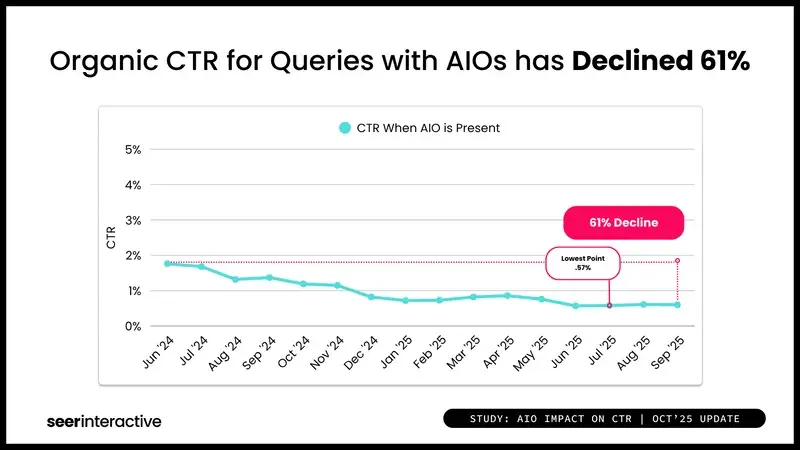
A lot of websites are now seeing higher impressions but lower click-through rates. In many cases, that happens because users are getting enough information directly from AI overviews or featured answers without needing to visit the page itself.
Seer Interactive’s research into AI Overviews and CTR highlighted this trend particularly well, and honestly, most SEO professionals are seeing similar patterns across client data now.
This is where structured SEO services matter more than ever.
Content cannot just be readable anymore. It needs to be easy for search engines to interpret, summarise, and reference. Usually, the pages that perform best answer the core question quickly and then expand naturally into supporting detail.
That balance matters.
Why Position 0 Matters for SEO Services
For a long time, Position 0 was one of the biggest goals in SEO.
That focus has shifted slightly now because visibility inside AI Overviews has become just as important, if not more so for some industries. Still, featured snippets have not disappeared. There are plenty of searches where Position 0 continues to appear above AI-generated results.
For businesses, the value is still fairly obvious.
It places your brand at the top of the page and positions your content as a trusted source. Even if somebody does not click immediately, there is still a visibility and credibility benefit that comes from being selected as the answer.
There is also the voice search side of things.
Featured snippets are regularly used as spoken responses across voice-enabled devices. So your content is not only appearing visually in search results. It may also be read aloud directly to users.
At the same time, Position 0 is not the perfect target for every search.
Some industries have very limited opportunities. Others are heavily dominated by major publishers or government sites, which can make featured snippets difficult to win consistently.
That’s usually where realistic SEO planning becomes important.
How to Optimise for Position 0
Optimising for Position 0 starts with understanding how people actually search.
Keyword research matters here, but the real focus should be on intent. You need to know the questions users are asking and the type of answer they expect to see.
Longer search queries often trigger featured snippets because they are more specific. At the same time, shorter searches can also work well if the intent behind them is clear enough.
Competition matters too.
If a search result currently has no featured snippet, there may be an opportunity to structure content in a way that earns that placement.
Once you know the target query, the structure of the page becomes important.
The strongest pages usually answer the question near the top, then expand into supporting detail naturally afterwards. That makes the content easier for users to follow and easier for search engines to interpret.
TOP TIP
“Choose the Right Opportunities”
Not every keyword is worth targeting for Position 0.
Some topics naturally lend themselves to featured snippets more than others.
Definitions, comparisons, step-by-step guides, processes, and practical explanations tend to perform well because they match the type of information Google likes to surface quickly.
If your content already includes lists, tables, short explanations, or clearly structured answers, you are probably starting from a stronger position than you think.
Build Content Around the Topic, Not Just One Question
One of the more common mistakes is focusing too narrowly on a single question.
Google looks at the overall depth of the page, not just one isolated paragraph.
Strong content usually covers the surrounding questions as well. If somebody searches for one thing, there is a good chance they will naturally want to know the next related question too.
That’s why search suggestions and related searches are still useful during content planning. They help uncover the wider context around a topic.
Covering those supporting areas naturally strengthens your chances of appearing in Position 0 while also helping the page perform better overall.
TOP TIP
“Position 0 is heavily tied to question-based searches.”
Simple searches beginning with “what is”, “how to”, and “why does” regularly trigger snippets, but each query type usually needs a different structure.
Definitions work best when they are short and direct.
“How to” searches generally perform better when broken into clear steps.
More complex questions often need balanced explanations rather than one-line answers.
A lot of this comes down to matching the format of the content to the intent behind the search.
Poor structure is another issue entirely.
Even useful content can struggle if it is buried inside huge blocks of text with no clear sections or hierarchy. Clear formatting, practical explanations, and direct answers tend to perform far better than overly complicated writing.
That’s one reason many SEO services focus heavily on clarity rather than simply publishing more words.
The Pros and Cons of Position 0
It increases visibility, places your content above the standard rankings, and can help reinforce trust in your brand. It also supports voice search visibility and gives your content wider exposure across different search formats.
But there are trade-offs as well.
Sometimes users get the answer they need directly from the search result and never click through to the website itself.
This is part of the wider move towards zero-click searches, and realistically, that trend is not slowing down.
That does not mean Position 0 has lost value.
It just changes how success is measured.
Visibility, brand recognition, authority, and trust now matter just as much as raw traffic numbers in many SEO strategies.
What is Position 0 in Google Search Results FAQs
What is Position 0 in simple terms?
Position 0 in simple terms is a featured snippet that appears above the standard search results on Google and provides a clear, direct answer to a user’s question without needing to click through.
Is Position 0 better than position 1?
Position 0 is better than position 1 for visibility because it sits above it on the search results page, though it does not always result in more clicks depending on the type of search.
Can you pay for Position 0?
You cannot pay for Position 0 because it is an organic search feature, meaning it is earned through content quality and relevance rather than advertising spend.
How do you get Position 0?
You get Position 0 by creating content that answers a specific question clearly, uses simple structure, and matches the intent behind what users are searching for.
Does Position 0 increase traffic?
Position 0 can increase traffic in some cases, but it more often improves visibility and trust as users may get the answer directly from the search results without clicking.
How This All Fits Together
Position 0 is not really a standalone SEO tactic anymore. It is part of a much bigger shift in how search works.
The pages that appear in featured snippets, AI Overviews, voice search, and strong organic rankings usually have the same things in common. They answer questions clearly. They are structured properly. They focus on what the user actually wants to know instead of trying to force rankings artificially.
That’s how this all fits together now.
Good SEO is no longer just about chasing one placement on Google. Content, structure, search intent, technical SEO, and usability all feed into each other. When those areas work together properly, your content becomes easier for search engines to understand and easier for users to trust.
Position 0 is simply one visible outcome of that wider process.
The businesses that tend to perform best in search today are usually the ones creating genuinely useful content consistently, keeping things clear, and thinking beyond individual keywords or rankings alone.
If you want to improve your chances of reaching Position 0 and strengthen your overall SEO, it helps to have a clear plan. Get in touch if you want SEO services tailored to your business and how your audience searches.