Local SEO for small businesses has always been one of the more rewarding parts of digital marketing.
There’s something very straightforward about it. You help a local business become easier to find, more people discover them at the right moment, and genuine growth follows from that visibility.
Large companies usually dominate broad national searches because they have huge budgets, established authority, and entire teams working on marketing. Local search works differently, though. Smaller businesses often have the advantage because they already have trust within their area. They know the people they serve. They understand local habits, expectations, and demand.
Local SEO simply helps Google recognise those signals.
This guide explains what local SEO is, why it matters, and how small businesses can use it to compete more effectively in their area.
If you’re completely new to local SEO, this article forms part of our wider Local SEO Blogs, where we break things down into practical, realistic steps instead of overwhelming theory.
Summary
- Local SEO helps small businesses appear in front of nearby customers who are ready to book, visit, call, or buy.
- Traditional SEO focuses on broad visibility, while local SEO targets people searching within a specific area.
- Hyperlocal SEO goes even further by targeting neighbourhoods, postcodes, and “near me” searches.
- Google Business Profile plays a central role in local visibility and trust.
- Consistent business information across the web helps Google trust your business.
- Fresh reviews, updated photos, and active profiles often improve local visibility.
- Local SEO gives small businesses a realistic way to compete with larger brands without relying heavily on ads.
- Google’s local algorithm tends to favour businesses that look active, accurate, and reliable.
- Local search traffic often leads to direct actions such as calls, bookings, visits, and enquiries.
- Small businesses already have an advantage locally because they understand their community and customers.
Local SEO for Small Businesses Explained
Before getting into strategy, it helps to understand the difference between traditional SEO, local SEO, and hyperlocal SEO.
People often group them together, but the intent behind each search is completely different.
What Are The Differences Between SEO, Local SEO, And Hyperlocal SEO?
These three approaches often get grouped together, but they solve very different problems.\n\nThe biggest difference usually comes down to intent and geography. Some searches are broad and research-focused, while others are immediate and location-driven. Understanding that distinction makes local SEO far easier to understand because the way people search locally is rarely the same as the way they search nationally.
Traditional SEO
Traditional SEO is built around reach.
The goal is usually to rank nationally or internationally for broad keywords with high search volume. A clothing retailer, for example, might try to rank for terms like “summer dresses” across the entire UK.
That type of SEO is highly competitive because businesses are fighting for visibility at scale.
Local SEO
Local SEO narrows the focus.
Instead of trying to reach everyone, it connects businesses with nearby people actively searching for a product or service in a specific area.
That same clothing shop might target searches like “summer dresses in Manchester” or “women’s boutique near Deansgate”.
The intent changes completely.
The person searching locally is usually much closer to taking action.
Hyperlocal SEO
Hyperlocal SEO goes even deeper into location-specific intent.
This is where searches become extremely precise. Individual neighbourhoods, postcodes, streets, or “near me” searches start becoming important.
Searches like:
- “coffee shop near Jesmond Metro”
- “barber near Hope Street Liverpool”
- “pizza delivery in SW18”
That’s hyperlocal behaviour.
And honestly, this is how many people search now.
Phones have changed everything. Most people are not sitting at a desktop typing long search phrases anymore. They’re walking through town, sitting in the car, or looking for something quickly while out and about.
That’s why local intent matters so much.
Traditional SEO creates awareness.
Local SEO creates action.
Google wants to return businesses that feel relevant, nearby, and trustworthy at the exact moment somebody needs them.
The Foundations And Value Of Local SEO
A huge percentage of local buying decisions now begin with Google.
Research from Uberall found that 87% of customers use Google to evaluate local businesses. Backlinko reports that 42% of local searches result in clicks inside the Google Maps Pack, while BrightLocal consistently finds that reviews heavily influence local decision-making.
Those numbers matter because they reflect real behaviour.
People compare reviews.
They check opening times.
They look at photos.
Sometimes they decide within seconds if a business feels trustworthy enough to contact.
Local SEO works because it supports that exact behaviour.
At its core, local SEO is built on three things:
- Accuracy
- Consistency
- Trust
Every mention of your business online contributes to how Google understands your company.
If your information looks inconsistent, outdated, or neglected, visibility often suffers.
If everything looks current and reliable, rankings usually improve naturally over time.
Google Business Profile
Your Google Business Profile sits at the centre of local SEO.
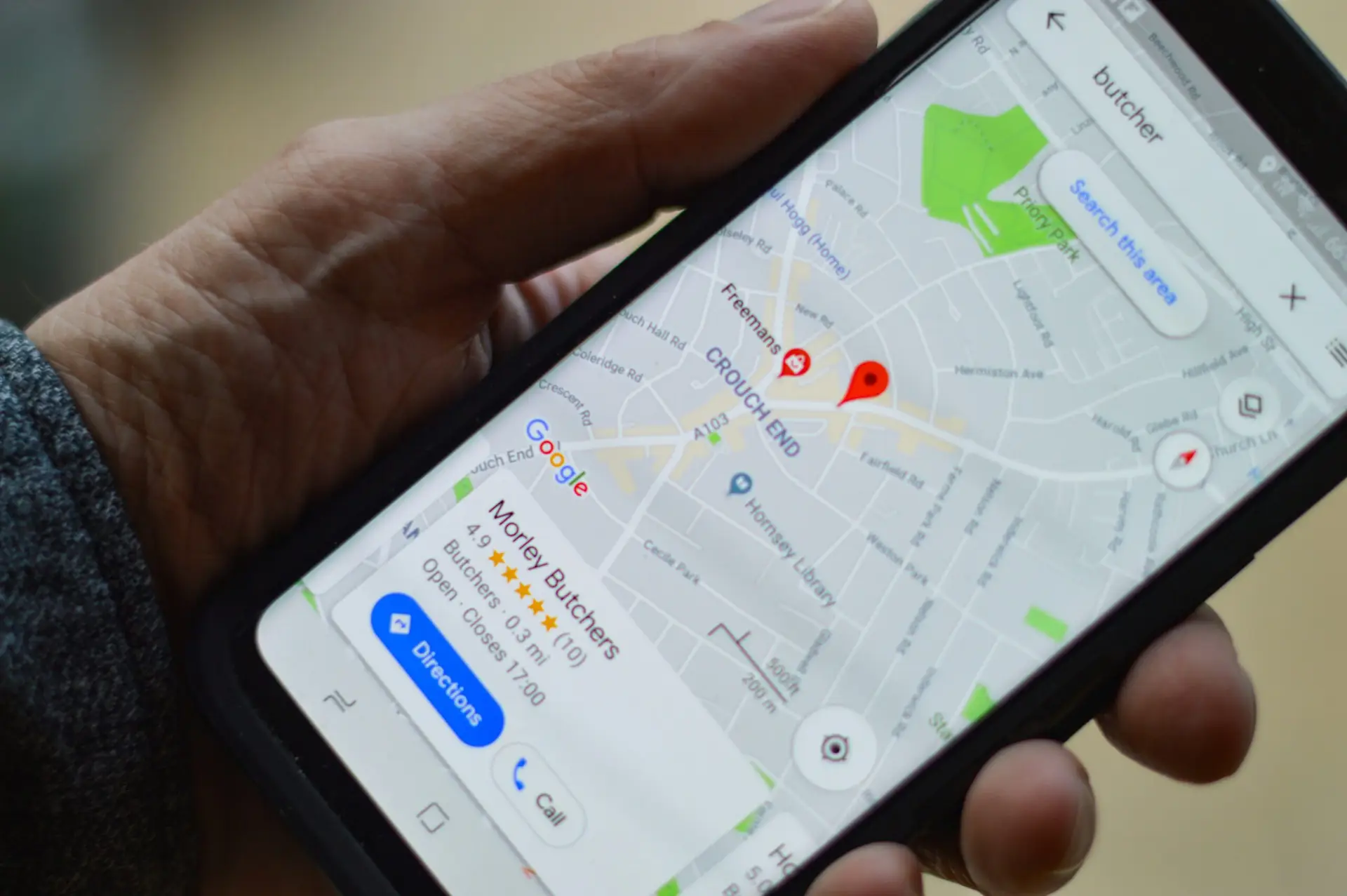
It powers your presence in Google Maps and strongly influences which businesses appear in local search results.
A complete profile sends strong trust signals.
An abandoned profile tends to disappear quietly.
That’s usually where smaller businesses lose visibility without realising it.
Start with the basics.
Make sure your:
- Business name
- Address
- Phone number
- Opening hours
- Services
- Website link
are all accurate and consistent.
Then build from there.
Add genuine photos regularly.
Show the premises, team, products, projects, or day-to-day work. Businesses that feel active tend to perform better locally because they look more reliable to both Google and real customers.
Reviews matter as well.
Not just the star rating either.
The frequency of reviews, the wording customers use, and the business responses all contribute to trust.
A calm, thoughtful reply to a negative review often creates more credibility than dozens of silent five-star reviews.
Most businesses overlook that completely.
Did You Know?
“Google’s local algorithm works differently from traditional organic rankings.”
Large national companies often struggle with genuinely local searches because proximity, relevance, consistency, and local trust signals carry far more weight.
That creates a real opportunity for smaller businesses.
Why Local SEO Works So Well For Small Businesses
Local SEO connects businesses with people who are already searching for what they offer.
That’s the important part.
You are not trying to interrupt somebody with advertising.
You are appearing when intent already exists.
If somebody searches:
- “emergency plumber near me”
- “best coffee shop in York”
- “dentist open Saturday Leeds”
There is already a clear need behind that search.
Local SEO helps your business appear at that exact moment.
For smaller businesses, this creates a much fairer playing field.
You might not have the budget of a national chain, but you do have:
- proximity
- local reputation
- community familiarity
- local knowledge
- personal service
Those things matter heavily in local search.
The more consistently your business appears across search results, the more familiar your brand becomes locally.
And familiarity builds trust surprisingly quickly.
Why Do Small Businesses Really Need Local SEO?
Because visibility now influences almost every local buying decision.
People search before they visit.
They search before they call.
They search before they book.
If your business is difficult to find online, customers often move on immediately.
Local SEO helps small businesses:
- increase local visibility
- generate more enquiries
- improve footfall
- compete with nearby rivals
- build trust through reviews
- attract repeat local customers
- reduce reliance on paid advertising
It also provides something many marketing channels struggle with.
Clear intent.
The person searching locally is often much closer to becoming a customer than somebody casually browsing social media.
That makes local SEO one of the most practical long-term investments many small businesses can make.
How Local SEO Works In Practice
It helps to picture how this works in the real world.
Imagine two bakeries on the same high street.
Both make excellent coffee.
Both have loyal customers.
But one business keeps its online presence active while the other barely touches it.
The first bakery has:
- outdated opening times
- old photos
- very few reviews
- no recent activity
The second bakery regularly:
- uploads fresh photos
- responds to reviews
- updates opening times
- posts seasonal specials
- keeps information accurate
Now somebody nearby searches:
“coffee near me”
Google is far more likely to show the second bakery.
Not because the coffee is objectively better.
Because the business sends stronger trust and activity signals.
That’s really what local SEO comes down to.
Google tries to reduce uncertainty for users.
Businesses that look current, reliable, and engaged tend to perform better.
Local SEO Vs. Traditional SEO
Traditional SEO and local SEO share similar foundations, but the goals are very different.
Traditional SEO
Traditional SEO focuses on broad visibility.
It helps businesses attract traffic nationally or internationally and often supports long-term brand awareness.
This works well for e-commerce brands, publishers, SaaS companies, and businesses without geographic limitations.
Local SEO
Local SEO focuses on immediate relevance.
The goal is to connect nearby customers with businesses that can realistically serve them right now.
That difference changes everything.
Local intent searches often lead directly to:
- calls
- bookings
- visits
- enquiries
- purchases
Research from Saga Pixel suggests that nearly half of all Google searches have local intent.
That represents billions of searches tied to real buying behaviour.
For small businesses, those searches are often far more valuable than broad national traffic.
Did You Know?
“Saga Pixel reports that 46% of Google searches have local intent, while over 22% of website traffic originates from local searches.”
That’s a huge amount of opportunity sitting inside local search alone.
How All This Ties Together
Local SEO helps small businesses appear where buying decisions actually happen.
Right in front of nearby customers who are ready to book, call, visit, or buy.
And unlike many areas of marketing, local SEO builds on things smaller businesses already have.
Real locations.
Real customer relationships.
Real community trust.
When your Google Business Profile stays accurate, your business details remain consistent, and your reviews continue growing naturally, visibility tends to improve steadily over time.
That process is rarely instant.
But it compounds.
And for many small businesses, local SEO becomes one of the most reliable long-term sources of enquiries and customers.