Strong on-page local SEO starts with your website.
It’s the place people land after finding you in search results, map listings, or recommendations. It’s also where Google tries to work out if your business genuinely serves the areas you claim to cover.
That’s why local SEO on-page matters more than many businesses realise.
Your website needs to make three things obvious straight away:
- Who you help
- Where you work
- Why somebody should choose you instead of the business down the road
If those signals are clear and consistent, your website becomes the foundation behind your entire local SEO strategy. It supports your visibility across Google Maps, organic search, local packs, and increasingly, AI-generated recommendations too.
Just as importantly, it helps turn visitors into enquiries.
If you want more tailored examples, I’ve also put together industry-specific local SEO guides covering businesses like plumbers, electricians, gyms, tattoo studios, and hairdressers and salons. Different industries attract different types of searches, and people make decisions differently depending on the service. A plumber dealing with emergency searches is operating in a completely different search environment from a beauty salon offering balayage appointments.
That difference matters.
Summary:
Your website acts as the proof behind your local visibility.
It’s where Google checks that your business genuinely operates in a location, and where potential customers decide if they trust you enough to pick up the phone, request a quote, or make a booking.
A strong local SEO setup usually comes down to a few core things done properly:
- Creating clear service and location pages without duplicating content
- Using local keywords naturally throughout titles, headings, introductions, images, and internal links
- Matching search intent so pages answer what people actually want to know
- Keeping NAP details consistent across the site
- Making contact details easy to use on mobile
- Adding schema markup so search engines understand your business properly
- Publishing genuinely local content tied to your area, customers, and community
- Using testimonials and case studies that show real work completed in real places
A lot of businesses focus heavily on rankings while overlooking trust.
Usually, that’s where local SEO starts to fall apart.
Structuring Your Website For Local Search Visibility
A well-structured website helps search engines understand two things quickly:
- What services you offer
- Which locations you provide them in
The simplest way to handle this is by creating dedicated pages for each location you genuinely serve.
That might mean separate pages for towns, cities, boroughs, or service areas depending on how your business operates.
Each location page should include:
- Natural mentions of the area throughout the content
- A short explanation of the services available there
- Contact details connected to that location
- Reviews, testimonials, or case studies from nearby customers
- Local references that make the page feel grounded in the area
One thing worth avoiding completely is duplicated location content.
A lot of businesses still copy one page, swap the town name, then publish fifty near-identical versions.
Google is much better at spotting that now.
More importantly, customers spot it too.
Instead, make each page feel genuinely local. Mention nearby landmarks, neighbourhoods, common problems people in the area experience, or the type of work you regularly carry out there.
Even small details help.
A heating engineer talking about older Victorian housing in Bristol sounds far more believable than generic copy that could apply anywhere.
That local relevance builds trust naturally.
Finding The Right Local Keywords
Local keyword research is mostly about understanding how people genuinely search in your area.
Not how businesses describe themselves.
There’s often a difference.
Tools like Google Search Console, Ahrefs, and Google Keyword Planner can help uncover the phrases people are already using to find businesses like yours.
Usually, the strongest local keywords combine:
- A service
- A location
- Sometimes a level of urgency or intent
For example:
- Accountant in York
- Emergency plumber in Milton Keynes
- Wedding photographer in Brighton
- Dog grooming near me
The intent behind the search matters just as much as the keyword itself.
Some searches are informational.
Others come from people ready to contact somebody immediately.
That’s why longer, more specific phrases are often worth targeting.
Top Tip
“Prioritise keywords that reflect genuine intent.“
Searches like “best Italian restaurant in Bath” or “24-hour locksmith near me” usually attract people much closer to taking action than broader searches with vague intent.
They also tend to be less competitive.
That’s one reason industry-specific SEO matters so much.
An emergency plumber, for example, relies heavily on urgency-based searches. A salon offering balayage treatments depends more on style-led and visual searches.
The search behaviour behind those services is completely different.
Your content strategy should reflect that.
Meta Titles And Descriptions For On-Page Local SEO
Meta titles and descriptions are often overlooked because people think of them as “just SEO elements.”
But they’re really your first impression in search results.
Before somebody visits your website, they usually see your title and description first.
That small preview often decides if they click or keep scrolling.
A good local SEO title should be clear, specific, and location-focused.
For example:
Title Tag: Professional Pet Grooming in Portsmouth | Coastal Pet Care
Meta Description: Book professional pet grooming services at our Portsmouth salon. Trusted local groomers for cats and dogs. Call today or book online.
Simple works better than clever most of the time.
You don’t need exaggerated copy.
You just need clarity.
Strong titles usually include:
- The core service
- The location
- Your brand name where appropriate
Descriptions should briefly explain why somebody should choose you and what action they should take next.
That’s enough.
Adding Local Keywords To The Content
Keyword placement still matters.
But forced keyword placement usually makes content worse.
The goal is to make your pages feel useful and natural while still giving search engines enough context to understand the page properly.
The best local SEO content doesn’t feel “optimised” when somebody reads it.
It just feels clear.
There are a few places where local keywords naturally carry more weight.
Headings And Subheadings (H1 And H2)
Headings help readers and search engines understand the topic quickly.
A heading like “Emergency Plumbing Services In Manchester” immediately provides clear context without sounding unnatural.
You don’t need to overcomplicate this part.
Straightforward headings are usually stronger.
Paragraph Introductions
The opening sentences of a page matter more than people think.
They help establish relevance early.
If your page is about roofing services in Leeds, that should become obvious naturally within the first few lines.
This helps both readers and search engines understand the page immediately.
Image File Names And Alt Text
Search engines can’t interpret images the same way people do.
They rely heavily on surrounding context, filenames, and alt text.
Instead of uploading files called “IMG_2049.jpg,” rename them properly.
Something like:
- boiler-repair-leeds.jpg
- kitchen-installation-brighton.jpg
- tattoo-studio-sheffield.jpg
The same applies to alt text.
Keep it short, descriptive, and natural.
Anchor Text For Internal Linking
Internal links help connect pages together and strengthen local relevance.
The wording of those links matters.
Generic phrases like “click here” don’t really provide context.
Something like “view our Sheffield salon services” gives both readers and search engines a much clearer understanding of the linked page.
Small improvements like this add up over time.
Understanding User Intent
This is where local SEO becomes far more interesting than simple keyword placement.
Search intent is really about understanding what somebody actually needs at that moment.
Google has become much better at recognising this.
A page that simply repeats keywords rarely performs well anymore unless it genuinely answers the search properly.
Take a search like:
“how to prepare your home for winter in Edinburgh”
That person probably wants advice connected to Scottish weather conditions, local suppliers, heating concerns, insulation issues, and realistic seasonal timing.
Generic winter advice isn’t enough.
The same applies to searches like:
“late-night car repair in Bristol”
That search carries urgency.
A strong page would address things like:
- Opening hours
- Emergency availability
- Nearby areas covered
- Contact options
- Typical response times
- Directions or landmarks
This is usually the difference between average local SEO content and genuinely useful local SEO content.
The best-performing pages tend to feel written by businesses that actually understand the area and the customer problem.
Because honestly, people can tell when content has been written purely for rankings.
It often feels hollow.
Why NAP Details Still Matter
Your business name, address, and phone number still play a huge role in local SEO.
Search engines use this information to verify that your business details match across your website, directories, map listings, and business profiles.
Customers use the same details to decide if your business feels trustworthy.
Consistency matters more than people expect.
Even small differences can create confusion.
An old phone number, missing suite number, or inconsistent formatting can weaken trust signals over time.
The simplest approach is usually the best one.
Keep your NAP information:
- Accurate
- Consistent
- Easy to find
- Visible across the site
Most businesses place this information in the footer so it appears on every page.
That works well because users never need to hunt for contact details.
To improve usability further:
- Use click-to-call phone numbers for mobile visitors
- Embed a Google Map on your contact page
- Match your NAP details exactly with your Google Business Profile
- Keep directory listings consistent across the web
A lot of local SEO is really about reducing uncertainty.
Clear contact details help do that.
Positioning NAP Information Across The Website
NAP information should never feel hidden.
People expect to find business details quickly.
If they can’t, trust usually drops fast.
That’s why many businesses include their contact information directly in the website footer.
It keeps everything accessible without forcing users to search around the site.
A dedicated Contact page also helps.
Most businesses benefit from including:
- Full business details
- Clickable phone numbers
- Email contact information
- Opening hours
- Embedded Google Maps
- Directions where useful
Mobile usability matters here too.
A surprising number of local business websites still make phone numbers awkward to use on smartphones.
That friction costs enquiries.
Usually unnecessarily.
Local SEO Schema Markup
Schema markup sounds more technical than it really is.
At its core, schema simply helps search engines understand your business information more clearly.
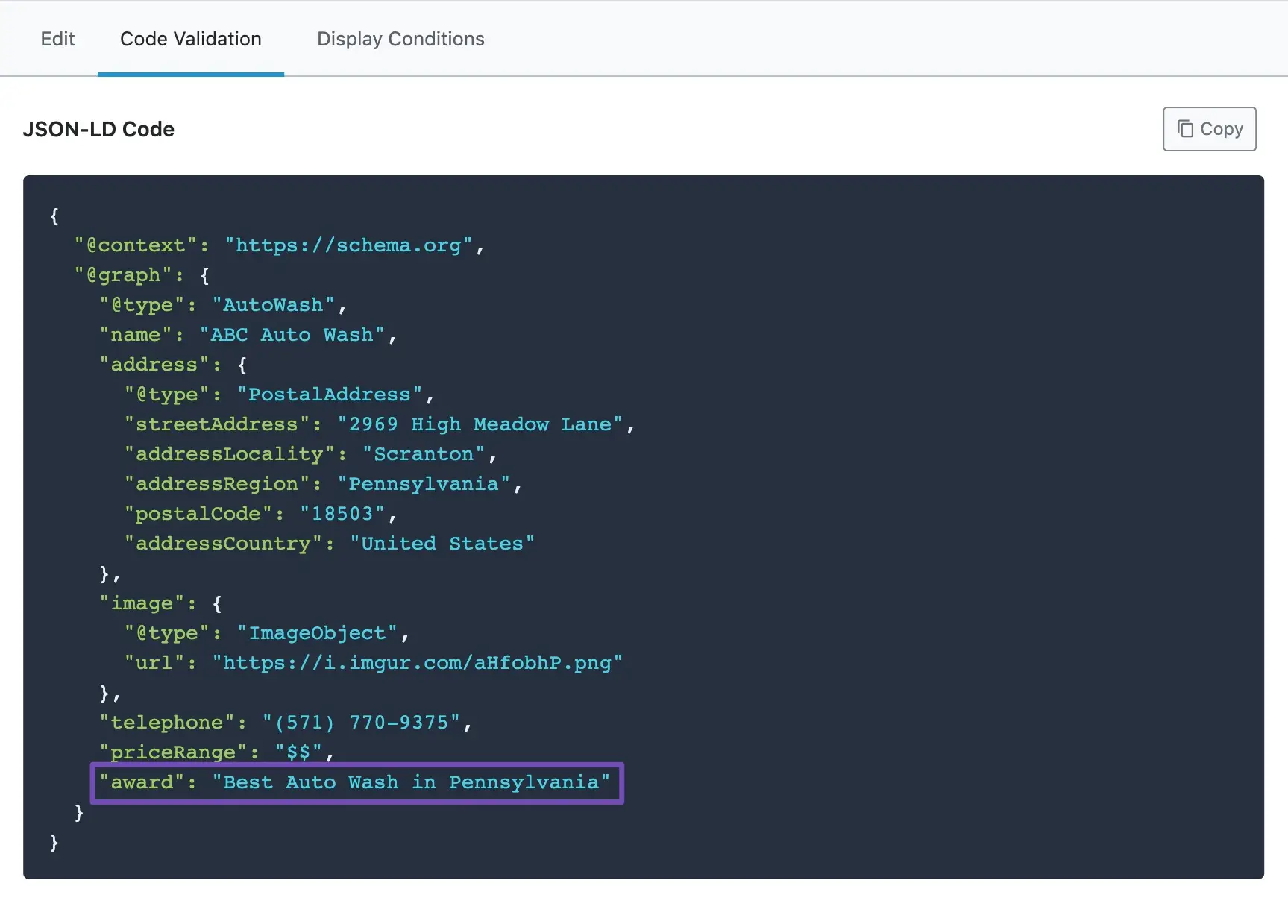
Instead of asking Google to interpret everything indirectly, structured data gives it direct context about:
- Your business type
- Your services
- Your opening hours
- Your reviews
- Your location details
For local SEO, that clarity matters.
Structured data supports things like:
- Rich search results
- Knowledge panels
- AI-generated business summaries
- Enhanced local visibility
It also helps reinforce consistency between your website and your business listings elsewhere online.
Some of the most useful schema types for local businesses include:
- LocalBusiness schema for contact details and address information
- Review schema for customer feedback
- Service schema for highlighting specific offerings
If schema feels overwhelming initially, start simple.
There are plenty of generators available that help create basic local schema markup without needing technical experience.
That’s usually enough for most small businesses getting started.
Create Localised Content That Actually Feels Local
One of the strongest local SEO signals isn’t technical at all.
It’s relevance.
Localised content helps demonstrate that your business is genuinely connected to the community it serves.
Not just operating inside it.
That difference matters more than people realise.
Writing About Local Events And Community Activity
Publishing content connected to local events, partnerships, sponsorships, or community activity helps your business feel grounded in a real place.
It also gives you opportunities to create genuinely useful content without forcing keywords unnaturally.
This type of content tends to work well because it builds trust naturally.
People prefer supporting businesses that feel involved locally.
You can create content around:
- Sponsorships and partnerships
- Community events
- Charity work
- Seasonal local activities
- Collaborations with nearby businesses
- Local industry updates
For example:
- “Our Café Sponsors The Brighton Food Festival”
- “How Our Salon Supported A Local School Fundraiser”
- “Fitness Events Happening In Leeds This Summer”
- “Independent Bristol Brands We Love Working With”
Content like this also attracts local backlinks more naturally.
News sites, bloggers, organisers, and community pages are far more likely to reference businesses already participating locally.
And those local signals still carry real SEO value.
Adding photos, tagging local businesses, and sharing content socially all help strengthen visibility too.
More importantly, it stops your website feeling generic.
That’s usually the bigger win.
Showcasing Case Studies And Testimonials
Case studies are massively underused in local SEO.
Most businesses collect testimonials.
Far fewer explain the actual work behind them.
That’s a missed opportunity.
Detailed customer stories help potential clients picture what working with your business actually looks like.
They also provide incredibly strong local relevance signals.
For example, a landscaping company could publish something like:
“Transforming A Newcastle Garden Into A Low-Maintenance Outdoor Space”
Immediately, the title reinforces:
- Service relevance
- Geographic relevance
- Real-world experience
A strong case study usually includes:
- The customer problem
- The work completed
- Challenges involved
- The final outcome
- Images where possible
- Customer feedback or quotes
Testimonials work best when they feel specific.
“Claire from Sheffield” feels far more believable than anonymous generic praise.
The same applies to visuals.
Even simple before-and-after photos can make a huge difference.
Video testimonials can work especially well because they feel harder to fake.
And honestly, authenticity matters a lot now.
People have become very good at spotting overly polished marketing content.
Real stories tend to outperform perfect copy.
Over time, these local examples build a strong layer of trust across your website.
They show:
- Real people
- Real work
- Real locations
- Real outcomes
That combination is difficult to replicate artificially.
Which is exactly why it works.
How This All Ties Together
Local on-page SEO is really about clarity, trust, and relevance.
When your website clearly explains who you help, where you work, and why somebody should contact you, everything else becomes easier.
Strong location pages, accurate NAP details, local content, schema markup, testimonials, and useful service pages all work together to support that.
None of this needs to feel over-engineered.
In fact, the strongest local business websites usually feel straightforward.
Clear information.
Useful content.
Real local relevance.
That’s what people respond to.
And increasingly, it’s what search engines reward too.
Local SEO is ultimately about owning visibility in the areas that matter most to your business.
Not everywhere.
Just the places where your future customers are already searching.