
If SEO is about helping people find your website, keywords are how they search. Understanding what people type into Google and how to make your site relevant to those terms is the backbone of search engine optimisation.
Summary: SEO Keyword Tips
Keywords are the bridge between what people need and the pages you publish. This post explains what keywords are, how to choose ones that are worth targeting (based on relevance, realistic competition, and demand), and where to find them—starting with customer language, then validating ideas with tools like Keyword Planner and competitor research.
It focuses heavily on intent, showing how informational, navigational, commercial, and transactional searches need different page types and different “next steps.”
The key message is to keep each page focused around one main topic, use the phrase naturally in the places that matter (title, intro, headings), support it with related terms and internal links, and judge success by the quality of visitors and actions taken.
What Are Keywords?
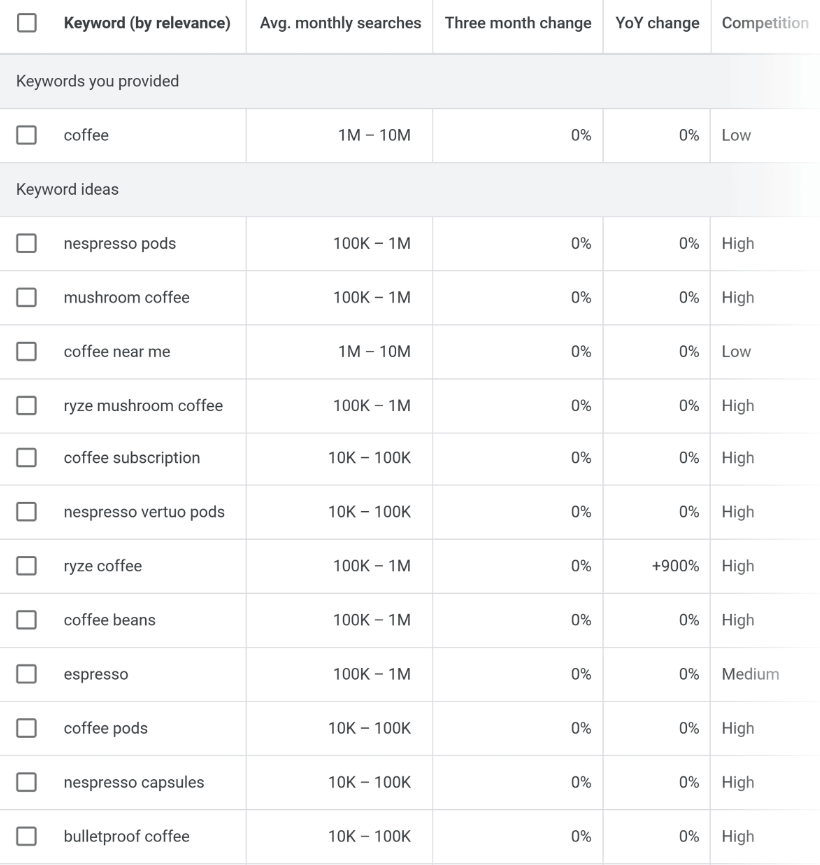
Example from Google Keyword Planner Tool.
Keywords are simply the words and phrases people use when they search. That might be “best waterproof jackets,” “accountant near me,” or “how to register a business in the UK.”
These terms help search engines connect a user’s query to relevant content. When your site contains language that reflects what someone’s looking for, it has a better chance of showing up.
But keywords aren’t just about matching words. They’re about matching intent. Choosing the right ones means thinking about who your audience is, what they’re trying to solve, and how your page can help. Search engines now interpret meaning rather than exact phrasing, which means clarity and relevance matter more than repeating the same words.
Top Tip
“One keyword per page is usually enough.
It’s tempting to load a single page with lots of keywords. But when you try to cover everything, your message becomes unclear. A focused page is easier to rank and easier for readers to understand. If you’ve got more than one topic, create more pages and link between them.“
What Makes A Keyword Worth Targeting?
Every keyword carries its own value, and not all of them will suit your goals. Choosing the right ones takes a little thought because you want terms that not only attract visitors but also bring in the kind of visitors who will find your content useful.
Three factors help you decide if a keyword deserves space on your site, and each plays a different part in shaping your strategy.
Search Volume
Search volume tells you the average number of monthly searches. High volume can be appealing, yet it often means you face stronger competition. A balanced approach usually works better because steady, realistic opportunities often produce more reliable results.
Relevance
Relevance is the most important factor. A term may be popular, but if it does not reflect your service or the audience you want to reach, it will not help your business. The closer a keyword aligns with what you offer, the more value it will bring.
Competition
Some keywords are crowded with large brands that have strong authority. Competing for these terms can take a long time. More specific long-tail keywords often provide better entry points because they attract visitors who already know what they want.
For most sites, long-tail keywords offer a more realistic path because they attract visitors who already know what they need.
Where To Find Keywords
A good keyword list often starts with real conversations. Think about how customers describe your services and what they ask about when they first get in touch. Their language reflects how they search online, so it gives you strong clues about the phrases they use.
Once you have a list of ideas, you can check them with tools. Google’s Keyword Planner offers free data on search volume and competition. Tools such as Ubersuggest and WordStream provide added insight and can reveal related terms you may not have considered. More advanced platforms offer deeper competitive data once your strategy matures.
You can also look at competitor websites. Review the terms they appear to target and the keywords they rank for. This can help you spot gaps in their coverage and uncover topics they have not addressed. Those gaps often become strong opportunities for your own content.
A steady mix of customer language, structured data from tools, and insight from competitors will help you build a clear, reliable keyword list that aligns with actual search habits.
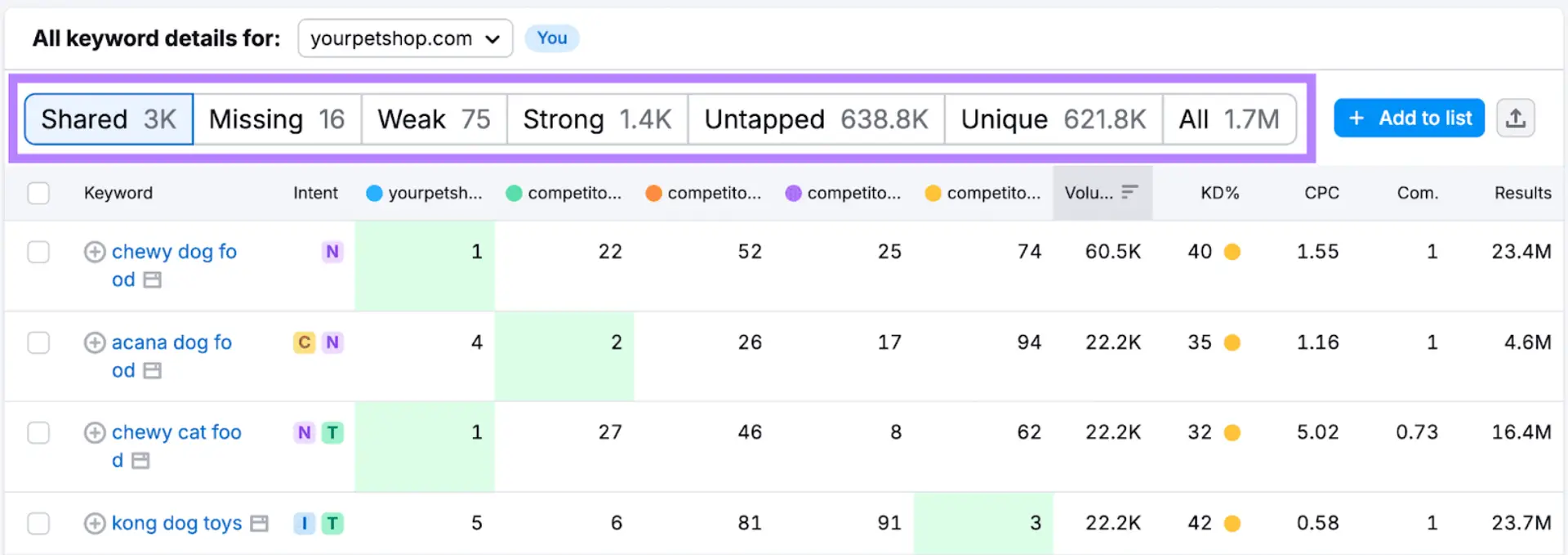
SEMRUSH Competitor Ranking Tool. Source: SEMRUSH
Matching Keywords With Intent
Each page works best when it has a single main topic. Once you choose a keyword that fits the page, shape the content around it with a natural flow. This keeps the message clear and helps search engines understand the purpose of the page.
A useful check is to read the page without thinking about SEO. If the topic is clear within the first few lines and the page stays focused throughout, the keyword placement is usually working.
Your keyword belongs near the start of the page title and in the opening paragraph. It usually fits neatly into one subheading too. You can use it a few times within the content as long as each use feels natural. The goal is to keep the writing smooth and helpful for real people.
It also helps to include related terms. These give search engines a rounded view of the topic and reflect what people search for in different ways. If your main keyword is “dog groomer Liverpool,” you might naturally mention terms such as “pet grooming,” “mobile dog wash,” or “dog grooming near me.” Each variation adds context without sounding repetitive.
Top Tip
“Before committing to a keyword, search it yourself. Look at what’s already ranking. Are the results blog posts, product pages, or local services?
This helps you understand what kind of content Google thinks suits that term, so you can create something similar or better.”
Understanding Different Keyword Intent
Not all keywords serve the same purpose. Some are questions. Some show purchase intent. Others are purely navigational.
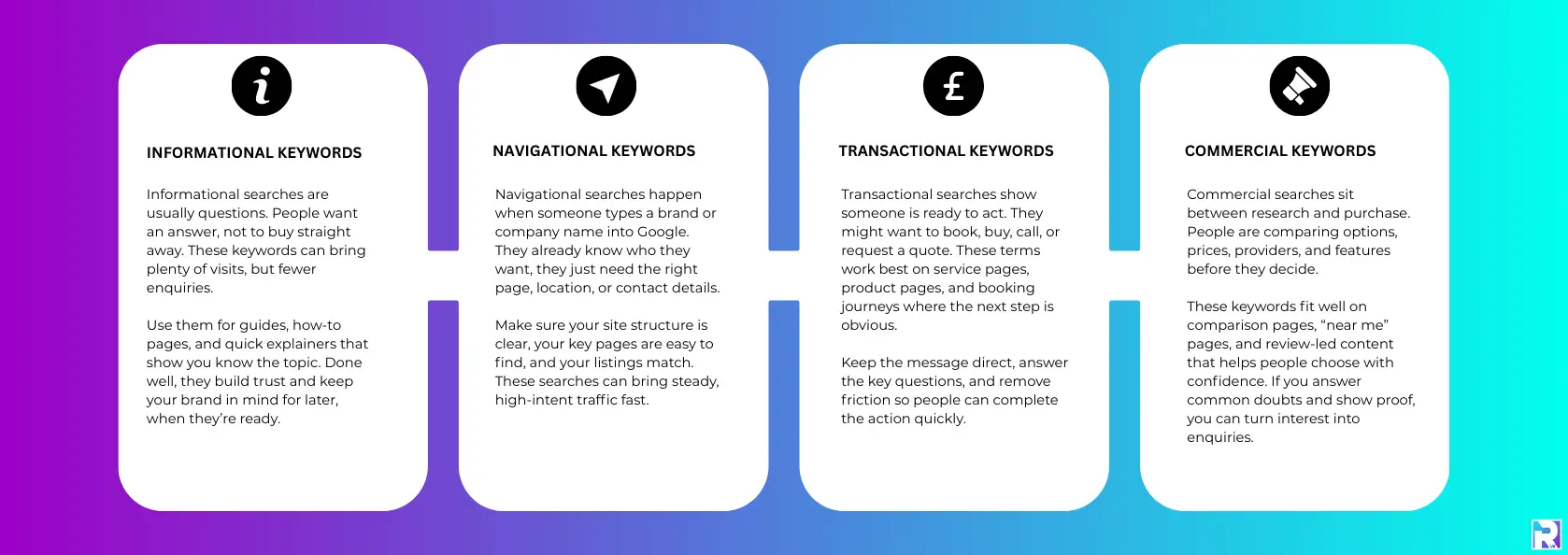
When someone types a phrase into Google, they usually have a clear aim in mind. Understanding that aim helps you create pages that answer their needs and guide them towards the right action. Most searches fall into four intent types. Each one shapes how your content should read and what it must explain.
Broadly, keywords fall into four types of intent:
Informational
These searches appear when people want to learn something. They want guidance, steps, or a simple explanation they can trust. A phrase like “how to clean roof tiles” shows that the person is not ready to buy anything. They only want a clear answer that helps them understand what to do next.
Navigational
A navigational query tells you the user already knows where they want to go. They use the search bar as a shortcut to reach a known site or brand. When someone types “GOV UK driving license,” they want the correct official page, and they want it quickly. Pages that succeed here keep the information direct and easy to find.
Commercial
These searches appear when people are comparing their choices. They know they need something, but they have not decided on the final option. An example is the best laptops under £500. A person searching this wants balanced detail that helps them weigh up features and value. Content aimed at this intent should guide, not push.
Transactional
Transactional keywords show clear readiness to act. The searcher knows what they want and now needs a simple path to complete it. A term like “book dentist near me” signals that they want fast access to contact details or online booking. Pages that match this intent remove extra steps and keep the next action obvious.
Content that aligns with the searcher’s intent tends to perform better and helps the user reach what they came for without frustration.
How To Use Keywords Naturally
Keywords still matter, yet the way you use them has changed. Repeating the same phrase throughout a page no longer helps. Search engines understand context far better now, which means they can recognise related language and variations without you forcing them.
A simple rule works well. Write clearly and explain the topic in full. When you cover the subject properly, related words appear on their own. This gives search engines enough signals to understand the page while also keeping the content readable.
Your main keyword usually fits in a few important places. The page title sets the theme, so include it there. It also belongs in the meta description and the H1 heading. Adding it to your opening paragraph helps set context from the start. Subheadings can also include it when it feels natural, and alt text can use it when the image relates to the topic.
Internal links help reinforce this structure. Linking blog posts back to relevant service pages tells search engines which pages matter most and guides readers towards the next logical step.
If a sentence feels awkward with the keyword, leave it out. Natural writing always wins.
Putting Keywords Across Your Site
A clear keyword plan helps your site stay organised. Once you have your list, match each keyword to a single page. Your homepage usually suits a broad phrase because it covers the overall purpose of your business. Service pages work better for focused terms that describe what you do. Blog posts can then explore questions, problems, and niche topics that surround your core services.
It can be tempting to create multiple pages that target the same keyword, but this often weakens your results. Search engines may struggle to identify which page should rank, and the value gets spread too thin. One strong page is more effective than several weaker ones.
Your site structure also plays a part. Important pages should be easy to reach through your menus and internal links. This helps search engines understand which pages matter most and also makes navigation easier for visitors.
The Bottom Line
Tracking keyword rankings can seem like a good way to measure progress, but it only tells part of the story.
Search results vary depending on location, device, and search history, so positions can shift from person to person. What really matters is the quality of the visitors coming to your site and the actions they take once they arrive.
Treat rankings as a reference point rather than the final goal. What matters most is whether the right people are finding your site and whether the content answers their needs.
When your keywords reflect real searches, your pages stay focused, and your writing feels natural, visibility follows as a by-product. Strong keyword choices support clarity, structure, and relevance, which are the foundations of sustainable SEO.