

Strong local SEO starts on your website. It’s where customers arrive after finding you in search results and where search engines confirm who you are, what you offer, and where you operate.
Your site must communicate three things immediately and clearly:
- Who your business serves
- Where those services are available
- Why a customer should choose you over local alternatives
When these signals are structured properly, your website becomes the anchor for your entire local SEO strategy. It supports visibility across map results, organic search, and AI-driven recommendations, while guiding visitors toward meaningful action.
If you want examples tailored to specific trades, you can also explore my industry guides, where I break down on-page local SEO setups for services like plumbers, electricians, hairdressers, gyms, and tattoo studios. These pages show how on-page local SEO changes depending on what people search for and how they choose.
Summary: On-Page Local SEO
Your website is the “proof” behind your local visibility. It’s where Google checks that you genuinely serve an area and where customers decide if they trust you enough to call or book.
This piece explains how to set your site up for local search by building clear location and service pages (without copy-pasting), using local keywords in the places that matter (titles, headings, intros, image info, internal links), and making search intent the priority so pages answer what people actually need in that moment.
It also covers the essentials that reinforce local trust: consistent NAP across the site, click-to-call usability, and local schema markup to remove ambiguity for search engines. Finally, it leans into what separates strong local sites from generic ones — locally grounded content like community posts, collaborations, and case studies/testimonials that show real work done for real people in specific places.
Structuring Your Website For Local Search Visibility
A well-structured website tells search engines exactly which locations you serve and what you offer there. The simplest way to do this is by creating dedicated landing pages for each location you operate in.
Each page should include:
- The city or area name naturally throughout the content.
- A short description of the specific services available in that area.
- Contact information relevant to that location.
- Links to reviews or case studies from local customers.
Avoid duplicating content between location pages. Instead, customise each one by highlighting local references, such as nearby landmarks, streets, or community events.
This helps both search engines and users understand that your business genuinely serves the area.
Finding The Right Local Keywords
Keyword research for on-page local SEO focuses on identifying how people in your area actually search for your products or services. Tools like Google Keyword Planner, Ahrefs, and Google Search Console are invaluable for uncovering these terms.
Look for keywords that include your service and your location, such as “accountant in York” or “emergency plumber in Milton Keynes.”
Top Tip
“Prioritise long-tail keywords that reflect real intent, like “best Italian restaurant in Bath” or “affordable dog grooming near me.”
These searches often have lower competition but higher conversion potential.”
This is exactly why industry-specific pages matter. A plumber’s ‘emergency’ keywords behave differently from a hairdresser’s ‘balayage’ keywords, so I’ve broken these differences down in my SEO for industry pages if you want more targeted examples.
Meta Titles And Descritpions For On-Page Local SEO
Meta titles and descriptions act as your digital storefront in search results. A well-written title that includes your location can dramatically increase your visibility.
For example:
Title Tag: Professional Pet Grooming in Portsmouth | Coastal Pet Care
Meta Description: Book expert pet grooming services at our Portsmouth salon. Trusted local groomers for cats and dogs. Call today or book online.
The goal is to be specific, relevant, and inviting. Titles should include your target keyword and location, while descriptions should highlight your unique selling point and include a clear call to action.
Adding Local Keywords To The Content
Keyword placement should always feel natural, not forced. Your goal is to write for people first, while signalling to search engines what your page is about.
The best-optimised content reads smoothly, engages readers, and still includes the search terms your audience uses when they’re ready to buy. To achieve this balance, weave your local keywords into places that naturally hold weight in search engines, such as:
Headings And Subheadings (H1 and H2)
These help Google and readers understand what each section covers. A heading like “Emergency Plumbing in Manchester” tells search engines exactly what the content relates to while staying clear and readable.
Paragraph Introductions
The first few sentences of a page or section are powerful for SEO. They set the topic, define the intent, and help reinforce local relevance early on.
Image File Names And Alt Text
Search engines can’t “see” images, but they can read filenames and alternative text. Instead of uploading “IMG_1234.jpg,” rename it to “boiler-repair-leeds.jpg” and write a short descriptive alt tag such as “engineer fixing a boiler in Leeds home.”
Anchor Text For Internal Linking
When linking between pages, use meaningful text rather than generic phrases like “click here.” For instance, link “view our Sheffield salon services” or “see our Bristol office” to reinforce both the keyword and location context.
Understanding User Intent
However, keyword placement is only half the story. The real strength of on-page optimisation lies in matching user intent, by understanding what people are actually searching for and why.
Search engines now prioritise pages that provide complete, context-rich answers to specific local needs. This means writing content that mirrors real-world conversations.
If someone searches for “how to prepare your home for winter in Edinburgh,” they’re not just looking for generic advice; they’re looking for solutions relevant to the Scottish climate, local suppliers, and the timing of regional weather patterns.
Similarly, a query like “where to find late-night car repair in Bristol” indicates urgency and location-specific intent. A well-optimised page would address both, offering details about your opening hours, availability, and directions from nearby landmarks or neighbourhoods.
Google and other search engines reward this depth of relevance. When your content reads like a genuine, helpful guide written by a business that knows the local area, it earns credibility and visibility. Over time, that builds both trust and rankings.
Importance Of Including NAP (Name, Address & Phone Number) On The Website
Your business name, address, and phone number (NAP) are core trust signals in local SEO. Search engines use them to confirm that your website matches your business listings elsewhere online. Customers rely on them to contact or visit you.
The most effective approach is to display your NAP consistently across your website, most commonly in the footer, where it appears on every page. This reinforces trust and ensures both users and search engines can locate your details easily.
Accuracy is critical. Even small discrepancies, such as an outdated phone number or a missing unit number, can reduce visibility and lead to lost enquiries.
To improve usability and conversion:
- Use click-to-call phone numbers for mobile users
- Embed a Google Map on your Contact page
- Ensure your NAP matches exactly with your Google Business Profile and key directories
Consistent, accessible contact details reduce friction and strengthen both rankings and user confidence.
Positioning NAP On Every Page
As mentioned above, NAP information should be easily accessible. One way many businesses make sure their information is never too far away is by putting their NAP information within the footer of their website. This will make users and search engines locate the information easily, and the users will be able to contact you quickly.
Businesses can even include a “Contact Us” with a backlink to their NAP detail and a Google Map address for easy identification.
Businesses need to make sure the phone number(s) used are clickable to enable their consumers to reach them directly from their smartphones.
Local SEO Schema Markup
When optimising the individual location pages on a website, businesses need to ensure they provide search engines with enough knowledge about their business.
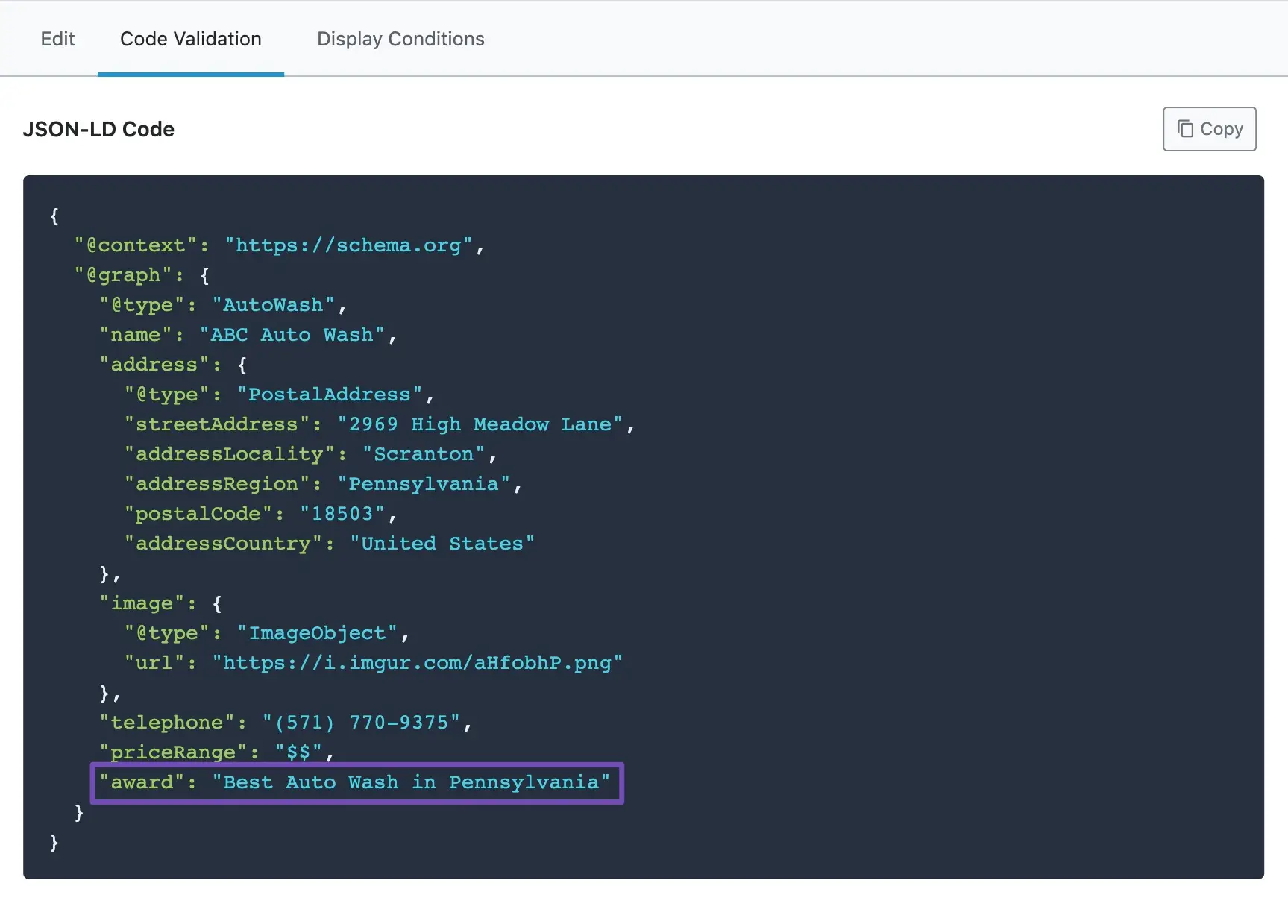
Schema markup helps search engines understand your business with greater precision. Instead of interpreting page content indirectly, structured data explicitly defines your business type, location, services, opening hours, and reviews.
For local SEO, this clarity is critical. Schema supports enhanced search features such as rich results, knowledge panels, and AI-generated summaries, all of which rely on structured, trustworthy data to surface businesses confidently.
Adding schema to your location pages strengthens consistency between your website, Google Business Profile, and citations, reducing ambiguity and improving eligibility for enhanced local visibility.
Types of schema that benefit local SEO include:
- LocalBusiness Schema for address and contact information
- Review Schema for displaying customer feedback
- Service Schema for highlighting key offerings
If you are new to schema, start with a simple generator like my Free Local Schema Markup Generator, which allows you to create structured data for one or multiple business locations without coding knowledge.
Create Localised Content That Resonates
Localised content is one of the most effective ways to signal relevance, both to search engines and to the people who matter most, your local community.
Write About Local Events And News
By publishing content tied to local news, events, and initiatives, you show that your business is active, invested, and connected to the area it serves.
Community-based content works on several levels. It builds relationships, attracts backlinks, and increases brand visibility across local search results. More importantly, it demonstrates that your business isn’t just located in the area, but it’s a part of it.
You can write about almost any local topic that has relevance to your audience.
Examples include:
- Sponsorships or partnerships, such as “Our Café Sponsors the Brighton Food Festival.”
- Involvement in community drives, for example, “How Our Salon Supported the Local School Fundraiser.”
- Coverage of seasonal activities, like “Top Fitness Events in Leeds This Summer.”
- Local collaborations, such as “Meet the Independent Brands We Work With in Bristol.”
Each piece of content offers the chance to use location-based keywords naturally while creating something genuinely interesting to readers. These articles can also attract backlinks from local news outlets, bloggers, and event organisers, are all valuable signals for improving local SEO authority.
To strengthen performance even further, keep your posts practical and visual. Include photos from the event, tag other local businesses involved, and share the article across social media channels. Google and social algorithms both reward engagement, so encouraging shares and comments can expand your reach far beyond your immediate area.
Finally, remember that this content has long-term value. Even months after an event, your posts continue to signal local expertise and freshness, helping to sustain visibility during quieter times of the year.
Showcase Case Studies And Testimonials
Customer stories are one of the most underused yet powerful tools in local SEO. They give potential clients the reassurance they need before making a decision and send clear signals to Google about your reliability and relevance.
Think of case studies as proof of expertise in action. They turn your services from claims into evidence, showing real-world outcomes for local customers.
For example, a landscaping business might create a post titled “Transforming a Newcastle Garden into a Low-Maintenance Outdoor Space.”
The title alone reinforces local intent while the story builds trust through authenticity.
A strong case study includes:
- A short introduction to the customer’s challenge.
- A summary of your solution and how you approached it.
- A clear outcome supported by visuals or client feedback.
- A short testimonial that includes the client’s name, area, or neighbourhood (with permission).
Testimonials work hand in hand with this content. A few sentences of honest feedback, paired with a photo or quote, can be more persuasive than any sales message. Mentioning the customer’s location, such as “Claire from Sheffield” or “Tom, based in Hove,” naturally reinforces your geographic connection without keyword stuffing.
Video testimonials are also worth considering. They humanise your brand, showcase your service quality, and keep visitors on your page longer, which is another positive ranking signal for Google. Even a short clip filmed on a phone can make a strong impression if it feels genuine.
By combining written and visual proof, you create a portfolio of trust that grows over time. Each story adds another layer of credibility to your brand, increases engagement, and enhances your presence in local search.
Authenticity and consistency are what make this strategy effective. When your content reflects real people, real locations, and real results, both your audience and search engines recognise it as credible, valuable, and local.
The Bottom Line
Local on-page optimisation is where your online visibility begins.
By structuring your website around local intent (with accurate NAP details, location pages, schema markup, and community-based content) you create a foundation that both search engines and customers trust.
Strong on-page SEO ensures that when people in your area search for what you do, your business stands out clearly, confidently, and consistently.
Local SEO is about owning visibility where it matters most, in your local area/community, among customers who are ready to buy.