
Tattooing has always been personal.
People spend weeks thinking about designs, placements, styles, and artists before they commit. Some sit on ideas for years. So when they finally decide to book, they do what almost everyone does first now. They search.
Usually it starts with something simple.
“Fine line tattoo artist London.”
“Blackwork tattoo studio near me.”
“Best realism tattoo artist Manchester.”
And from that point on, Google quietly shapes the decision.
The studios that appear first immediately feel more established. More trusted. More active. Fair or not, visibility creates confidence.
That is why SEO matters for tattoo studios.
Not because of algorithms or marketing jargon. Simply because people need to find your work before they can book it.
Summary
- SEO helps tattoo studios appear for searches with strong booking intent
- Google Business Profile optimisation improves visibility in local map results
- Separate pages for styles and artists help Google understand your expertise
- Fast mobile websites with clean galleries improve both rankings and enquiries
- Reviews, local mentions, and updated portfolios build trust naturally
- AI search tools now favour clear, conversational, up-to-date content
- Consistency matters more than shortcuts or aggressive SEO tactics
Why Tattoo Studios Need SEO In The First Place
Most clients are not searching for “a tattoo”.
They are searching for a specific style, a certain atmosphere, or an artist whose work feels right to them.
That changes how SEO works for tattoo studios.
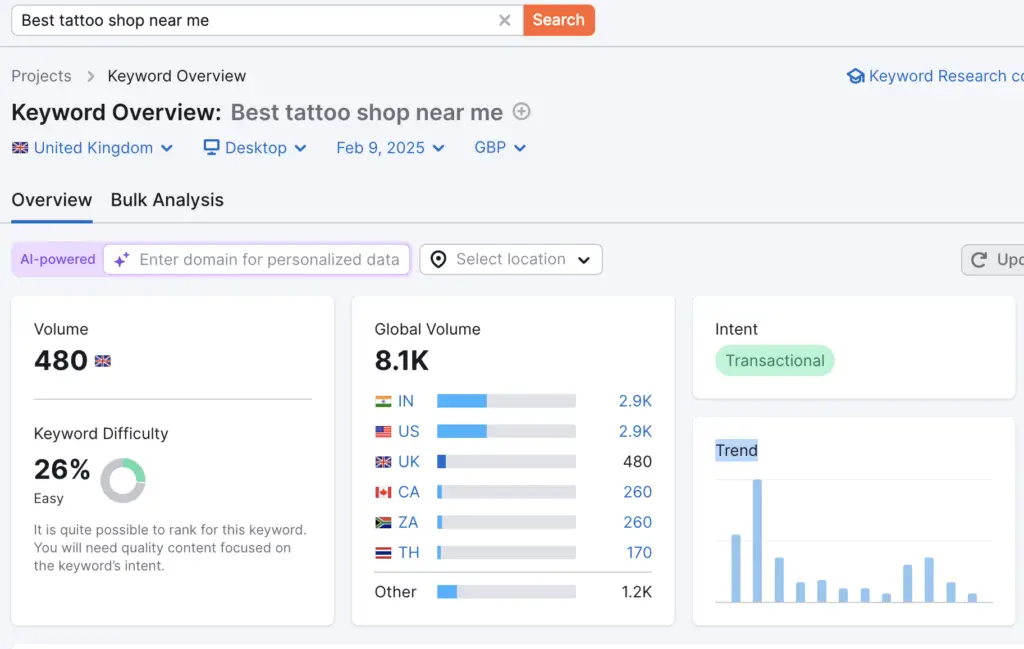
A plumber can rank for emergency call-outs because urgency drives the search. Tattoo clients behave differently. They compare artists carefully. They scroll portfolios. They check reviews. They look at healed work. They sit with the decision.
Trust matters before the first message is even sent.
That is why searches like these carry so much value:
- “Fine line tattoo artist Leeds”
- “Traditional tattoo studio Liverpool”
- “Black and grey realism Birmingham”
- “Japanese tattoo artist Bristol”
Nobody types those searches casually.
The intent is already there.
And if your studio does not appear when somebody searches for that style in your area, another artist gets the booking instead.
That sounds obvious, but a surprising number of tattoo studios still rely almost entirely on Instagram.
The problem is social media content disappears quickly. Search traffic does not.
A strong website keeps bringing people in long after the post goes live.
SEO For Tattoo Studios Is Mostly About Clarity
Google is trying to work out a few basic things.
What kind of tattoos do you specialise in?
Where are you based?
Do people trust you?
A lot of studio websites make those answers strangely difficult.
Huge image sliders. Minimal text. Hidden navigation. No location information. No explanation of styles. No artist pages.
Visually, some of them look incredible.
From an SEO perspective, though, Google is left guessing.
And honestly, users are too sometimes.
The studios that perform well online usually make things very easy to understand.
Not boring. Just clear.
Style Pages Matter More Than Most Studios Realise
A single gallery page is rarely enough anymore.
Google needs context.
If you specialise in realism, blackwork, traditional Japanese, colour tattoos, fine line, or cover-ups, each style should ideally have its own page.
Not because you need hundreds of keywords forced into the site.
Because clients search differently.
Someone looking for fine line tattoos wants to see fine line work immediately. They do not want to dig through mixed galleries trying to work out if you do that style regularly.
Dedicated pages make the experience easier for both Google and the client.
That overlap is usually where good SEO happens.
Location Still Carries Huge Weight
Tattoo SEO is heavily local.
Even clients willing to travel tend to start with nearby searches first.
Your city, studio location, and surrounding areas should appear naturally throughout the site.
Not crammed awkwardly into every paragraph.
Just written naturally.
If you regularly guest in other cities, mention that too.
Location pages can work very well when they feel genuine.
That last part matters.
Most location pages fail because they feel copy-and-pasted. Google can tell. Users can too.
A page about tattooing in Manchester should actually sound connected to Manchester.
Your Google Business Profile Is Often The Real First Impression
When somebody searches for tattoo artists locally, the map listings usually appear before the normal website results.
Most people click one of those first.
So your Google Business Profile ends up acting like a digital shopfront.
And a neglected profile quietly damages trust.
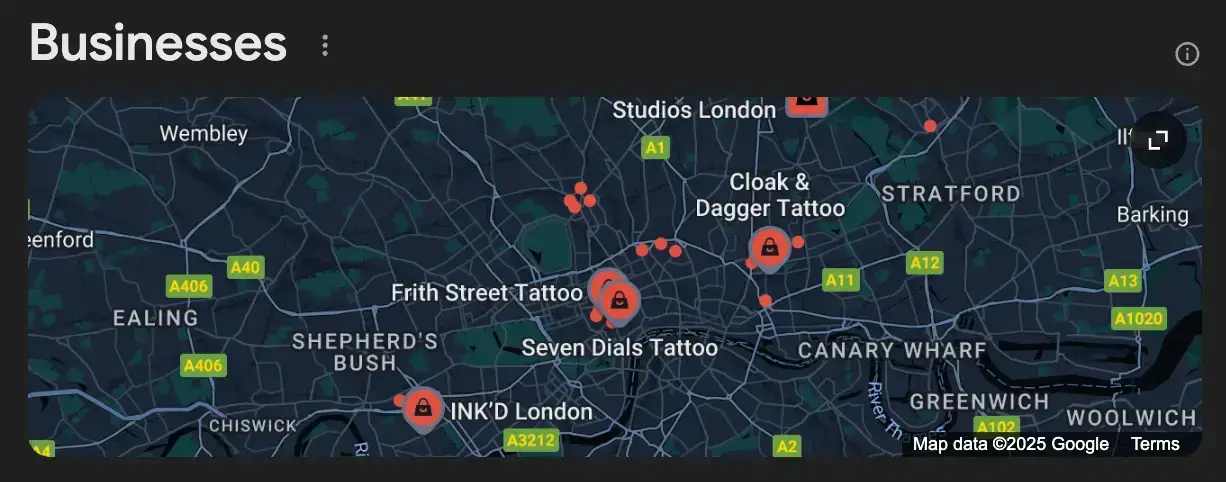
Outdated opening hours, old photos, missing booking links, unanswered reviews. People notice all of it.
A properly maintained profile should include:
- Accurate contact details
- Booking links
- Updated opening hours
- Recent tattoo photos
- Studio images
- Artist updates
- Service information
- Regular reviews
The photos matter more than many studios expect.
Authentic studio images almost always outperform polished stock photography because people want to see the actual environment they are walking into.
Same with reviews.
Fresh reviews tell both Google and potential clients that the studio is active.
Even better if clients naturally mention styles or locations in their feedback.
A review saying “best realism sleeve in Leeds” gives Google useful context without you forcing keywords onto the page yourself.
Your Website Needs To Make Booking Feel Straightforward
A lot of tattoo studio websites focus so heavily on visuals that basic usability gets forgotten.

Huge galleries slow everything down.
Menus become awkward.
Booking forms disappear under layers of design.
It looks creative, but the experience becomes frustrating.
And people leave quickly when a site feels difficult.
Especially on mobile.
The best tattoo websites usually feel surprisingly simple.
Strong imagery.
Clear artist pages.
Obvious booking options.
Fast loading times.
That is normally enough.
Your homepage should quickly explain:
- What styles you specialise in
- Where the studio is based
- How people can book
- Who the artists are
- What kind of work you are known for
Then the deeper pages can expand naturally.
Style pages can explain the process, healing expectations, appointment prep, or how certain tattoos age over time.
Not every page needs endless copy.
But it does need enough substance for somebody to feel confident booking.
Mobile Experience Is Not Optional Anymore
Most tattoo searches happen on phones.
Usually while somebody is scrolling inspiration late at night or talking with friends about ideas.
If your site loads slowly on mobile, people leave.
It is that simple.
Large image files are one of the biggest problems.
Tattoo studios understandably want high-quality visuals, but galleries still need compressing properly. Otherwise pages crawl.
Good technical SEO for tattoo studios is mostly practical:
- Compress image sizes
- Keep navigation simple
- Make booking buttons obvious
- Use reliable hosting
- Ensure galleries work properly on mobile
- Add SSL security
Overdesigned websites often create more problems than they solve.
People should never need to hunt for basic information.
While you may not appear in Google’s Local Pack (Map Listings) for areas outside your physical location, these pages help you rank in organic search results, making it easier for clients from nearby cities to find you.
Did You Know?
“More than 60% of Google searches come from mobile devices, and for tattoo studios, that number is likely even higher.“
Artist Pages Usually Convert Better Than Generic Studio Pages
People often book the artist, not just the studio.
That distinction matters online.
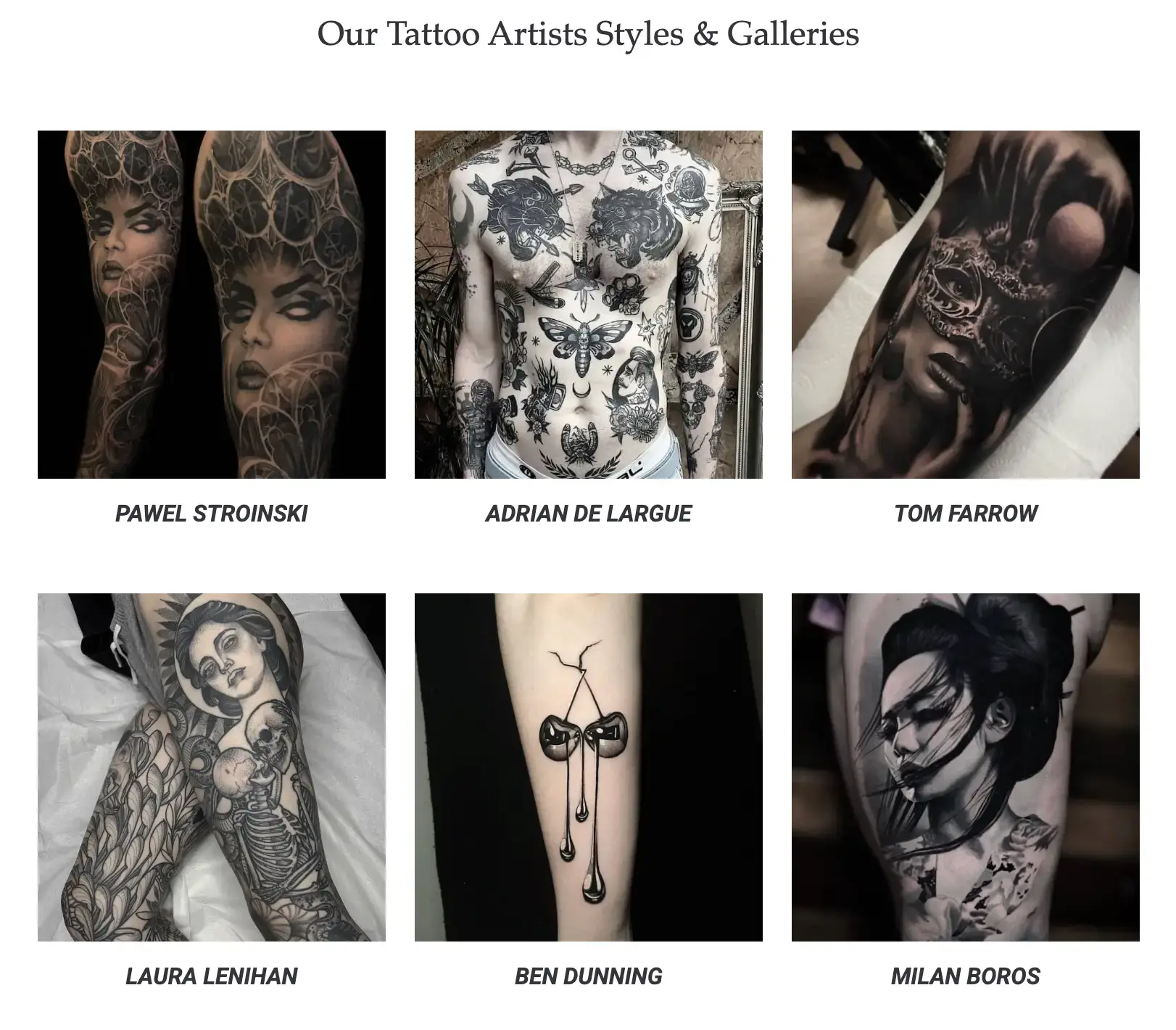
Every artist should ideally have their own page with:
- Portfolio examples
- Style specialisms
- Experience
- Booking details
- Reviews or testimonials
- Healed work
Those pages help SEO, but they also make the studio feel more personal.
Clients want to know who they are sitting with for several hours.
That reassurance matters.
Especially for larger pieces.
Location-Specific Pages
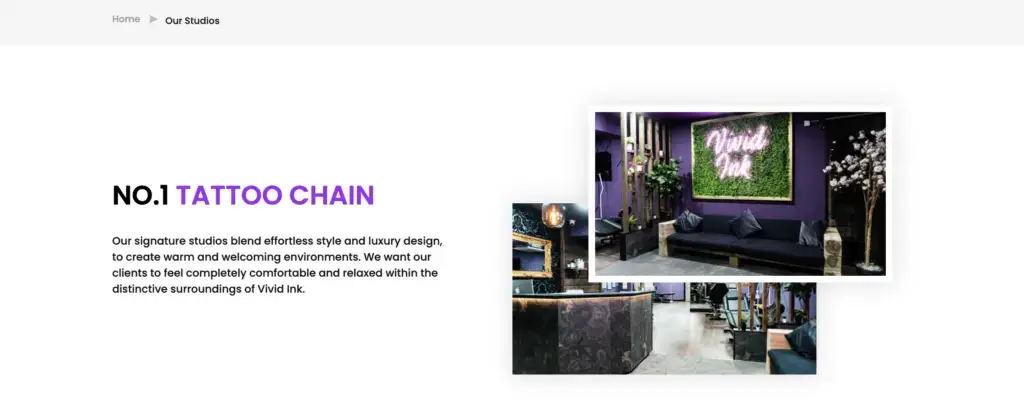
Vivid Ink Tattoo sets the standard for location-based SEO, with dedicated pages for each studio that make it easy for clients to find them. It’s a perfect example of how tattoo chains can structure their websites to maximise visibility and attract more bookings across multiple locations.
Google prioritises businesses that are closest to the searcher, making it difficult to rank for areas outside your immediate location. If you serve multiple cities, you can still increase visibility in surrounding areas by creating location-specific pages.
For example, if your main studio is in Liverpool but you actively tattoo at other shops regularly in Manchester, Chester, and Warrington, then your website should have separate pages for each location, such as:
- “Tattoo Artist in Manchester”
- “Fine Line & Minimalist Tattoos in Chester”
- “Japanese & Traditional Tattoos in Warrington”
Each page should feature content tailored to that area/style, including:
- A description of your services and specialities.
- Local references (e.g. “Located just a short drive from Chester city centre”).
- Images of tattoos done for clients from that region.
- Testimonials from customers in that area.
Tell Stories That Earn Trust
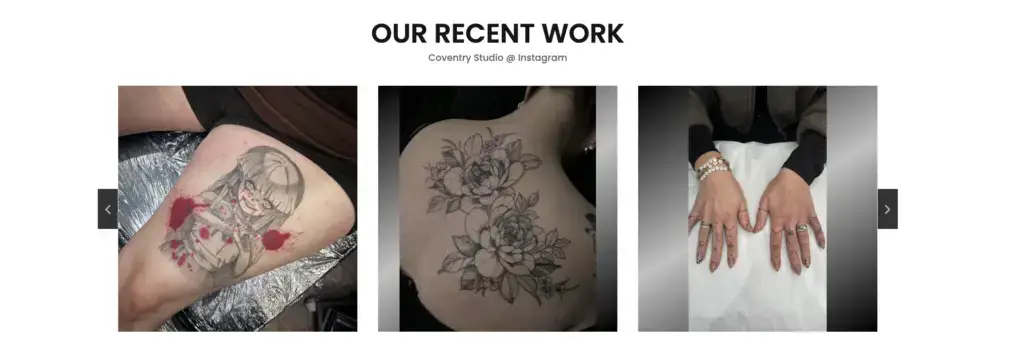
SEO thrives on content that teaches, informs, or inspires. For tattoo artists, that content can be as creative as the work itself. It can also be the difference between being seen or buried.
Educational and story-based content works best. Write short guides that answer real questions:
- How long does a tattoo take to heal?
- What should clients do before their appointment?
- How can they choose the right design or placement?
Add articles about the meaning behind certain designs, updates on new techniques, or insights into your process. People love understanding what goes into their tattoo. Sharing that makes you more relatable and trustworthy.
Blogs also help with search variety. Someone might not search for your name, but they might search “how to care for a new tattoo in summer.” If your article answers that, they find you naturally.
Top Tip
“Each paragraph should sound like advice you’d give across the counter; simple, confident, and practical. Avoid jargon. Focus on reassurance and expertise.”
AI Search Is Starting To Reward Clearer Content
Search behaviour is changing quickly.
People now ask full questions through ChatGPT, Google Gemini, Siri, and voice search tools rather than typing short keywords.
That changes how tattoo studios appear online.
Instead of searching:
“Tattoo shop Bristol”
Someone might ask:
“Who is known for minimalist tattoos near Bristol?”
AI systems pull information from websites that appear reliable, active, and detailed.
That means:
- Updated artist pages matter more
- Clear explanations matter more
- Fresh portfolio images matter more
- Reviews matter more
- Consistency matters more
Studios trying to force awkward SEO wording onto pages often look weaker now because AI tools understand natural language much better than older search systems did.
Clear writing wins.
That shift is actually good news for tattoo studios with genuine expertise.
Educational Content Quietly Builds Trust
One of the easiest ways to improve tattoo SEO is by answering the questions clients already ask constantly.
Things like:
- How long does a tattoo take to heal?
- What should I do before my appointment?
- Do fine line tattoos fade faster?
- How painful are rib tattoos?
- How should I prepare for a sleeve session?
People search these questions every day.
Studios that answer them well tend to build trust faster.
And the content itself often ranks surprisingly well.
The important part is tone.
Most tattoo advice online sounds robotic or overly polished.
Write the way you would explain things during a consultation instead.
Simple. Direct. Calm.
That usually feels more trustworthy.
People are not looking for corporate expertise from tattoo studios. They are looking for confidence and reassurance.
Top Tip
“Treat feedback collection like cleaning your machines. Do it every week. Regular reviews create consistent visibility, which builds both trust and search authority.”
Reviews Still Influence Almost Everything
Reviews affect rankings.
But more importantly, they affect confidence.
Tattoo clients pay close attention to recent experiences because the decision feels personal.
A studio with fresh, detailed reviews immediately feels safer.
Ask for reviews regularly.
Reply to them properly too.
Not with robotic “thanks for your feedback” responses.
Real replies make the business feel active and human.
That matters more than most businesses realise.
Google notices engagement.
Users do too.
Local Partnerships Help More Than Cheap SEO Tricks Ever Will
Tattoo studios naturally sit inside creative communities.
That creates genuine opportunities for local visibility.
Collaborations with photographers, clothing brands, barbers, art events, music venues, or conventions often lead to local mentions and backlinks.
Those signals carry weight because they are real.
Cheap directory spam and artificial link-building rarely help long term.
Google has become very good at spotting manufactured SEO activity.
Local credibility tends to outperform volume.
A mention from a respected local event website is usually worth more than dozens of low-quality links.
SEO For Tattoo Studios Is Mostly About Consistency
This is the part people often dislike hearing.
SEO is gradual.
Most studios will not jump to the top of Google overnight.
The first signs are normally smaller:
- More profile views
- More website clicks
- More direction requests
- More consultation forms
- More messages mentioning Google
Then momentum builds.
Studios that consistently:
- Upload fresh work
- Update artist pages
- Collect reviews
- Improve their websites
- Add useful content
usually outperform studios chasing shortcuts.
Search visibility compounds over time.
Frequently Asked Questions About SEO For Tattoo Studios
There is a lot of confusion around SEO in the tattoo industry because most explanations make it sound far more technical than it really is.
How Long Does SEO Take For Tattoo Studios?
Usually a few months before noticeable movement starts.
Most studios begin seeing improvements in visibility within three to six months, especially locally.
Google Business Profile activity, reviews, and fresh website content often speed things up.
Do Tattoo Studios Need Separate Pages For Each Style?
For your main styles, yes.
Dedicated pages help both Google and clients understand what you specialise in.
A realism client and a fine line client are usually looking for very different things.
Your website should reflect that clearly.
Is SEO Different For Tattoo Studios Compared With Other Local Businesses?
Very much so.
Most local businesses compete on convenience.
Tattoo studios compete on trust, identity, style, and reputation.
The emotional side of the decision matters far more.
How Can Tattoo Studios Stand Out Online?
Usually through clarity and consistency rather than aggressive marketing.
Studios stand out when they:
- Show genuine work regularly
- Explain their process naturally
- Keep reviews updated
- Make booking simple
- Write like real people
That sounds simple because it mostly is.
How This All Ties Together
SEO for tattoo studios is really about helping the right people find your work.
When your website clearly explains your styles, your Google profile stays active, and your portfolio reflects the quality of your work, enquiries become easier to generate naturally.
The studios performing well in search right now are rarely the ones trying to sound the most “optimised”.
Usually they are just the clearest.
The most active.
The easiest to trust.
And in tattooing, trust changes everything.