
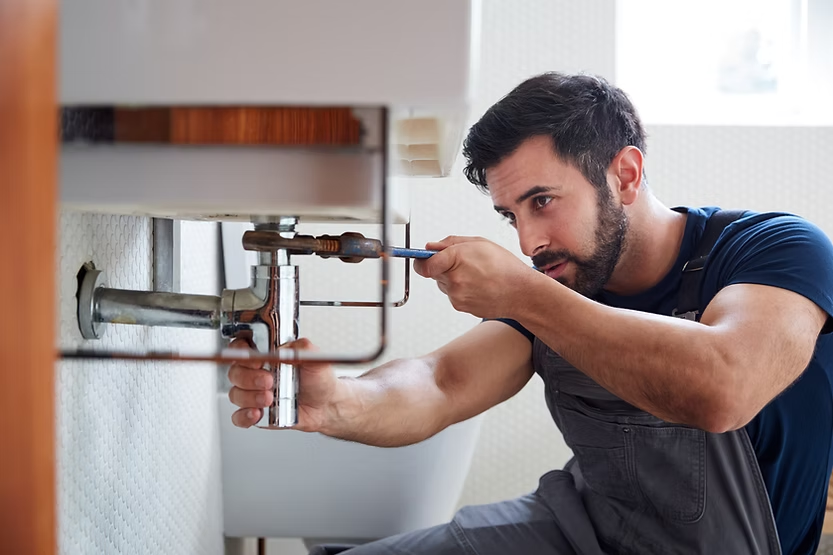
When a boiler breaks or water starts leaking through a ceiling, people don’t browse directories or wait for recommendations. They open Google and search for help.
The plumber who appears first often gets the call, not because they are the only one who can fix the problem, but because they are visible at the exact moment of need.
If your plumbing business isn’t appearing in local search results, potential clients go straight to competitors who are easier to find. Every day, people search online for reliable plumbers in their area, ready to book immediately.
Effective SEO for plumbers ensures your business appears at the right time, for the right searches, in front of customers who are ready to act.
Summary
Plumber SEO is basically “be the obvious option when something goes wrong.” This piece breaks down how to win those urgent local searches by nailing the fundamentals: a complete, regularly updated Google Business Profile (categories, photos, posts, review replies), separate pages for your core services and service areas, and a site that loads fast and makes calling or booking effortless on mobile.
It also highlights why trust signals (recent reviews, consistent business details, real job photos) often decide who gets the call, plus how seasonal demand and AI/voice search are pushing plumbers to publish useful, timely answers before the winter spike hits.
Essential Plumbing SEO
Plumbing has always been a word-of-mouth trade, but search behaviour has reshaped how people find trusted local services.
Over 90% of home service enquiries now begin online, and Google reports that “near me” searches for plumbers have grown by more than 200% in the last three years.
These are high-intent searches. They represent real problems that need solving, not casual browsing.

The numbers prove how critical it is to rank high in search results. The term “plumber near me” receives over 40,500 searches every month in the UK. More specific searches, like “boiler repair London,” attract 720 searches each month.
Perhaps most importantly, around 75% of people never scroll past the first page of Google. If your plumbing business isn’t visible in the top results, those customers don’t compare options, they choose someone else.
Take, for example, a plumber in Manchester who specialises in boiler repairs. If they haven’t optimised their website for “boiler repair in Manchester” or “24/7 emergency plumber near me,” they won’t appear in front of the customers who are actively looking for their services. Their competitors will take those job opportunities instead.
Strong SEO helps you build a reliable stream of leads from organic search. Instead of paying for endless ads or relying on directories, your website and Google Business Profile become your 24-hour referral source.
How SEO Works For Plumbing Businesses
Search engines evaluate countless signals to decide which businesses appear at the top of the results. For plumbing businesses, search engines focus on three main signals: relevance, proximity, and trust.
Relevance
Google needs to understand what you actually do. A single homepage listing “plumbing services” isn’t enough.
Your website must describe your key services in detail: emergency repairs, heating installations, bathroom fitting, leak detection, and boiler servicing, each with its own page.
The clearer your structure, the easier it is for search engines to connect your business with the right searches.
Distance
Distance refers to location. Most plumbing jobs are local, so Google prioritises nearby businesses.
This is why Local SEO is vital. It tells Google which areas you serve and helps you appear in both the map listings and standard results.
If you work across several towns, create individual pages that mention each area, include real customer reviews, and show examples of local jobs.
Trust
Google rewards consistency, transparency, and genuine customer feedback. A plumber with a few dozen recent, detailed reviews will often outrank larger firms with outdated testimonials.
Regular updates to your website, photos of finished jobs, and honest responses to customer feedback all strengthen that trust signal.
To improve your chances of getting featured in the Local Pack, optimising your Google Business Profile, collecting customer reviews, and using local keywords on your website are essential.
Turning Local Visibility Into Real Calls
When people search for a plumber, they rarely scroll. They call one of the top results, often from the map section known as the “Local Pack.” Appearing here can double or triple your enquiries overnight.
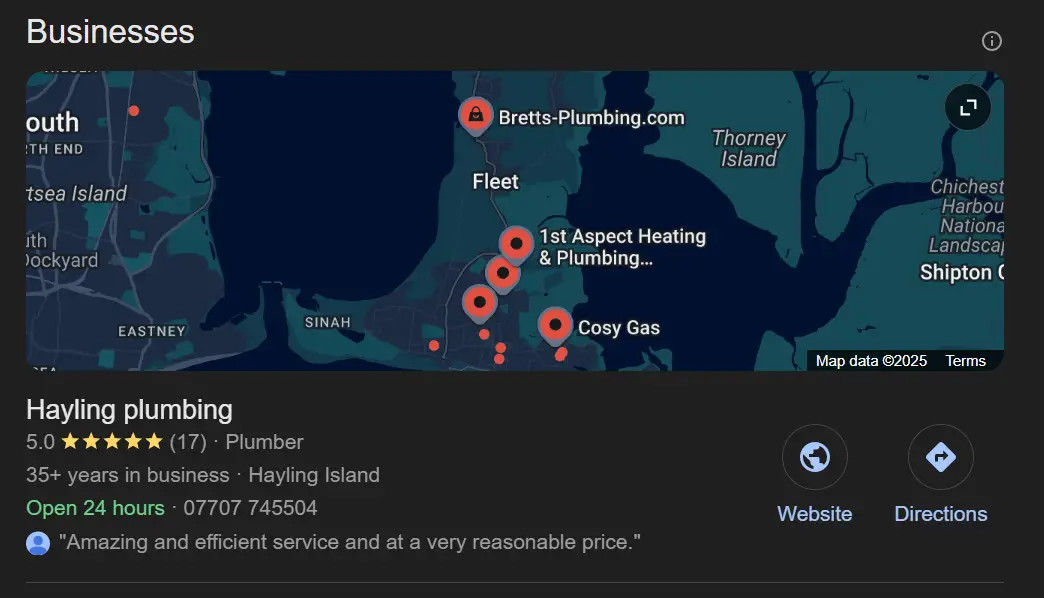
To earn that visibility, your Google Business Profile must be complete, accurate, and active. Add your full business name, address, and phone number (the NAP data). Write a clear, conversational business description. Upload genuine photos of your work, vans, and staff, and update these regularly. Google notices when a listing looks fresh.
Encourage customers to leave reviews soon after completing a job. Ask them to mention the specific service and area (“boiler repair in Sheffield” or “bathroom fit in Norwich”). These reviews contain keywords that Google reads and associates with your business, subtly boosting your rankings.
Top Tip
“A short thank you tells both Google and future customers that you are attentive, polite, and active. Silence gives the impression of neglect. Small gestures make a big impact online.”
Local SEO also involves maintaining consistent information across directories, like Yell to Checkatrade.
Inconsistencies confuse search engines and can weaken your presence in local search results. Keep everything identical, from your phone number to your punctuation.
Want more plumbing leads from Google?
See my SEO services for plumbers.
Google Business Profile For Plumbers
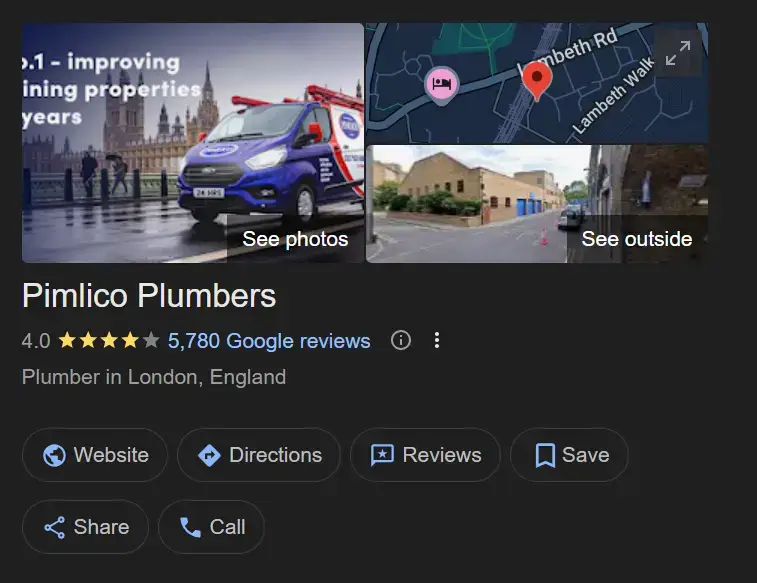
Start by completing every section of your profile. Surprisingly, many plumbers leave out key details, which can negatively impact their rankings.
Your business name, address, phone number, website, and operating hours should all be 100% accurate. If you offer emergency plumbing services, this should be clearly highlighted.
Categories
Choosing the right categories is another essential step. Your primary category should be “Plumber,” but you can also add related categories such as “Boiler Repair Service” or “Emergency Plumber” to increase your chances of appearing in different searches.
Photos
Photos also play a significant role in building trust. Customers are more likely to hire a plumber who showcases real images of completed work, before-and-after transformations, and even photos of their van with business branding.
Avoid stock images; people want to see the real work you’ve done.
Posts/Updates
Another way to keep your GBP active is by posting regular updates. Google allows you to publish posts, like mini blog updates, or those that can feature special offers, seasonal promotions, or reminders about common plumbing issues.
Since these posts expire after seven days, updating them weekly keeps your profile fresh.
Reviews
Customer reviews are one of the biggest ranking factors. Plumbers with more positive reviews tend to rank higher in local search results.
Encourage satisfied clients to leave feedback, and always respond to reviews, whether they’re positive or negative. Addressing concerns professionally shows potential customers that you care about service quality.
Google reads review content as confirmation of what you do and where you do it, which directly supports local rankings.
Website SEO For Plumbers
Your website is your digital shopfront, and SEO ensures it’s visible to the right people. If potential customers visit your site and find it slow, confusing, or lacking key information, they’ll quickly leave and contact someone else.
Choosing The Right Keywords
The foundation of good website SEO is keyword research. Your website should target the exact phrases that customers are searching for. Instead of just using “plumber in [city]”, focus on high-intent searches like
“Emergency plumber in London”
“Boiler repair specialist in Glasgow”
“Blocked drain plumber in Manchester”
These long-tail searches reflect urgency and intent. Ranking for them attracts customers who are actively looking to book, not just gather information.
Website structure also matters. Instead of listing all your services on one page, create dedicated pages for different plumbing services such as boiler repair, leak detection, drain unblocking, emergency call-outs, and bathroom installations.
If you serve multiple areas, build location-specific pages optimised for each region.
Technical SEO: The Plumbing Behind Your Site
Think of your website’s technical setup as the unseen pipework of your business. If it’s clogged, nothing flows. Technical SEO keeps your website running smoothly so search engines can index and rank it properly.
Fast-Loading Website
A fast-loading website is essential. According to Google, 53% of mobile users abandon a page that takes longer than three seconds to load.
Plumbing customers, often under pressure, will leave even sooner. Compress images, remove unnecessary code, and use clean layouts that prioritise contact options.
Mobile-Friendly
Mobile responsiveness is another major factor. Most plumbing searches happen on phones. Make sure your site adapts neatly to any screen size and that your phone number is always one tap away.
Helping Search Engines
Sitemaps, structured URLs, and secure HTTPS connections all contribute to better performance. They might sound technical, but they translate directly into real results: higher visibility and more trust from both users and search engines.
Explaining, Reassuring And Building Authority Through Content Marketing
SEO without content is like a pipe without water. Your website must demonstrate expertise and help customers understand their problems before they call.
Start with your core service pages, then build around them with supporting content — blog posts, FAQs, and guides that answer real questions.
Examples include:
- “What to do if your boiler loses pressure”
- “How often should you service your central heating?”
- “When is it time to replace copper pipes?”
This type of content attracts organic traffic and shows Google you’re an authority in your field. But more importantly, it builds trust with readers. Many visitors aren’t ready to call immediately.
Include photos, short videos, or even case studies. A quick clip explaining how to isolate a leak or a testimonial video from a satisfied client can perform better than any advert. Customers remember people who help them before they even make a purchase.
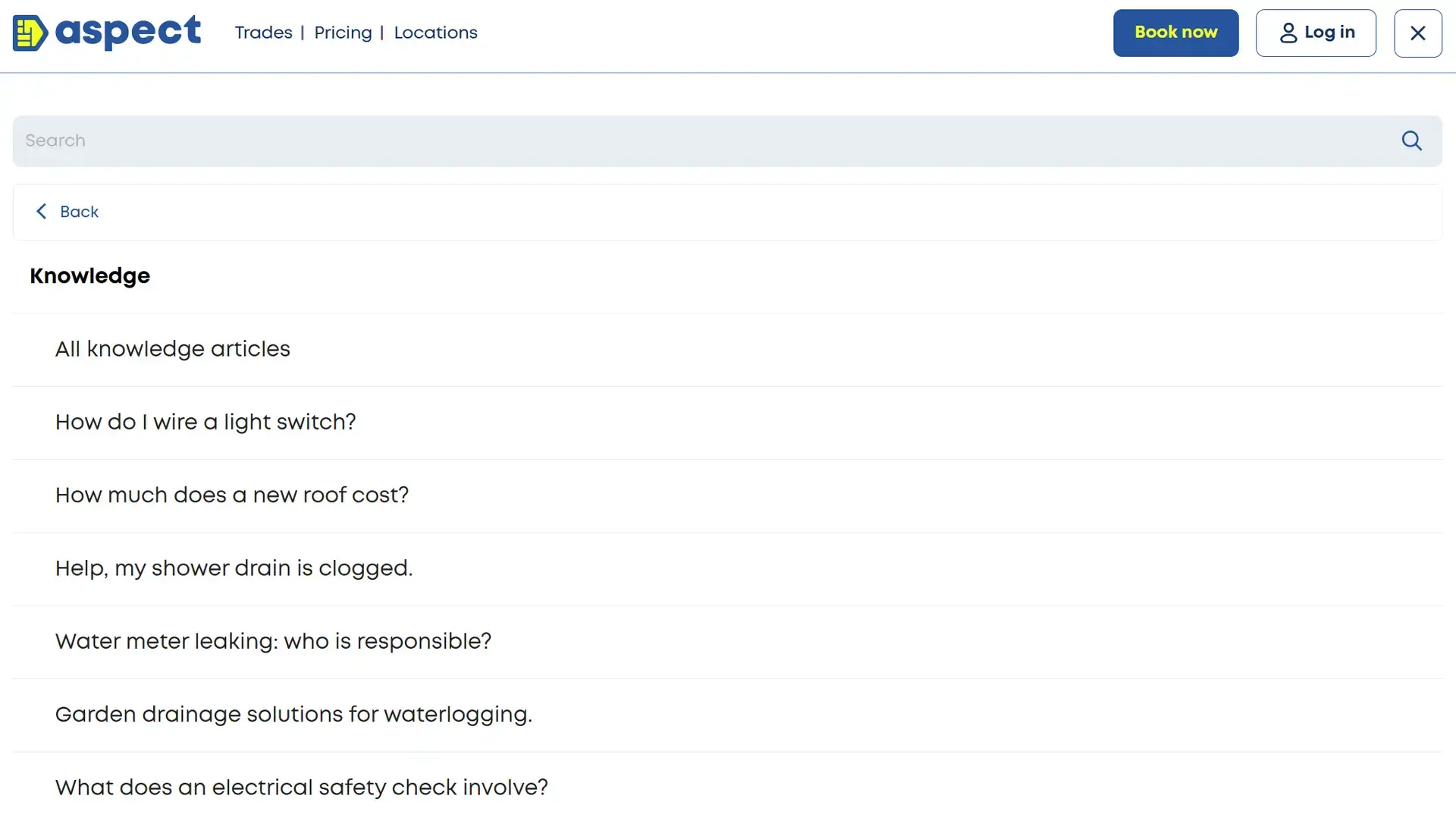
Informative content keeps them on your site longer, and when they do decide to book, they’re far more likely to choose you.
Top Tip
“Avoid technical jargon unless you explain it. Clear, practical writing makes complex topics understandable and builds confidence in your professionalism.”
Reaching Beyond Your Postcode With Location Pages
You don’t need multiple offices to attract customers in nearby towns. Well-written location pages help you appear for searches just outside your immediate area.
Each page should focus on a specific location and service mix. For instance, if you’re based in Manchester but often work in Bolton or Stockport, create dedicated pages for each.
Discuss typical jobs, mention local landmarks, and include testimonials from those towns. This demonstrates genuine experience, not manufactured reach.
Avoid copying and pasting text between locations. Google can detect repetition and may ignore duplicate pages. Each one should sound distinct, personal, and relevant to its area.
Intelligent Search And Predictive Demand

The newest phase of online discovery isn’t just about answering questions. Modern AI-driven systems, including Google Gemini, ChatGPT, and Microsoft Copilot, analyse local behaviour patterns and seasonal trends to anticipate demand before people actively search.
For plumbers, this is a quiet advantage waiting to be used. Search data already shows that “boiler repair” spikes sharply each autumn, while “outdoor tap installation” climbs in spring. AI systems recognise those patterns too, and the businesses that prepare for them early gain more visibility.
You can align your website and Google Business Profile with these predictable surges by publishing seasonal content ahead of time, guides like “Preparing Your Heating for Winter” or “How to Protect Pipes Before a Freeze.” When those search trends appear, AI tools already have your answers to surface.
Unlike traditional SEO, AI discovery also considers tone and reliability. It looks for confident, consistent, and well-reviewed local experts. A plumber who keeps service pages updated, answers questions naturally, and uploads real photos of work sends all the right trust signals.
AI is also merging with voice search. People are now asking devices things like, “Who can fix a leaking radiator nearby?” or “Call a plumber open now.”
The AI connects directly to verified Google profiles and business hours. If yours is complete, responsive, and current, it becomes the natural choice.
Analysing, Adapting And Responding
Good SEO behaves a lot like a plumbing system, it needs regular checks, pressure tests, and fine-tuning to keep working smoothly.
Performance analysis is that maintenance. It shows where your traffic is flowing and where leaks are costing you leads.
Start by reviewing which pages attract the most calls or form submissions. You might find that your “Boiler Repair” page pulls heavy traffic but few enquiries, while your “Emergency Callouts” section delivers a smaller but higher-value audience. These patterns show where to focus content improvements or internal links.
Seasonal Fluctuations
Seasonal tracking is especially valuable for plumbers. Search data changes with the weather, so your strategy should too.
During colder months, prioritise heating content and service promotions. In summer, shift focus toward bathrooms, outdoor taps, and renovations.
Aligning your optimisation with the calendar keeps traffic steady all year.
Pay attention to search intent changes as well. More homeowners now look for sustainable solutions like heat pump installations or water-saving systems. Updating your pages to reflect new technologies helps you capture early traffic before competitors catch on.
Set clear benchmarks, average position, conversion rate, and enquiry volume, and review them monthly.
SEO performance rarely shifts overnight, but steady improvement shows you’re moving in the right direction.
SEO For Plumbers Frequently Asked Questions
Why Do Plumbing Websites Lose Visibility?
It’s common for established plumbers to see their rankings slip without realising it. Google doesn’t measure how busy you are offline, it measures how active you appear online.
If your website hasn’t been updated for months, your Google Business Profile has no new photos, or reviews have slowed, search systems assume you’re less relevant.
Staying visible means staying active. Upload photos of new jobs, publish short updates, and respond to reviews quickly. Even a single weekly post keeps your business in Google’s rotation.
What Makes SEO Different For Plumbers Compared To Other Trades?
Plumbing searches are reactive. People search when something goes wrong. That means SEO for plumbers has to capture immediate intent, instead of general awareness. Unlike decorators or landscapers, plumbers benefit most from local, emergency-driven optimisation.
That’s why phrases like “open now,” “near me,” and “24-hour plumber” matter more than abstract service keywords. Your online presence should feel urgent but trustworthy.
Fast-loading pages, click-to-call buttons, and clear service areas help convert searchers in real time.
Should I Focus More On Emergency Call-Outs Or Long-Term Installations?
Both have value, but the approach differs. Emergency work relies on short-term search visibility, for example ranking for “burst pipe repair” or “emergency plumber in [city].” These pages must be direct, mobile-friendly, and built for conversion.
Long-term installation work, like bathrooms or heating systems, benefits from in-depth content and visuals. People research those projects for weeks.
Building pages that show your process, materials, and before-and-after results helps attract that slower but higher-value audience. A strong SEO strategy balances both. Quick-fix pages bring volume. Long-form service pages build profit and reputation.
How Can Reviews Improve Plumbing SEO?
Reviews aren’t just social proof; they are ranking signals. Google scans review text for service types and locations. A review saying “Fixed our leaking radiator in Preston” helps you appear for similar searches in that area.
Encourage customers to mention what you did and where they live. Avoid copying the same thank-you replies, instead vary them. Google recognises patterns, and genuine responses signal authenticity.
Also, don’t ignore negative feedback. A professional, calm reply often improves trust more than five short five-star ratings. Google values transparency, and so do customers.
What Metrics Should I Measure?
Traffic numbers only tell part of the story. Calls, contact form submissions, and direction requests matter far more. Use your Google Business Profile insights to track how many people clicked “call now” or asked for directions. These actions show intent.
Then match that data with job records. If enquiries start aligning with specific pages, you’ll know where your SEO is working hardest. Over time, small consistent improvements in those interactions mean your local presence is solidifying.
The Bottom Line
SEO for plumbers isn’t about chasing clicks. It’s about building a steady, reliable pipeline of work by making your business easy to find and easy to trust.
A well-structured website, an active Google Business Profile, and helpful local content all work together to bring the right customers straight to you.
Plumbing is a trade built on reliability. SEO extends that reliability online. It ensures your reputation shows up when people search for help, not just when they hear your name from a friend. If your calls and enquiries could be stronger, start by reviewing your visibility. Is your site clear and current? Are your reviews recent? Is your Google profile complete? Small changes lead to lasting growth.
For tailored support building a strong, local SEO strategy for your plumbing business, get in touch today.