
Link building for beginners is about earning a small number of relevant links from real sites your customers trust, then building steadily over time.
Link building can sound mysterious when you are starting out. Some people make it sound like a quick win. Others make it sound risky. The truth sits in the middle. Links still matter, but they only help when they come from the right places, for the right reasons.
For link building for beginners, it is rarely about chasing national press or trying to rack up hundreds of backlinks each month. It is about building trust signals that fit your niche, your location, and your customers. Think local relationships, useful resources, and mentions from organisations that already sit in your world.
Summary
Link building is earning links from other websites, and those links can support rankings and trust when they come from relevant, reputable sources.
Link building is the process of earning links from other websites to yours. Search engines treat those links like recommendations, which can support rankings, discovery, and trust when the links come from relevant, reputable sources.
In this guide, you will learn what a backlink is, what makes a link valuable, and which links to avoid. You will also get practical ways to earn links as a beginner, plus simple tracking tips, common mistakes to watch for, and clear next steps you can take without spending hours on outreach.
What link building actually means
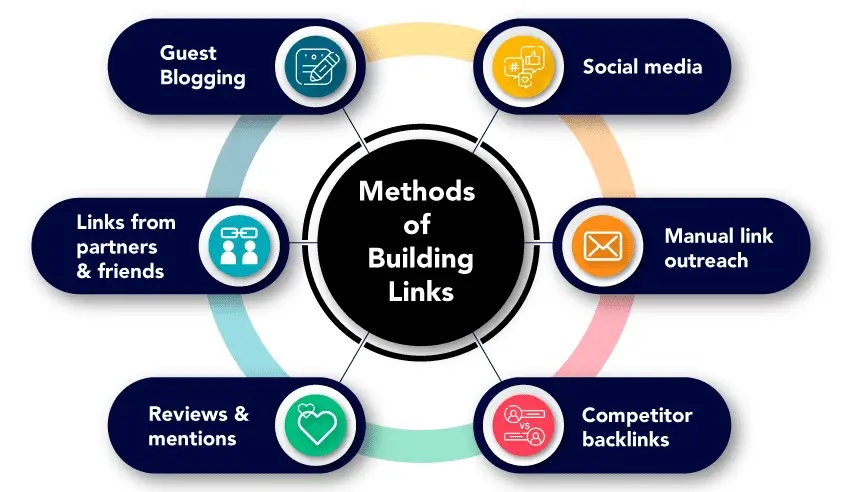
Source: Munro Agency
Link building means getting other websites to link to your website, usually by giving them something worth referencing.
Link building is the process of getting other websites to link to your website. Those links are called backlinks, and they help search engines understand how your site fits into a wider topic area. When your pages earn links from relevant sites, it suggests your content is useful enough to reference.
It helps to think of backlinks as recommendations. A recommendation from a respected site in your space can carry serious weight, even if it is only one link. On the other hand, a big pile of links from low-quality sites can do very little, and in some cases can create issues you then have to clean up.
A simple example is often easiest. A local architect publishes a guide on choosing a builder for a loft conversion, then links to a builder’s clear page explaining building control steps. That link is helpful to readers and makes sense in context, which is why it tends to be the sort search engines value.
Top Tip
“It’s tempting to chase big, well-known sites. In practice, a link from a smaller site that shares your audience can be more useful. Look for relevant blogs, industry bodies, local business networks, and trade associations, because the topic match often matters more than the logo.”
What is a backlink?
A backlink is a link from another website to your website, and search engines can treat it like a recommendation when it is relevant and placed naturally.
Backlinks help search engines understand how your site fits into a wider topic area. When your pages earn links from relevant sites, it suggests your content is useful enough to reference.
Why links still matter for SEO
Links still matter because they help measure trust, help search engines find pages, and can send referral traffic that turns into enquiries.
Search engines aim to show results people can trust, and links are one of the ways they measure that trust. If other sites reference your page, it can be a sign that your information holds up beyond your own website. Over time, those signals can support stronger visibility, especially when your content and technical setup are already solid.
Links also help with discovery. If someone links to a new service page or blog post, search engines can find it sooner and crawl it more efficiently. That can make a real difference for small business sites that publish less often, because you want new pages to be picked up without delay.
It is also worth remembering that links can drive direct traffic. A mention on a local blog, a partner website, or an industry page can bring people to your site who are already interested in what you do. Sometimes that referral traffic is just as valuable as any ranking change.
A good backlink should be relevant, come from a real site, sit in the main content, and make sense for the reader.
Is link building about trust or volume?
The goal is trust, not volume. A few strong links that fit your niche and location can beat hundreds of weak ones.
It is easy to get stuck comparing backlink counts. You might see a competitor with thousands of links and assume you need the same, fast. In reality, many of those links will be weak, irrelevant, or old, and some will even be spam the competitor did not ask for.
Your goal is to earn links that prove you belong in your market. If you run a plumbing business in Leeds, links from local suppliers, trade groups, community sites, and relevant local publications usually mean more than random links from unrelated sites. Those links confirm relevance and legitimacy, which is exactly what search engines want to see.
A small number of strong links can shift things more than a long list of weak ones. For many local businesses, 5 to 20 good local links over a few months can move visibility more than 100 low-quality links.
That is why beginners are often better off focusing on fewer, higher-quality opportunities and then building steadily over time. For more detail, read my blog post on local link building strategies.
What makes a backlink valuable
A valuable backlink is relevant, trustworthy, placed naturally in the content, and uses normal anchor text.
Not all backlinks are equal. Some help, some do nothing, and some can cause problems if you rely on them too heavily.
Relevance of the linking site
A link from a site connected to your industry or audience is usually stronger than a link from a general site that covers everything. Search engines can understand topical patterns, so links that fit your niche tend to support your authority more clearly. If you are a wedding photographer, links from venues, florists, and wedding blogs make sense, because the audience overlap is obvious.
Relevance of the linking page
It is not just the website, it is also the page the link sits on. A page about “kitchen refurbishment costs in Manchester” linking to your cost guide is a natural match. A random page linking to your homepage with no context is often less useful, even if it still counts as a link.
Placement in the content
Links inside the main body of a page tend to carry more weight than links in a footer or sidebar. Body links are often editorial, meaning someone chose to reference you within a sentence because it helped the reader. Footer links can be templated, and sidebar links can be there for reasons that have nothing to do with the content.
Anchor text that sounds normal
Anchor text is the clickable text. In most cases, simple and descriptive is best. Brand name, a page title, or a short phrase that fits the sentence works well, because it reads like a real person wrote it. Overly repeated keyword anchors can look forced, so avoid anything that feels unnatural.
Trust and site quality
A trusted website looks real. It has a clear purpose, decent content, and a normal link pattern. Low-quality sites often have thin pages, messy topics, lots of outbound links, and no clear organisation behind them. If a site feels off, it is usually not worth chasing.
Which links should beginners avoid?
Avoid backlink packages, link farms, private blog networks, spam comments, and low-quality directories, because they rarely bring the right traffic and can create risk.
“Backlinks packages” are the common trap. Offers like “50 links for £99” tend to be built on low-quality placements that exist only to sell links. They might move the needle briefly, then disappear, or create patterns that are hard to undo.

What is a link farm?
A link farm is a site or network made mainly to publish links, not to serve real readers, and search engines can often spot them. Link farms and private blog networks are another risk. They can look tidy at first, but often have obvious footprints, similar templates, similar writing style, and loads of outbound links. Search engines have been dealing with these tactics for years, which is why relying on them is risky.
NB
You want links that do something for your business, not links that just make a report look busy.A good link should bring a clear benefit. That might be relevant referral traffic, a stronger trust signal in your niche, or a real mention from a site your customers recognise.
Buying random links just to increase your backlink count is mostly noise. It rarely brings the right visitors, and it does not tend to lead to more enquiries or sales.
Comment spam and forum profile links are usually pointless. Many are ignored, and the rest can leave your brand associated with places you would never want a customer to see. It is rarely worth it.
Low-quality directories are also common. Some directories are useful, especially trade bodies and respected local listings. Others list every business in every town with no real standards. If it feels like a dumping ground, skip it.
Top Tip
“If you want early progress, begin with links that come from being legitimate and visible in the right places. These links are not flashy, but they help build a solid base, and they often support local signals at the same time.
Claim and complete profiles on relevant sites, such as accreditation bodies, trade associations, and chambers of commerce. If you already work with suppliers or partners, ask for a simple mention on their site, and offer the same on yours if it makes sense. These are normal business relationships, so the request does not feel forced.
Local sponsorships can help too, even small ones. A community event, a local team, a school fundraiser, or a charity page often includes a sponsor list. It is not about chasing links; it is about doing something real, then making sure the online mention exists.”
What are safe ways to earn backlinks?
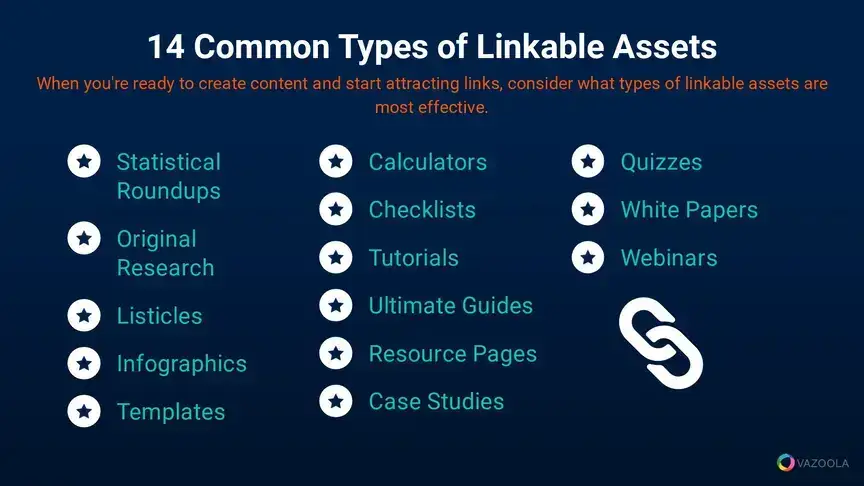
Source: Vazoola
Safe link building focuses on useful content, real local relationships, guest features that people read, and PR based on real activity. Link building gets easier when you stop thinking “how do I get links” and start thinking “what would someone want to reference”. The best methods create reasons for other people to mention you naturally.
Create one genuinely useful guide
One useful guide that answers a common customer question is often the best beginner link asset. Pick one topic your customers ask about all the time and answer it properly. Add examples, common mistakes, a basic process, and realistic ranges if you can. Make it easy to scan, but do not cut it so short that it feels thin, because thin pages rarely earn links.
A roofer might publish “How to spot roof damage after a storm”. An accountant might publish “What to prepare before a self-assessment appointment”. A cleaning company might publish “End of tenancy cleaning checklist for tenants and landlords”. These topics earn links because they solve real problems.
What is a linkable asset?
A linkable asset is a page people reference because it saves time or explains something clearly, like a checklist, template, calculator, or visual. Linkable assets work best when they save someone time or help them explain something quickly. An online calculator, like a simple “project cost estimator” or “time needed” tool, gives people a reason to reference your site, because it is practical and easy to share.
Infographics can do the same when they turn a confusing topic into a clear visual that a blog post or local publication can drop in.
Another strong option is a downloadable checklist or template, for example an “end of tenancy cleaning checklist” or “new starter HR pack”, because it is useful, easy to link to, and tends to get shared within teams.
Build a local resource page people bookmark
Local resource pages earn links when they become genuinely useful lists people share and revisit. Local resource pages can attract links because they are useful beyond your business. A trades business might list trusted local suppliers and services, like timber merchants, tool hire, skip hire, or specialist stores. A wedding business might publish a local planning timeline with registrars, venues, and transport options.
These pages can also build relationships. When you feature other local businesses or organisations, some will share it, and a few will link to it as well.
Guest posts that are worth reading
Guest posting works when you write for real readers on a relevant site and link to a page that matches the topic. Guest posts work when you write for real readers, not just for a link. Choose sites that already reach your audience, then offer a topic that fits what they publish. The link should point to a relevant page on your site, ideally a guide or service page that matches the post.
This method is slow if you do it properly, but it can build trust and referral traffic at the same time. If the post is generic, it often does very little, so aim for quality over volume.
Small-scale PR that suits local businesses
You do not need a press office to earn press links. Local papers, community sites, and regional magazines often need stories and expert quotes. A charity fundraiser, a local award, a collaboration, a seasonal warning, or a quick survey of local trends can all become a usable story.
If you give the journalist a clear angle and something easy to publish, a link is more likely. Even one local article can send traffic and build trust, which supports SEO in a way cheap links never will.
Case studies that show real work
Case studies can earn links, but they also help customers choose you. The key is to show the problem, the approach, and the outcome. Avoid vague claims and focus on what you actually did, what changed, and what you learned.
If your case studies include useful detail, other sites can reference them, and partners involved in the work may link to them too. That makes them a practical piece of content for both SEO and sales.
Top Tip
“Ask for links in a way that feels normal
Outreach can feel awkward, but it does not have to. The simplest approach is to ask at the right moment, when a link makes sense for the reader.
If you have completed work with a partner, ask for a short mention on their site. If you have spoken at an event, ask for a link from the speaker page. If you provided a quote for an article, ask for your name to link to the most relevant page, not always the homepage.”
What is an unlinked brand mention?
An unlinked brand mention is when a site talks about your business but does not link to you, and you can often turn it into a backlink with a polite request.
You can often find them by searching Google with a simple site operator, like
“Your Brand Name” -site:yourwebsite.comThen checking the results for mentions that are missing a link. If the page is relevant and the mention is positive, send a polite note to the editor or site owner and ask if they can add a link for readers who want to learn more. It is a straightforward request, because you are not asking for a new mention, you are just making an existing one more useful.
What is an internal link and why does it matter?
An internal link is a link from one page on your site to another, and it helps search engines and users find your most important pages. Beginners often focus only on backlinks and forget internal links. Internal links are the links within your own site, from one page to another, and they help search engines understand your structure. They also help people find what they need without bouncing.
If you earn a strong backlink to a blog post, that post should link clearly to the related service page and other helpful pages. That helps the value flow through your site and supports pages that lead to enquiries. Without this, you can end up with popular blog posts that do not support your business goals.
A simple check is to open your top blog posts and ask, “If someone lands here, can they easily get to the next useful page?” If the answer is no, add a few sensible internal links.
How long does link building take?
Most businesses see early movement in 4 to 12 weeks, but stronger results often take 3 to 6 months of steady link earning. Link building usually takes longer than people expect.
Some links are quick, like a supplier adding you to a partner page. Others are slow, like a guide that earns links over months as more people find it. Quick links can appear in days. Content-led links often build gradually over several months.
You may also see a delay between earning a link and seeing any impact in search. That is normal. The aim is to build a steady pattern over time, not chase instant results.
If you are consistent, link building becomes easier. You build assets worth referencing, you build relationships, and you gradually become the business people mention when answering questions in your space.
How to tracHow do I track backlinks without overthinking it?
Use Google Search Console for a free view of who links to you, then review once a month to spot patterns and issues. Google Search Console is the best free starting point. It shows which sites link to you and which pages attract links. It is not perfect, but it is enough for monitoring patterns and spotting obvious issues.
Paid tools like Ahrefs and SEMRUSH can add more detail, especially for competitor research and outreach targets. Still, you do not need a paid tool to start earning links, and you do not need to check links daily.
A monthly check is enough for most small businesses. Look for patterns, not totals. Which pages attract links, where those links come from, and if they fit your niche and location.
If you notice suspicious links, do not panic. Many spam links are ignored automatically. Most businesses never need to use the disavow tool, and it is usually better to focus on earning more good links than chasing every weak one.
Common link building mistakes beginners make
The biggest mistakes are forcing links, pointing everything at the homepage, ignoring page quality, and repeating one tactic only. One common mistake is trying to force it. If you push too hard, you often end up with weak opportunities and a messy profile. Start with the simple, legitimate links first, then build steadily.
Another mistake is linking to the wrong pages. If every link points to your homepage, you miss chances to support service pages and useful guides. Aim for links that match the topic, because those tend to be stronger.
A third mistake is ignoring page quality. A link can bring people to your site, but if the page is thin, slow, or unclear, the benefit drops quickly. Good links deserve good pages.
Finally, many beginners do one tactic repeatedly, like only building directory links. A healthier approach mixes a few directory links with partnerships, resource links, guest features, and mentions from real organisations in your space.
FAQs For Link Building For Beginners
1) How many backlinks do I need to rank?
There is no fixed number, but in many local niches a small number of relevant links can be enough to compete. It depends on your competition, your niche, and how strong your site is overall. In some local markets, a small number of relevant links can be enough. In tougher markets, you may need more links plus better content and stronger site quality.
2) Are directory links still worth it?
Directory links are worth it when they come from real trade bodies, accreditation sites, and trusted local listings, not generic directories. Low-quality directories that list every type of business in every town are usually not worth the effort.
3) Should I buy backlinks if competitors seem to do it?
Buying links is risky, and earned links from useful content and real relationships are safer and tend to last longer. Sudden drops can happen and cleaning up poor links is time-consuming. A safer route is to earn links through useful content and genuine relationships, because those links tend to last.
4) What is the difference between a brand mention and a backlink?
A brand mention names your business without a link, while a backlink includes a clickable link and usually has more direct SEO value. Mentions can still help awareness, but backlinks usually have more direct SEO value.
5) Which page should I try to earn links to first?
Start with a page that genuinely helps people, like a strong guide, a useful local resource, or a clear service page that answers a common question. Thin pages rarely earn links and usually convert poorly too.
The Bottom Line
Link building is not about collecting links for the sake of it. It is about earning trust signals that match your real reputation and your real market. When links come from relevant places and fit naturally, they can support rankings, discovery, and referral traffic.
For beginners, the simplest approach is often the best. Start with the links that come from being a legitimate business, then create one or two genuinely useful pages people want to reference. Build relationships with suppliers, partners, local groups, and niche sites, and let those connections lead to steady mentions over time.
If you want a tailored link plan for your business, based on your niche and your local competition, get in touch. I can map out link opportunities you can realistically win, and help you prioritise what to do first.