Search Has Changed, and Your Reporting Needs to Catch Up
Search used to be short and sharp. Two or three words, maybe four. Enough to hint at intent, then you would refine it from there.
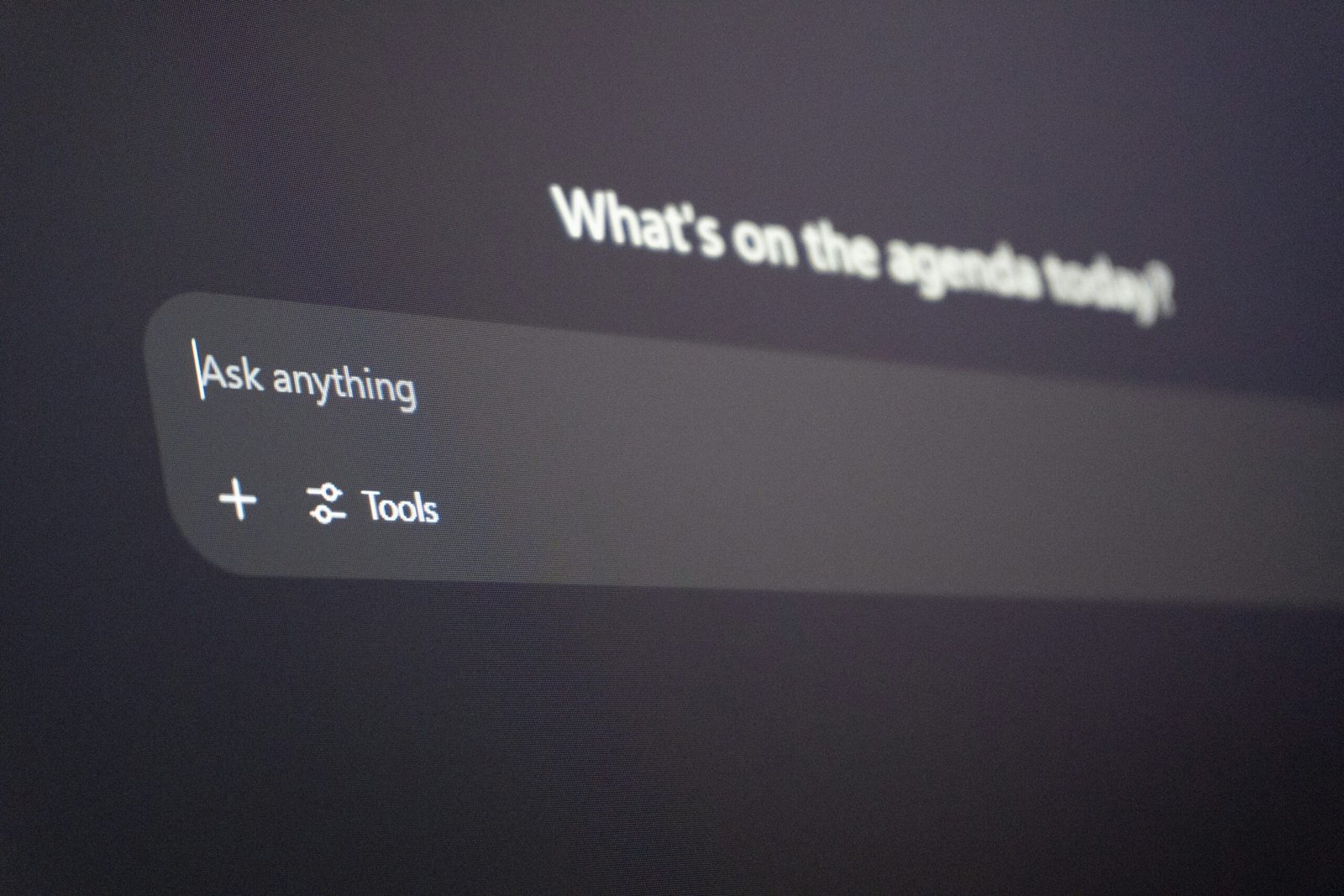
Now, more people start with a full thought. They write the same way they speak. They add context, constraints, and follow-up questions. When someone uses an LLM, they rarely type a “keyword phrase.” They write a sentence, sometimes two. They might paste a paragraph and ask for a summary, a shortlist, and then a comparison.
This shift matters because it changes the shape of demand, and it changes the shape of evidence. Query data gets messier. Attribution gets fuzzier. The results page does more of the job, so clicks do not behave like they used to.
It also means two searches are rarely the same anymore. Even when two people want the same thing, they describe it differently. One asks for “best,” another asks for “most reliable,” another asks for “good for a team of 20,” and another asks for “cost breakdown.” Same need, different language.
So if you are planning an AI SEO strategy for 2026, you need a plan that fits how people search now, not how they searched five years ago.
A quick note before we start.
There is a lot at play. Industry, competition, seasonality, devices, and query intent all affect results. What works for one site can land flat on yours or move the wrong metric. Still, as a starting point, there are clear areas to focus on because they sit close to user behaviour and how AI-led results are assembled.
Summary
Search is shifting from short keyword phrases to longer, sentence-style queries, partly because people are asking questions more naturally, and partly because LLMs shape how they phrase things. That makes Search Console look messier, with more one-off queries and wider variation. It does not mean your SEO is slipping. It means the language around the same needs is getting more varied, so you need to focus on topics and intent, not just tidy keyword groups.
AI Overviews can also change what “good” looks like in reporting. You might see impressions rise as your pages show up more often, while clicks fall because some people get enough detail on the results page. That often pulls CTR down even if rankings are stable and the page is still strong. CTR still matters, but it is no longer a clean signal on its own.
For 2026, track visibility, selection, and outcomes together. Visibility is impressions and presence across query types. Selection is clicks and CTR by page and intent. Outcomes are what happens after the click, like enquiries, calls, bookings, and sign-ups. Then put your effort into pages that answer quickly, stay easy to read, and make next steps obvious, while building brand demand so people look for you, not just any result.
How searches have changed, and why keyword lists feel less useful
Short phrases are no longer the default
Traditional search rewarded shorthand. People typed a topic or keyword, got a list, and then did the thinking.
Conversational search has been pushing things in the other direction for years. Voice search is one example, and Search Engine Land has pointed out that spoken queries tend to be longer and more detailed than typed queries. LLM-style searching takes that further because the interface encourages people to describe the situation, not just name the topic.
That changes what you see in your data. You will still see short head terms, but you will see many more long, specific queries that show up once, twice, then never again.
Two searches are rarely identical, even when the intent is
This is the bit that catches teams out.
You can have one service page and see hundreds of “unique” queries, each with a slightly different angle. A person might ask for speed, cost, reliability, setup time, integrations, support, compliance, or comparison. The intent is connected, but the wording changes.
If you treat every line in Search Console as a target keyword, you end up building thin pages and repeating yourself. If you treat those queries as signals, you can group them into themes and build stronger pages that answer the real questions properly.
An AI SEO strategy for 2026 needs that mindset. Less obsession over individual phrases, more focus on the recurring decision points people work through.
What AI Overviews change on the results page
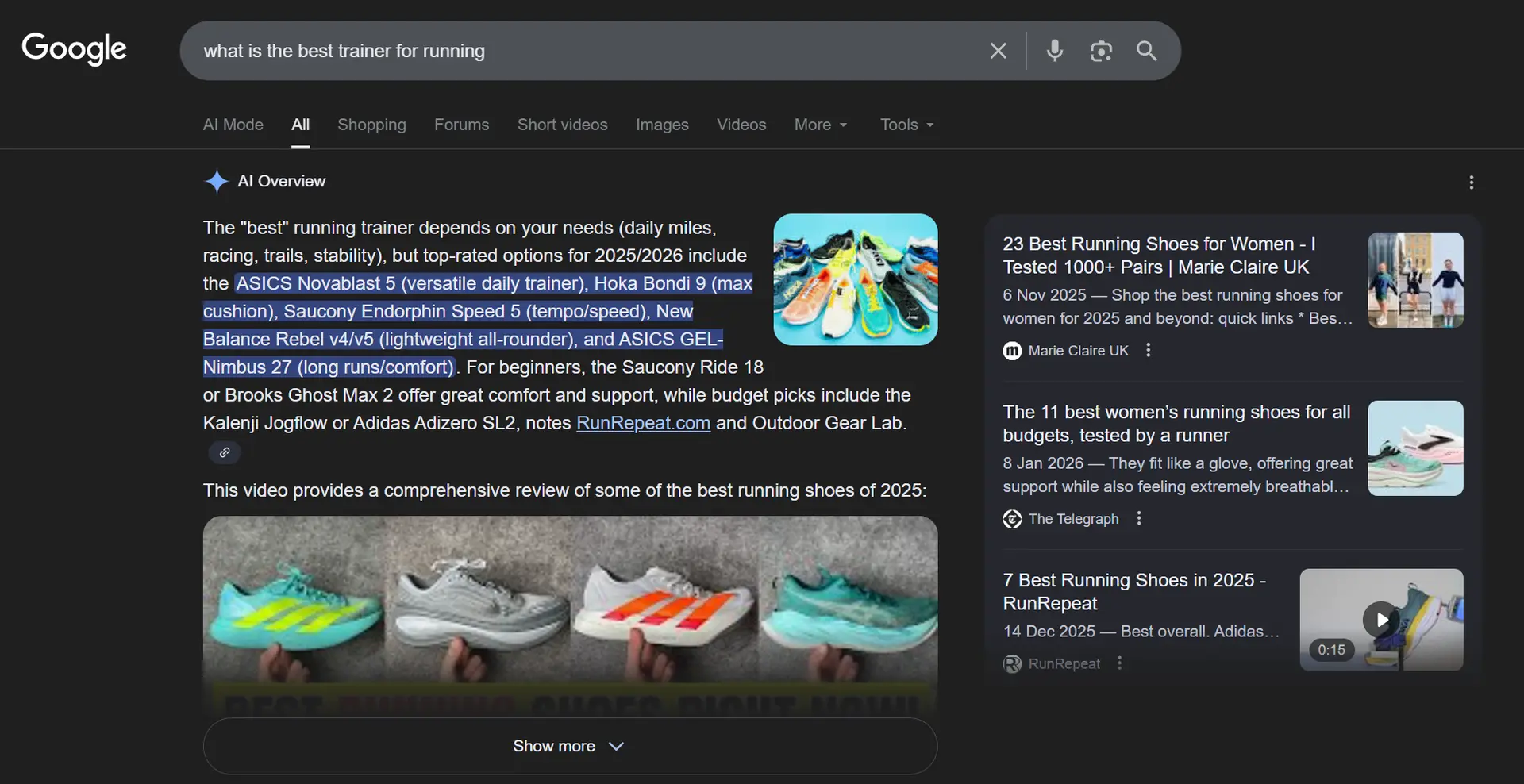
Google may still rank pages, but the results page now does more summarising, more shortlisting, and more hand-holding than it used to. AI Overviews are part of that change.
Semrush analysed AI Overviews across a large keyword set and reported that early in 2025 they appeared mostly for long-tail informational queries, then expanded into more intent types later in the year. Search Engine Land also covered this, describing the surge and pullback through 2025 and the move into commercial and navigational intent.
The practical impact is that “being visible” and “getting the click” are separating.
You can show up, even show up more often, while getting fewer clicks.
How this affects your GSC data
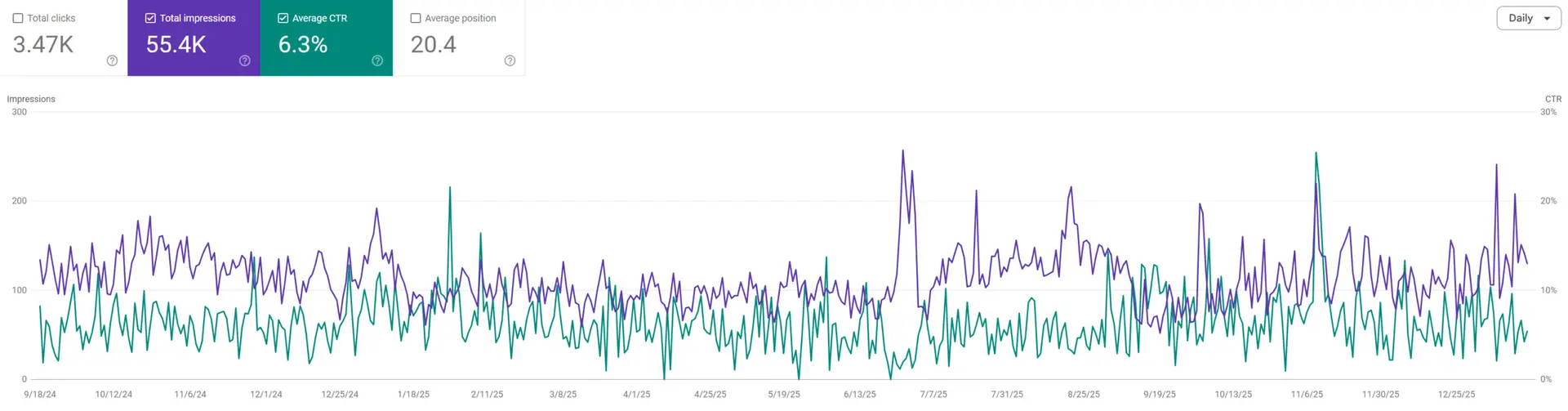
If you have been watching Search Console closely, you have probably noticed a pattern that feels backwards.
Impressions look fine, sometimes higher than expected. Clicks lag. CTR trends down.
That does not automatically mean your pages have got worse. It often means the results page has changed.
Search Engine Land reported Seer Interactive findings showing large CTR drops on queries featuring AI Overviews, with organic CTR on informational queries down sharply in their dataset. The numbers will differ by site, by market, and by query set, but the direction is the key point. AI features can soak up attention, which makes the click harder to win.
Why impressions can rise while clicks fall
An impression is recorded when your result is shown. AI Overviews can increase how often results get shown while reducing the need to click.
A person might read the overview, scan the cited sources, take one action, and move on. They might not click any result at all. They might click later, after searching your brand name.
So impressions can stay strong or rise, but clicks do not rise in line with them. CTR drops as a result. This is why CTR is becoming a weaker “content quality” signal. It is now partly a “SERP layout” signal.
What you should do with that information
First, stop reading a falling CTR as a universal failure. You need to segment it.
Look at CTR by query theme and by page type. Informational queries tend to be hit first. High-intent service queries can behave differently. You might find one area is collapsing while another is steady.
Second, change the question you ask. Instead of “How do we get CTR back up?” ask, “What would make someone click after they have seen an overview?”
That is where strategy starts to feel practical again.
TOP TIP
If your main KPI is still CTR, you will end up arguing with the results page.
A better reporting view for 2026 links three things together.
Visibility, which includes impressions and average position.
Selection behaviour, which includes branded search growth and direct visits.
Outcomes, which include conversions, lead quality, sales, bookings, and signups.
CTR still has value, but it cannot be the only story. If AI Overviews are increasing impressions while reducing clicks, CTR will naturally trend down in affected areas.
When you shift reporting this way, you can have calmer conversations internally. You can also spot where the business impact is real, rather than assuming every dip is a content problem.
Brand demand is becoming the tie-breaker
There is a simple model that still helps.
- Non-branded search is discovery.
- Branded search is selection.
Non-branded work introduces you to people who do not know you. Branded work happens when someone has a short list, wants reassurance, or wants to go straight to the source.
AI Overviews push more of the “discovery” experience onto the results page. That can reduce clicks, but it can still increase awareness. A person might see your brand in a cited source and then search for you later.
This is why branded demand matters more in 2026. It is a strong signal that people remember you, repeat you, and choose you.
It is also a practical goal. If you want visibility in AI answers, you want your brand to be a thing people look for by name, not just a site that matches a topic.
Citations and mentions are the new middle layer
A lot of AI visibility comes down to what the system chooses to reference.
Search Engine Land published an analysis on what gets cited by AI tools, based on a large citation dataset, and the takeaway is clear. Citation patterns vary by engine, and the sources that get referenced are not always the same sources that rank in classic organic results.
This creates a middle layer that many teams are not used to measuring.
- You might rank well but not get cited.
- You might get cited but not get clicked.
- You might be mentioned, and branded searches rise later.
So, an AI SEO strategy for 2026 needs to support three layers of visibility at once.
- Classic organic presence.
- AI citations and references.
- Brand selection signals, such as branded search growth.
You do not need to become obsessed with every mention. You do need to build a web footprint that makes your brand easy to confirm.
The current split in advice: what to do to appear in AI search
Right now, there is a strong split in what people recommend.
Some advice is helpful. Some advice is confidently wrong, or based on a single experiment.
Two ideas keep showing up.
The “chunking” camp
One side pushes “chunking” hard.
The idea is that if AI systems pull passages, you should break content into small, self-contained sections so specific bits can be lifted into AI answers.
In its sensible form, that just means good structure. Clear headings, focused paragraphs, and single ideas per section.
In its extreme form, it becomes pages made of fragments, with headings every few lines and content written like a script for extraction.
Google’s warning about writing for LLM behaviour
Google has pushed back on this trend.
Google’s Danny Sullivan discouraged the creation of “bite-sized chunks” purely because people think AI systems want it and described the point as “don’t do it for LLMs.”
This is an important distinction.
Structure is good. Writing purely for extraction patterns is not a safe long-term plan. If you make the page worse to read, you might win a short-term test and lose the trust of real visitors.
A more grounded approach: get to the answer sooner, then earn the deeper read
The other side of the debate is not really a “tactic”. It is a response to user behaviour.
People want an answer quickly. So give them one, then let them go deeper. This often looks like a short “quick summary” near the top of a page. Some call it TLDR. You do not have to label it that way. The label matters less than the job it does.
Done well, this helps two groups at once.
- People who are scanning, comparing, or checking.
- Systems that summarise pages and cite sources, because your core points are easy to find.
It also reduces the risk that your main message is misunderstood. If your key point is buried in the middle, there is more room for someone, or something, to pull the wrong conclusion.
My take: it is still SEO, just with different pressure points
AI SEO, GEO SEO, answer engine SEO, call it what you like. The centre of it is still good SEO.
Write for the user, not for an LLM, and not for Google.
That is not a fluffy statement. It is practical. The moment you start writing for extraction patterns, you risk making content that feels odd, repetitive, and untrustworthy. You also risk building a strategy that breaks when the presentation layer changes.
Still, there are sensible adjustments that can help your content show up more often in AI-led results, while also making the page better for humans.
The key is to pick changes that improve clarity for people first, and happen to help machines second.
Start with an overview near the top, when it fits the topic
People have less patience for slow intros than they used to. AI summaries have trained users to expect the main point quickly.
An overview section near the top can do a lot of work without turning the page into a list.
It can confirm the page is relevant in seconds. It can set expectations, so the rest of the page feels easier to follow. It can also reduce bounce from visitors who only need the headline answer.
Keep it short. Two to five sentences is often enough. Make it specific. If your overview reads like a slogan, it will not help.
Keep paragraphs single-topic, without turning the page into fragments
This is where the “chunking” debate often gets stuck.
I am not a fan of turning a page into dozens of tiny sections. It can make reading worse, not better. It can also make your writing feel nervous, like it is scared to commit to a thought.
But it is sensible to keep each paragraph focused on one topic, and avoid mixing signals. When a paragraph tries to do three jobs, it becomes harder to scan, harder to quote, and easier to misread.
So the goal is not lots of chunks. The goal is clean structure and clean meaning. That fits Google’s warning as well. You are not creating bite-sized content for LLMs. You are writing cleanly for the reader.
Use schema and FAQs where they fit naturally
Schema is not a magic button, but it can support clarity when it reflects what is visible on the page and helps define context.
FAQs can help too, when they answer real questions and remove friction. They work best when they cover objections, comparisons, and practical next steps. If you add FAQs that nobody asks, it becomes filler. It does not help users, and it rarely helps visibility.
TOP TIP
If a page is getting impressions but CTR is falling, it is often a sign that the results page is doing more of the early explanation work.
A quick answer block helps you compete in that environment because it makes the page immediately useful when someone does click. It also gives other sources something clear to reference.
You do not need to do this across the whole site. Start with pages that already sit near the top of funnels.
Category pages for services.
Explainer pages that attract research queries.
Comparison pages.
“How it works” pages.
Keep the block short, then let the rest of the page do the depth and the proof.
A practical AI SEO strategy for 2026 that fits how people search now
This is a simple framework you can apply across most industries.
It is not built around hacks. It is built around how people decide, and how the results page is changing.
Step 1: Track how your query mix is changing
Start by comparing Search Console data in three views.
First, your short, broad themes. These are the classic head terms and common category terms.
Second, your long, sentence-like queries. These include “how do I”, “what is the difference”, “what should I choose”, “how much does it cost”, and similar.
Third, your brand-led queries, which include your brand name alone and brand name plus intent terms, such as pricing, reviews, contact, login, alternatives, and comparisons.
Then look at CTR trends by theme. If impressions are steady but clicks are falling in one theme, it may point to stronger AI feature presence on that topic. Search Engine Land’s coverage of CTR drops alongside AI Overviews supports the idea that CTR changes can be driven by the results page, not only by page quality.
This step is not about blaming AI. It is about seeing where the click is becoming harder to win, so you know where to change your approach.
Step 2: Build pages that earn the click, not just the impression
If the results page is doing more of the explaining, your click value has to be different. A page earns a click when it offers something the summary cannot.
That is rarely “more words”. It is usually one of these.
- Proof that makes a claim believable.
- Depth that covers the trade-offs, not just the happy path.
- Utility, like templates, checklists, calculators, or examples.
- Confidence, like pricing clarity, timelines, process steps, and boundaries.
This is also where brand matters. When two results look similar, people choose the one they recognise, or the one that feels more trustworthy.
So, do not only ask “how do we rank for this”. Also ask “what would make someone choose us, once they have seen the overview”.
Step 3: Make pages easier to summarise, without writing for machines
This is where structure helps, without chasing tactics Google has warned against.
Use headings that match real questions. Put a short overview near the top for pages that benefit from it. Keep paragraphs single-topic. Put examples close to claims.
Search Engine Land’s citation analysis work highlights that different AI engines cite different types of sources and content, and it reinforces the value of clear, specific pages that are easy to reference.
You are not writing for machines here. You are removing ambiguity for the reader. That tends to travel well across systems.
Step 4: Build brand demand so people search for you directly
When someone searches your brand name, it often means they are closer to action, or they are checking you before action.
If AI results reduce clicks, branded demand becomes one of the cleaner signs that people are still choosing you, not just reading about the topic.
Brand demand grows when you show up consistently in places your market trusts. It also grows when your site makes it easy to confirm who you are and what you do, without fluff.
Step 5: Create a citation footprint outside your own website
Citations and references are not only about your pages. They are also about how the wider web talks about you. Search Engine Land’s analysis of AI citations shows that citation sources vary by engine, which makes it risky to rely on one channel.
For most businesses, the goal is not “be everywhere”. It is “be consistently present where it counts (where your customers are”. That tends to mean credible industry coverage, partnerships, expert commentary across social platforms like Reddit and Quora ( a quick AMA thread is a great way to project your business’s attributes, strengths and offerings (especially in the case of any negative discussions)), and third-party pages that confirm your key facts.
Keep the facts consistent. Keep the positioning consistent. Make it easy to confirm what is true.
FAQs about AI SEO strategy for 2026
These FAQs cover the practical bits that usually trip teams up, from query changes and reporting, to what to do on-page without chasing fads.
Why are impressions rising while clicks fall in Search Console?
Because you can be shown more often without being chosen more often. AI features can satisfy part of the query on the results page, which reduces the need to click. CTR drops as a result.
Search Engine Land’s reporting on Seer Interactive data describes this pattern clearly for informational queries that show AI Overviews.
Does a lower CTR always mean my content is weaker?
Not anymore. CTR is partly a reflection of how the results page is laid out.
When AI Overviews appear, there is more content above organic results, and more reasons to pause before clicking. Semrush’s research and Search Engine Land’s coverage both point to AI Overviews changing where attention goes, which can affect click behaviour even when rankings hold.
Should I use “chunking” to get into AI answers?
Clear structure helps. Building pages out of bite-sized fragments because you think LLMs like it is risky.
Google has discouraged creating bite-sized chunks for LLM behaviour, and Search Engine Land reported Danny Sullivan’s comments directly. A safer approach is to keep paragraphs single-topic, use clear headings, and write like a human.
Is a TLDR or quick summary at the top worth doing?
Often, yes, on pages where people want a quick answer.
It helps scanners decide they are in the right place. It also reduces the chance that your main point is missed or misread. Keep it short, then go deeper below.
How do I improve my chance of being cited in AI answers?
Focus on being a clear, specific source, then build a wider footprint. Search Engine Land’s analysis of AI citations suggests citation behaviour varies across engines and highlights how different systems rely on different sources.
So you want strong pages that are easy to reference, plus credible third-party mentions that confirm your brand and your claims.
The Bottom Line
An AI SEO strategy for 2026 is not about chasing a new checklist. It is about adapting to two changes at once. Searches are becoming more conversational and more varied, and AI Overviews are changing what visibility looks like on the results page.
That affects your Search Console data. Impressions can stay strong, while clicks and CTR fall, because the results page answers more questions before the click. Search Engine Land’s reporting on CTR shifts alongside AI Overviews is a useful reference point when you need to explain this internally.
The most sensible path is still the boring one. Write for the user. Make your pages easier to understand quickly, without turning them into fragments. Use a short overview where it helps. Keep paragraphs single-topic. Add schema and FAQs when they fit naturally. Google has warned against creating bite-sized content purely for LLM patterns, so favour clarity for people, then let the systems catch up.
If you want help turning this into a tailored plan for your business, get in touch and I will map out a practical roadmap based on your market, your current GSC patterns, and the queries where AI Overviews are changing click behaviour.