Search Engine Optimisation can feel frustrating when you run a small business.
You publish a new service page. Change a few headings. Add some keywords somebody recommended in a Facebook group. Then you wait.
Sometimes enquiries pick up.
Sometimes absolutely nothing changes.
That’s usually where SEO becomes difficult for small businesses. Most problems are not dramatic enough to stand out. They sit quietly in the background. A half-finished Google Business Profile. Service pages that barely explain anything. Three pages all targeting the same search term without meaning to.
Individually, these issues often seem minor.
Together, they slowly chip away at visibility, trust, and enquiries.
The good news is most SEO problems are fixable once you know where to look.
Summary
- Most local SEO problems come from small gaps that build up over time
- Weak Google Business Profiles still hold back a huge number of businesses
- Thin service pages often struggle to rank or convert visitors into enquiries
- Many websites accidentally create competing pages targeting the same search terms
- Poor mobile usability still loses customers surprisingly quickly
- Better SEO usually comes from consistency and clarity rather than clever tactics
- Strong local SEO depends on trust signals, useful content, and a good user experience
- Tracking what works matters more than constantly changing strategy
- Small improvements made consistently tend to outperform rushed SEO “fixes”
Why small business SEO often becomes messy
Most small business websites are built quickly.
A developer hands over the site. Somebody installs a template. A few pages get written. Then the business gets busy and the website stays mostly untouched for years.
That’s completely normal.
The problem is that SEO relies heavily on consistency and detail. Google is trying to work out:
- what you do
- where you do it
- who you help
- and whether people trust you
If those signals are unclear, rankings usually become inconsistent.
A lot of the advice online doesn’t help either.
People hear things like “you need backlinks” or “just add more keywords” without much explanation behind it. That often leads to awkward keyword stuffing, low-quality link building, or pages written for search engines instead of actual customers.
A better way to think about SEO is this:
You are making it easier for the right people to find your business, trust what they see, and contact you.
That’s really it.
Once you strip away the jargon, most SEO improvements become far more practical.
Local SEO mistakes that quietly hurt visibility
A lot of local SEO problems are easy to overlook because nothing looks obviously broken. Your business still appears online. The website still works. But weak location signals, inconsistent business details, or neglected Google Business Profiles quietly make it harder for Google to trust and recommend your business in local searches.
Treating local SEO like an optional extra
If you serve a specific town, city, or region, local SEO matters far more than many businesses realise.
When somebody searches for:
- electrician in Sheffield
- accountant near me
- emergency plumber in York
Google needs clear local signals before it feels confident showing your business.
This is where Google Business Profiles become important.
A lot of businesses claim their profile, add opening hours, then forget about it completely.
That leaves a lot of opportunity sitting there unused.
A properly maintained profile helps with:
- map visibility
- call clicks
- direction requests
- local trust
- review visibility
And honestly, most competitors still neglect it.
A few updates that normally make a noticeable difference:
- Add accurate services and categories
- Upload recent photos regularly
- Answer common questions in the Q&A section
- Keep opening hours updated
- Add occasional posts or updates
- Reply to reviews properly instead of ignoring them
Reviews matter here too. BrightLocal’s research shows not only because Google sees them as trust signals, but also because customers do too. Most people check reviews instinctively now.
Top Tip
“Treat reviews as part of your SEO rather than a separate admin task.”
Ask for them naturally after a successful job or good customer experience. Keep the process simple with a direct review link. Most businesses overcomplicate this part.
What to fix this week
Check your NAP details across the web.
That means your:
- business name
- address
- phone number
They should match consistently across your:
- website
- Google Business Profile
- Facebook page
- local directories
Small inconsistencies create messy trust signals over time.
Then add photos that show what buying from you actually looks like.
For trades businesses, before-and-after images work well.
For restaurants or cafés, show the space, menu, staff, or atmosphere.
Real photos nearly always outperform polished stock imagery.
Duplicate Google Business Profiles causing confusion
This issue causes more problems than people realise.
Old addresses. Duplicate listings. Slightly different business names. Wrong phone numbers.
All of these split trust signals and confuse Google about which profile should rank.
It also frustrates customers.
Nobody wants to drive to the wrong location or call an old number.
Do a quick search for your business name and postcode.
Check Google Maps carefully for:
- duplicate listings
- old locations
- slightly different naming versions
- outdated categories
If duplicates exist, request removal or merge them where possible.
It’s not the most exciting SEO task in the world, but cleaning this up often helps more than businesses expect.
Weak service area signals on key pages
A lot of local businesses try to rank everywhere by stuffing long lists of towns into footers.
Sometimes dozens of them.
Usually, it looks forced.
A better approach is to explain your service areas naturally.
If you cover York, Tadcaster, and Easingwold, say that clearly on your service pages. Mention travel times, call-out availability, or how you normally schedule nearby jobs.
That gives both users and Google something genuinely useful.
If you serve a wider region, build proper location pages instead of duplicating the same paragraph with different town names swapped in.
Good local pages often include:
- local case studies
- photos from nearby jobs
- common property types
- area-specific problems
- practical information customers actually care about
Thin location pages rarely help anymore.
Keyword mistakes that create traffic but not enquiries
A lot of websites attract traffic that never turns into calls, bookings, or enquiries. Usually, the issue comes back to keyword targeting. Businesses often chase broad search terms with high volume while missing the more specific searches that reveal real buying intent. Getting traffic is one thing. Getting the right traffic is what actually matters.
Chasing huge keywords too early
A lot of small businesses aim for broad keywords like:
- plumber
- dentist
- gym
- accountant
The problem is those searches are extremely broad.
The person searching may still be researching. They may live nowhere near you. They may not even know what they want yet.
Smaller businesses often get better results targeting more specific searches.
Things like:
- emergency plumber in York
- Invisalign consultation Bristol
- reformer Pilates classes Chiswick
Those searches reveal clearer intent.
The person already knows what they need.
That usually means better conversion rates too.
One useful question to ask is:
“What would somebody expect to see after searching this?”
If they probably want prices, include pricing guidance.
If they likely want proof, add reviews and photos.
If every top-ranking result is a service page, writing a blog post instead probably won’t help much.
Search intent matters constantly in SEO. Most businesses overlook it completely.
Multiple pages competing against each other
This happens constantly on growing websites.
You publish:
- a blog post
- then a service page
- then an FAQ
- then another article
All targeting almost the same phrase.
Google then has to decide which page is most relevant.
Sometimes it picks the wrong one.
Sometimes none of them perform particularly well.
You can usually spot this inside Google Search Console when several pages receive impressions for the same queries.
A better approach is to assign one primary keyword theme to each important page.
Then let supporting pages target related questions.
Your main service page should normally be the strongest commercial page. That means:
- pricing guidance
- process explanation
- proof
- reviews
- clear calls to action
Supporting blogs and FAQs should reinforce that page rather than compete with it.
Keyword stuffing still ruins readability
Some businesses still force exact phrases into every paragraph because they think that’s what Google wants.
It rarely reads well.
And honestly, users notice immediately.
You do not need to repeat “Manchester dentist” fifteen times.
Use the phrase naturally where it fits:
- title
- heading
- introduction
- occasional references
Then write normally.
Related language gives Google context anyway.
Things like:
- dental clinic
- check-ups
- teeth whitening
- nervous patients
All help reinforce relevance naturally.
A good test is reading the page out loud.
If it sounds awkward, robotic, or repetitive, customers probably feel the same.
Mobile usability problems businesses still ignore
Most small business websites technically work on mobile, but that does not always mean they feel easy to use. Slow-loading pages, awkward menus, tiny buttons, and cluttered layouts quietly frustrate visitors and cost enquiries every day. Because so many searches now happen on phones first, mobile usability has become one of those areas businesses cannot really afford to ignore anymore.
Mobile experience is often treated as secondary
Most customers visit your website on a phone first.
Usually while distracted.
They may be:
- comparing businesses
- checking reviews
- trying to call quickly
- looking for directions
If your website becomes frustrating on mobile, people leave fast.
Tiny buttons. Slow loading pages. Cluttered layouts. Menus that barely work.
That’s normally where conversions disappear.
Google also primarily uses mobile versions of websites for indexing now, so poor mobile usability can affect rankings directly.
Keep things simple.
Make key information easy to find:
- phone numbers
- opening hours
- pricing guidance
- enquiry buttons
- service areas
And test your site properly.
Not by dragging a desktop browser smaller.
Use an actual phone.
Try booking, calling, or filling in forms yourself. That’s usually where problems become obvious.
Slow pages quietly damage trust
Page speed is partly technical, but it’s also emotional.
People want websites to feel smooth and stable.
If a page jumps around while loading or takes ages to display basic information, trust drops quickly.
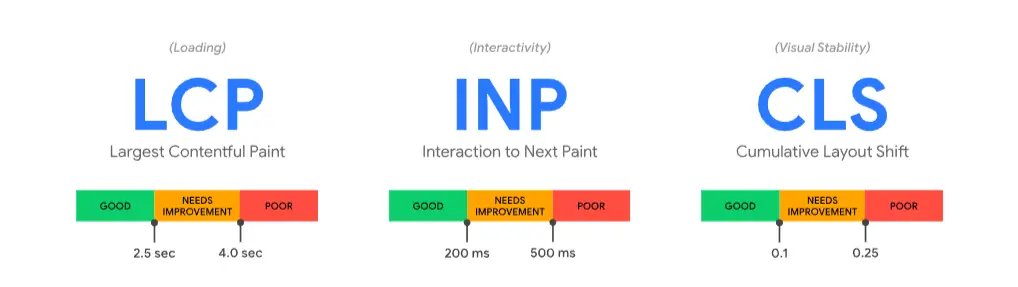
You do not need perfect PageSpeed scores.
Honestly, many businesses obsess over tiny technical gains while ignoring bigger usability problems.
Simple improvements often matter more:
- compress oversized images
- remove unnecessary sliders
- limit bloated plugins
- simplify fonts and scripts
If you only do one thing, run important pages through PageSpeed Insights and fix the biggest issues first.
That usually gets most of the benefit without turning it into a massive project.
On-page SEO mistakes that affect click-throughs
Even strong pages can struggle if the basics of on-page SEO are neglected. Things like weak meta titles, vague descriptions, confusing headings, or messy page structure make it harder for people to understand what the page offers before they even click. Small improvements here often increase visibility and click-through rates without needing a complete rewrite.
Weak meta titles and descriptions
Your title and description influence how people see your page in search results.
They won’t magically fix rankings on their own.
But they absolutely affect click-through rate.
And if lots of people ignore your result, that becomes a problem.
Good meta titles are usually:
- clear
- specific
- relevant
- readable
Put the main topic near the start.
Add location terms naturally where relevant.
Meta descriptions should explain why somebody should click.
Think of them like a quick preview rather than a slogan.
You can also use my SERP Preview Tool to check how your meta titles and descriptions are likely to appear in Google before publishing.
Messy headings and confusing page structure
Pages should be easy to scan.
People skim constantly online.
Use:
- one clear H1
- logical H2s
- sensible section structure
If you have pricing, label the pricing section clearly.
If you have FAQs, make them easy to find.
Simple structure improves readability for users and makes pages easier for Google to understand.
Honestly, it usually improves the writing itself too.
Link building mistakes that limit authority
Backlinks still matter because they help search engines judge trust and authority. The problem is many small businesses either ignore link building completely or go after low-quality links that add very little value. Good local SEO links are usually built through genuine relationships, useful content, and local relevance rather than shortcuts or bulk link packages.
Ignoring backlinks completely
Backlinks still matter.
Not because Google wants businesses chasing random links across the internet, but because links still act like references.
A mention from:
- a local newspaper
- trade association
- trusted supplier
- community organisation
Can send strong trust signals.
Small businesses often assume link building is only for huge companies.
In reality, local SEO links usually come from practical relationships.
Things that tend to work naturally:
- sponsoring local events
- community involvement
- partnerships with nearby businesses
- useful local resources
- local PR stories
What usually doesn’t work long-term is buying cheap spammy links from random websites.
If the site looks low quality, Google probably thinks the same.
Internal linking left completely to chance
Internal links help users move through your website properly.
They also help Google understand how pages connect.
Most small business websites barely use them well.
A simple improvement is adding natural next-step links throughout key pages.
For example:
A service page might link to:
- pricing
- FAQs
- case studies
- booking pages
A blog post should normally link back to the relevant service page.
Descriptive anchor text helps too.
“See our boiler repair pricing in Leeds” gives clearer context than generic phrases like “click here”.
Content upkeep problems that slowly hurt rankings
A lot of businesses publish content once, then barely look at it again. The problem is websites age quietly. Services change, prices move, opening hours shift, and advice becomes outdated without anybody noticing straight away. Over time, those small gaps affect trust, usability, and rankings more than people expect.
Publishing content once and forgetting about it
Old content is not automatically bad.
Outdated content is.
If your:
- prices changed
- opening hours changed
- services evolved
- process improved
Your website should reflect that.
Customers notice outdated information quickly.
Google notices inactive sites too.
You do not need a massive publishing schedule.
A simple quarterly review is usually enough for many small businesses.
Start with your most important pages.
Update:
- weak photos
- outdated details
- missing FAQs
- broken forms
- unclear calls to action
Even small updates help keep content useful and trustworthy.
Top Tip
“Adding a small “last reviewed” note on important advice pages can quietly build trust. Just make sure you actually review the page afterwards.“
Tracking mistakes that make SEO feel random
Without proper tracking, SEO quickly starts feeling unpredictable. One month traffic goes up, the next month enquiries disappear, and it becomes hard to tell what actually helped or hurt performance. That uncertainty often leads businesses into constant tweaking, changing direction too often, or chasing advice that sounds convincing but solves nothing.
Not tracking what actually works
Without tracking, SEO quickly turns into guesswork.
That’s normally when businesses start making random changes every week because nothing feels predictable.
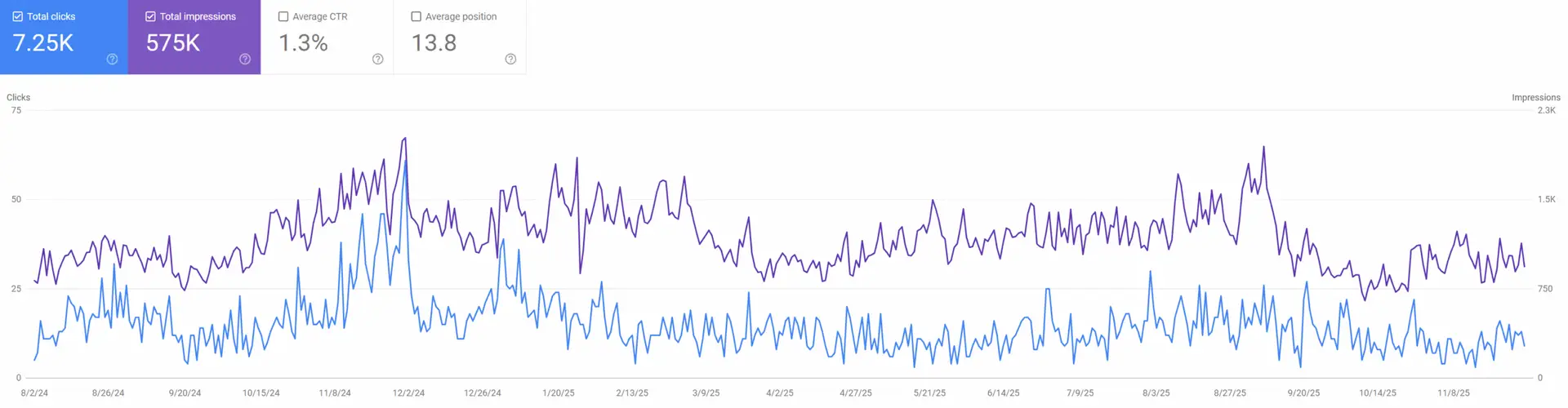
Google Search Console is still one of the best free tools available.
It shows:
- impressions
- clicks
- queries
- pages appearing in search
Google Analytics helps explain what visitors do afterwards.
Do they:
- call
- leave immediately
- submit forms
- browse multiple pages
That behaviour matters.
Sometimes rankings are fine.
The page simply does a poor job converting visitors.
A simple monthly review helps massively:
- check top service page performance
- improve pages with high impressions but weak click-through rates
- review pages getting traffic but no enquiries
- monitor mobile behaviour
Most businesses skip this completely.
Expecting SEO to work instantly
This part catches people out all the time.
SEO is usually slower than businesses want.
You may see small movements in a few weeks.
Meaningful growth often takes months.
Especially in competitive local industries.
That delay frustrates people, so they:
- stop too early
- keep changing direction
- chase shortcuts
- obsess over tiny ranking drops
The businesses that normally win are the ones improving steadily over time.
Clear service pages.
Strong local trust signals.
Useful content.
Consistent updates.
Better user experience.
None of it feels especially glamorous.
But small improvements compound surprisingly well.
Quick SEO wins you can sort this week
- Check your top service pages on mobile and fix anything frustrating
- Improve one weak meta title and description
- Add internal links from blog posts to key service pages
- Upload fresh photos to your Google Business Profile
- Reply properly to recent reviews
- Remove duplicate or outdated business listings
- Add clearer calls to action on important pages
Most SEO improvement comes from fixing overlooked basics consistently.
Not from chasing every new tactic online.
Frequently Asked Questions About Common SEO Mistakes
What are the biggest SEO mistakes small businesses make?
Usually weak local SEO signals, thin service pages, poor mobile usability, and inconsistent business information.
A lot of businesses also struggle because they never track performance properly, so they cannot see what’s actually helping.
How do I know if I chose the wrong keywords?
A common sign is traffic that never converts into enquiries.
Another is pages getting impressions but very few clicks.
Broad keywords often attract researchers rather than buyers.
More specific searches normally reveal clearer intent.
How often should website content be updated?
For many small businesses, reviewing key pages every few months is enough.
Focus on service pages first.
Update outdated information, improve clarity, and add missing questions customers regularly ask.
Do backlinks still matter for local SEO?
Yes, but relevance matters more than quantity.
A few strong local links from trusted businesses, organisations, or publications are usually more valuable than dozens of low-quality links.
Why does my website get traffic but not enquiries?
Usually because of friction or mismatch.
The page may rank for informational searches while your visitors are not ready to buy.
Or the page simply makes the next step unclear.
Improving:
- trust signals
- calls to action
- proof
- mobile usability
Often helps more than chasing additional traffic.
How All This Ties Together
Most SEO problems are not dramatic.
They are usually small gaps that slowly build up over time.
Weak local signals. Competing pages. Poor mobile usability. Thin service content. Outdated information.
None of it feels catastrophic individually.
But together, they make it harder for customers to trust your business and harder for Google to understand what you actually offer.
Start with the basics first.
Improve the pages that directly affect enquiries.
Strengthen your Google Business Profile.
Make your website easier to use on mobile.
Track what genuinely moves the needle.
Then keep improving steadily.
That approach is rarely exciting.
But it usually works far better than constantly chasing SEO shortcuts.
If you are ready to improve visibility and attract more local customers, get in touch to build a tailored SEO strategy for your business.