
Turning Local Search Into Steady Membership Growth
When somebody decides it’s time to join a gym, the process nearly always starts online.
They search for things like “best gym near me”, “personal training in Bristol”, or “spin classes open now”. Within a few seconds, they’ll compare a handful of options, click the one that looks trustworthy and convenient, then decide if it feels worth visiting.
If your gym isn’t visible at that moment, the quality of your equipment or coaching almost doesn’t matter. People can’t choose a business they never see.
That’s where SEO for gyms matters.
Good SEO helps your gym appear when local intent is highest, then turns that visibility into enquiries, tours, free trials, and memberships. Not meaningless traffic. Actual members.
Summary
- SEO for gyms is really about visibility at the exact moment somebody is ready to join.
- Most fitness searches are local and high-intent, especially searches like “gym near me” or “personal trainer in [city]”.
- Google tends to favour gyms that look active, trustworthy, and genuinely local.
- A strong Google Business Profile, updated photos, reviews, and accurate information all help.
- Gym websites need to focus on conversion as much as rankings.
- Dedicated pages for classes, PT, and specialist services usually perform far better than generic service pages.
- Clear pricing guidance, easy booking options, and fast mobile usability make a noticeable difference.
- Helpful content builds trust over time and improves visibility naturally.
- AI-driven search is making clarity and freshness more important than ever.
- SEO performance should be measured through enquiries, tours, and memberships, not just traffic.
Why Gyms Need SEO More Than Ever
The fitness industry has become incredibly competitive over the last few years, especially at a local level.
Large national chains dominate paid ads and brand awareness, but independent gyms still compete very effectively when they show up strongly in local search.
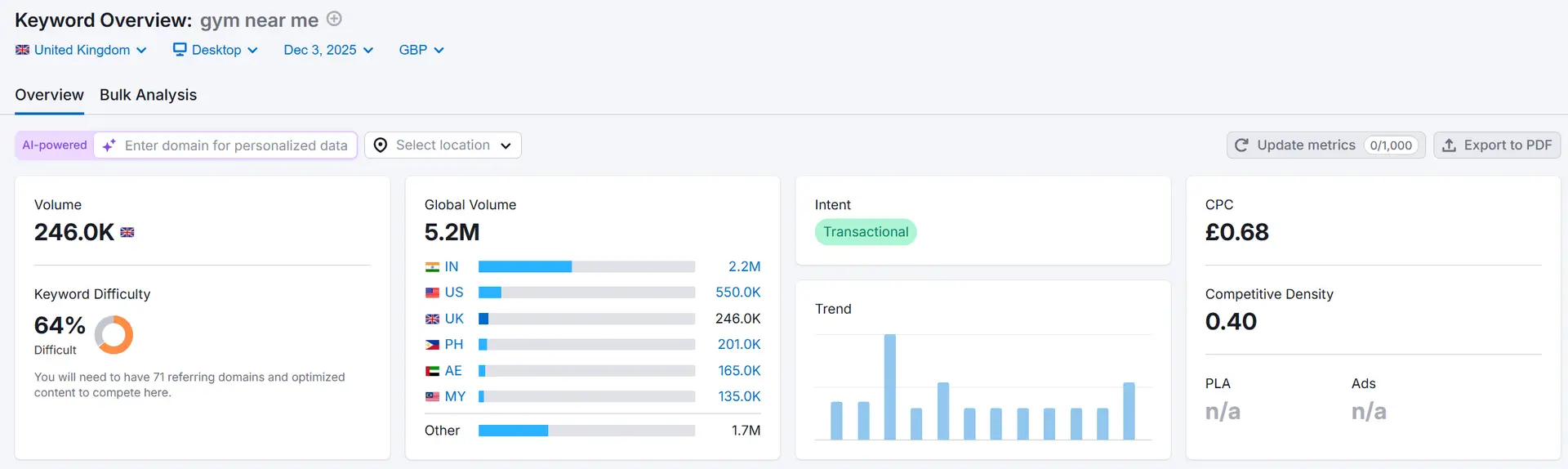
According to SEMRUSH data, “gym near me” receives more than 201,000 searches every month in the UK alone. That’s not casual browsing. Those are people actively looking for somewhere to train.
Every one of those searches represents somebody considering a membership, a trial session, or a fresh start.
At the same time, most people never scroll very far. Studies consistently show that the majority of clicks go to the top few results. If your gym sits further down the page, a large percentage of potential members never even discover you.
That’s why visibility matters so much.
A gym that appears consistently in local search has a constant stream of opportunities coming in. One that doesn’t often ends up relying heavily on promotions, discounts, or paid ads just to stay visible.
Why Google Rewards Active, Local Gyms
Gym SEO isn’t only about rankings.
Google is trying to recommend businesses that feel useful, active, and trustworthy. That means the search engine looks for signals that suggest your gym is genuinely operating well locally.
Things like:
- updated opening hours
- recent reviews
- active Google Business Profile posts
- current photos
- clear service information
- accurate location details
All of that helps.
If your website hasn’t changed in months, your timetable is outdated, and your reviews stopped coming in last year, Google starts to assume the business is less relevant.
Most gym owners overlook this part completely.
Modern SEO is really about consistency. Every signal across your website, reviews, local listings, and content should reinforce the same message:
This gym is active, trusted, and worth visiting.
Understanding Search Intent In The Fitness Industry
People search for gyms in very different ways.
Some want a gym immediately. Others are researching classes, comparing pricing, or trying to find somewhere they’ll actually feel comfortable training.
The strongest gym websites usually understand all of those motivations.
Immediate Need
These are high-intent searches from people ready to act now.
Searches like:
- “gym near me”
- “24 hour gym”
- “free gym trial”
- “gym open now”
These users want reassurance quickly. They care about convenience, opening times, location, and credibility.
This is where your Google Business Profile and local SEO do most of the heavy lifting.
Goal-Led Search
Some people already know exactly what they want.
They search for things like:
- fat loss coaching
- Hyrox training
- postnatal fitness
- Pilates classes
- boxing gym
- strength coaching
- rehab support
These searches are outcome-driven.
Pages that focus on the result somebody wants usually perform much better than generic pages about facilities or equipment.
Comparison Search
These users are weighing up options.
They’re searching things like:
- “best gym in Manchester”
- “gym membership prices Leeds”
- “gym with classes near me”
This is usually where transparency matters.
Clear pricing guidance, timetables, FAQs, genuine photos, and reviews make decision-making easier.
A surprising number of gyms still hide basic information. Honestly, that’s usually where people leave and continue searching elsewhere.
Lifestyle Fit
A lot of fitness searches are emotional, even if they don’t look like it on the surface.
Searches such as:
- “gym for beginners”
- “women’s only gym”
- “strength training over 40”
- “friendly local gym”
are often about confidence and comfort.
People want to know if they’ll fit in.
If your website explains who you help, what the atmosphere feels like, and how people are supported, you naturally attract better-fit members who are more likely to stay long-term.
The best-performing gym sites usually cover all four intent types without making the website feel overloaded.
Winning Your Area With Local SEO
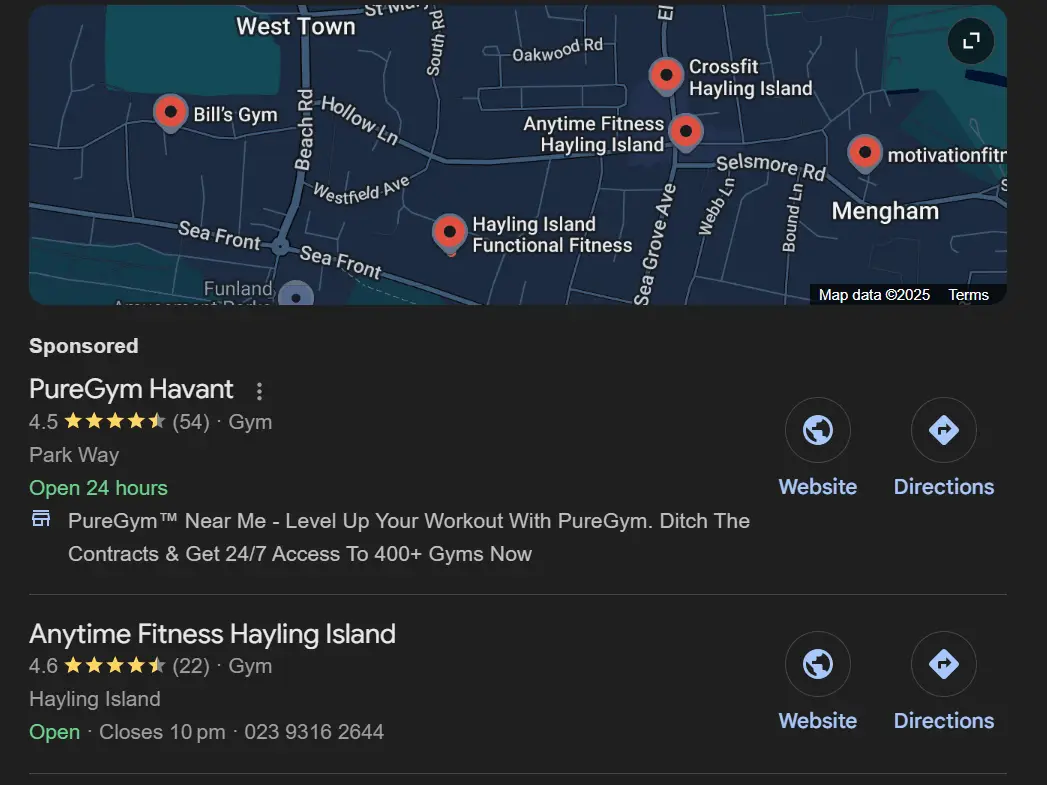
Gyms rely on local visibility.
Social media can help with awareness, but local SEO is what connects your business directly to nearby searches from people actively looking to join.
Google Business Profile Optimisation
Your Google Business Profile is one of the most important parts of local SEO.
It’s what appears inside Google Maps, local search results, and voice search queries.
A lot of gyms still leave these profiles half-finished.
Complete every section properly:
- opening hours
- phone number
- class information
- facilities
- accessibility details
- pricing guidance
- membership options
Add services individually too.
If you offer personal training, small group coaching, classes, rehabilitation support, or specialist sessions, include them clearly.
Upload real photos regularly.
Not stock photography. Real images of your space, trainers, classes, and members.
People can spot generic stock imagery instantly now. It lowers trust far more than many businesses realise.
Posting updates weekly also helps keep the profile active.
That could include:
- trainer spotlights
- upcoming classes
- member events
- charity challenges
- seasonal offers
It all reinforces local activity.
Top Tip
“Community events often create more than engagement. “
They generate local visibility, reviews, links, and useful content for your website and Google profile at the same time.
Local Content And Links
Local mentions still matter.
Partnerships with nearby businesses, wellness studios, sports clubs, or cafés help reinforce local relevance.
Community involvement helps too.
If your gym hosts beginner sessions, charity workouts, competitions, or local events, publish them on your website as well as social media.
These pages often attract local links naturally and help strengthen your authority in the area.
Local Landing Pages
If members travel from multiple nearby towns or cities, dedicated local landing pages can work very well.
The key is making them feel genuinely local.
Too many businesses simply swap town names into the same template. Google has become very good at spotting that.
Instead, include practical local detail.
Mention things like:
- parking access
- train stations nearby
- commuting convenience
- popular classes for that area
- nearby landmarks
For example:
“Just a few minutes from Sheffield Station, the gym works well for commuters who want early morning or after-work sessions without travelling across the city.”
That sounds far more natural because it reflects how people actually think about location.
Turning Visits Into Memberships
A gym website shouldn’t function like a digital brochure.
It should help people make decisions quickly and confidently.
Every page should move somebody one step closer to booking a trial, making an enquiry, or visiting the gym.
Structure And Layout
A good homepage behaves a bit like a reception desk.
It welcomes people, explains what the gym offers, and makes the next step obvious.

When somebody lands on your site, they should immediately understand:
- what kind of gym you are
- where you’re based
- who you help
- how to get started
Clarity matters more than clever design.
A lot of gym websites become cluttered with sliders, oversized text, or vague marketing phrases.
Most visitors just want practical reassurance.
Things like:
- classes not feeling overcrowded
- beginners feeling comfortable
- trainers being approachable
- flexible membership options
- equipment being looked after
Those details matter far more than generic claims like “state-of-the-art facility”.
Navigation should stay simple.
Typically:
- Home
- Classes
- Personal Training
- Memberships
- About
- Contact
works perfectly well.
Complicated menus usually create friction.
Conversion points should also appear naturally throughout the site.
Things like:
- “Book A Free Trial” buttons
- quick enquiry forms
- click-to-call phone numbers
- WhatsApp contact options
Small usability improvements often make a surprisingly large difference.
Service Pages
One generic “services” page rarely works well anymore.
Both Google and potential members want more detail.
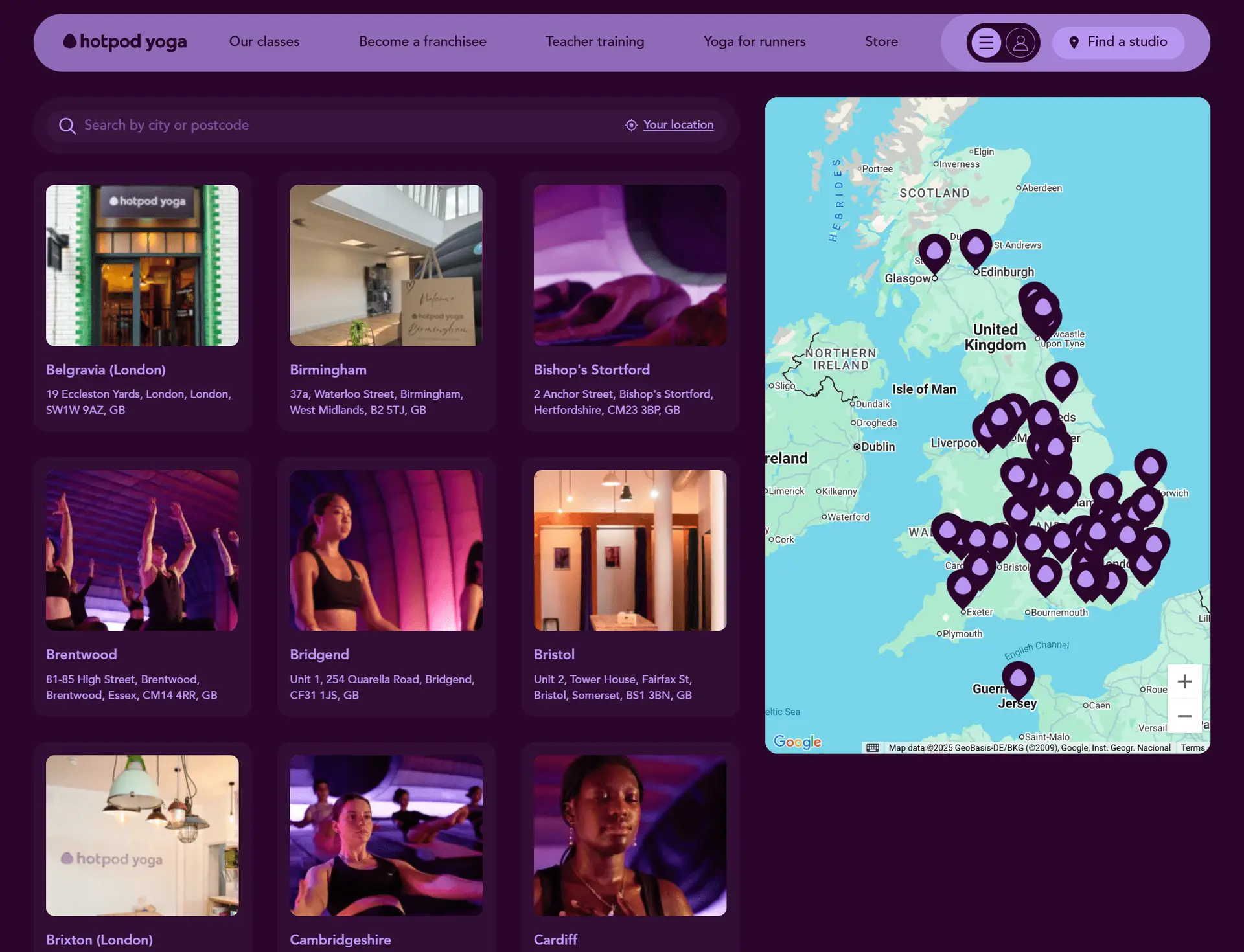
Each major class, service, or training type deserves its own dedicated page.
A strong gym service page usually answers a few simple questions:
- Who is this for?
- What happens during sessions?
- What results can people expect?
- When is it available?
- What does pricing roughly look like?
- Who runs it?
- How can somebody get started?
That structure works because it mirrors how people naturally evaluate fitness services.
Pages like:
- “Personal Training In Nottingham”
- “Yoga Classes In Leeds”
- “Hyrox Coaching In Bristol”
also create much stronger opportunities for local SEO.
Open each page with benefits rather than features.
For example:
“Our strength classes are designed for busy professionals who want structured coaching and consistent progress without spending hours in the gym.”
That feels far more relatable than simply listing equipment.
Then build trust naturally.
Use:
- trainer bios
- testimonials
- class photos
- member feedback
- short explanations
People want reassurance before committing.
Internal links matter too.
A personal training page might naturally link to transformation stories, membership pages, or beginner guides.
That keeps users exploring instead of returning straight to Google.
Conversion Optimisation
People make gym decisions quickly.
Sometimes within a few minutes.
If your site feels confusing, slow, or difficult to navigate, many users simply move on.
Start with transparency.
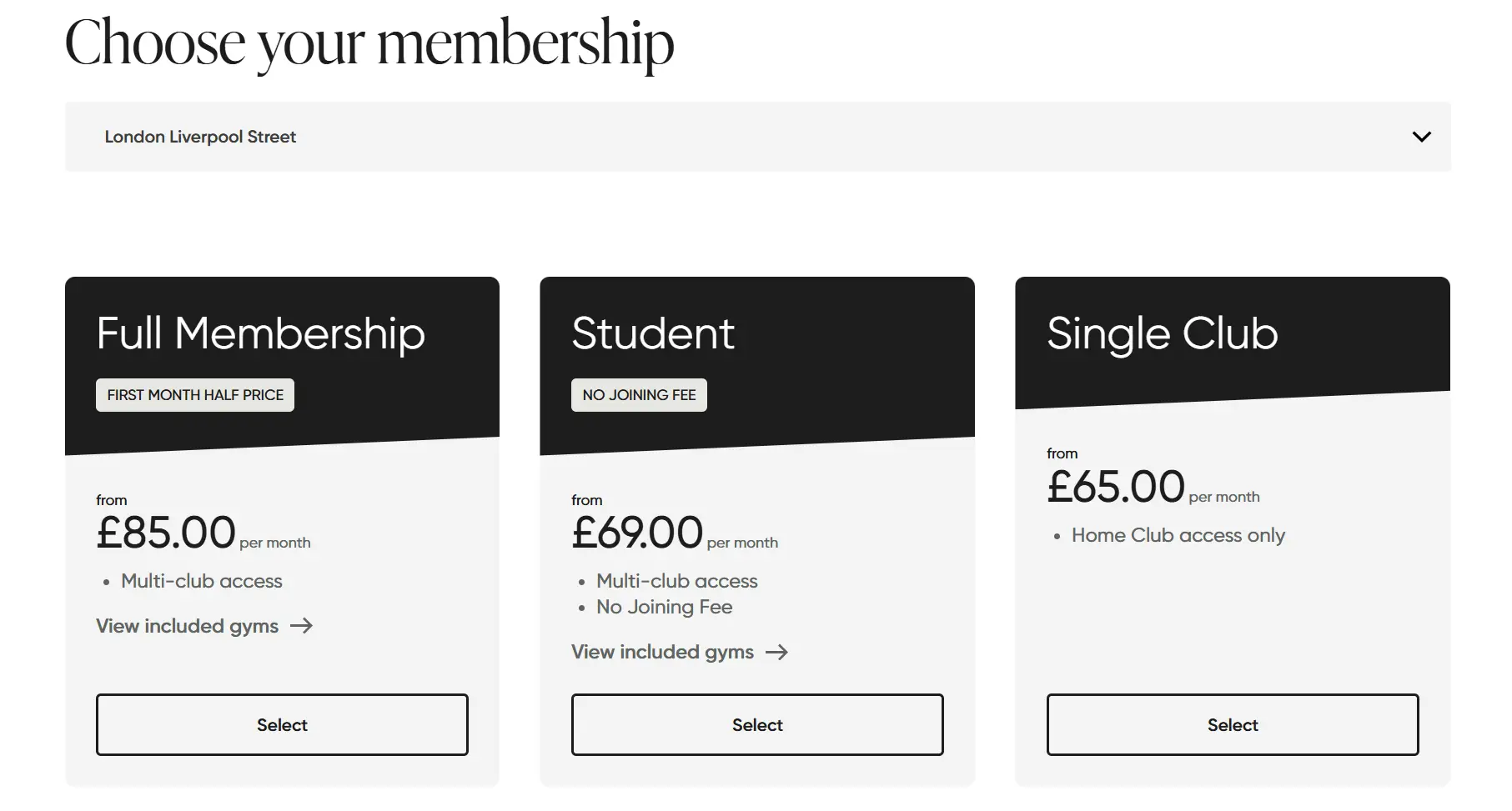
Show pricing guidance clearly, even if it’s only “from” pricing.
Then make the next step obvious:
- book a trial
- arrange a tour
- send a message
- speak to the team
For many independent gyms, WhatsApp works exceptionally well.
It removes friction.
A pre-filled message like:
“Hi, I’d like to book a free trial”
makes starting a conversation feel easy.
Live chat can also work well during staffed hours.
Beyond that, regularly test your website yourself.
Check:
- mobile usability
- page speed
- enquiry forms
- booking systems
- button functionality
What feels minor internally can easily cost memberships.
If the website experience feels smooth, people naturally assume the gym itself will too.
Building Trust Through Content Marketing
Fitness is a crowded industry.
There’s constant noise online, endless quick fixes, and a lot of advice that feels either extreme or generic.
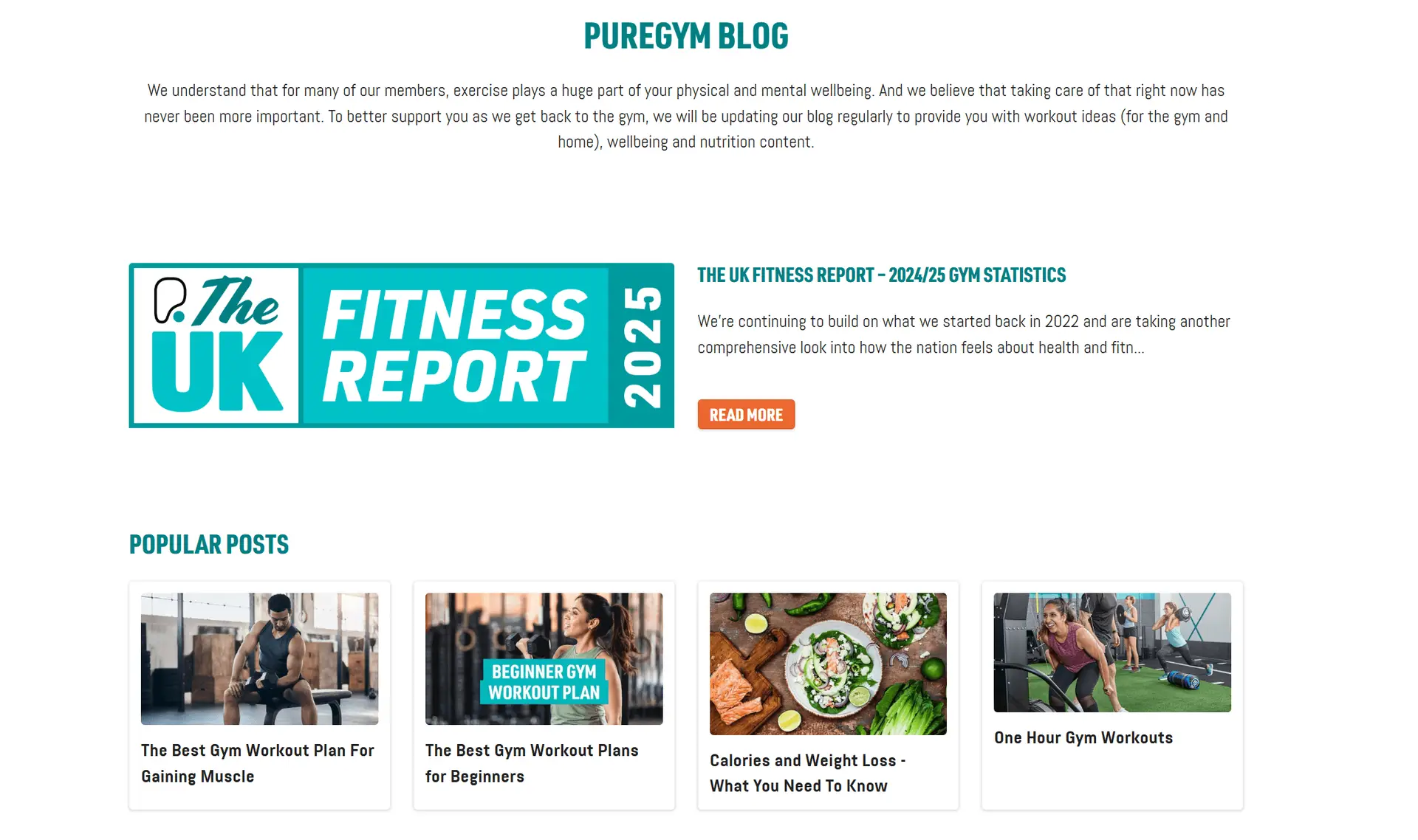
Good content helps your gym become the trusted local voice instead.
Educational Blogs
The best gym content usually answers real questions people already have.
Things like:
- “How long does it take to build strength?”
- “What should I eat before training?”
- “Is personal training worth it for beginners?”
These searches create traffic naturally because they reflect genuine concerns.
They also position your gym as helpful and credible.
Google increasingly rewards content that feels useful, specific, and experience-led.
Trainer input helps a lot here.
Even short observations from coaches make content feel more grounded and believable.
You don’t need massive publishing volume either.
Two genuinely useful articles each month often outperform rushed weekly content.
Top Tip
“Plain language usually performs better than fitness jargon. Most people search for simple, familiar terms, not industry terminology.”
Video And Visual Content
Fitness is naturally visual.
Photos and videos help people imagine themselves training with you before they ever visit.
Simple content works well:
- warm-up demonstrations
- technique tips
- class walkthroughs
- gym tours
- trainer introductions
You don’t need cinematic production.
Authenticity matters more.
In fact, overly polished fitness content can sometimes feel less trustworthy.
Embedding videos into related pages and blog posts also improves engagement signals and time on site.
Behind-the-scenes content helps too.
Showing the atmosphere of your gym often removes uncertainty for nervous first-time visitors.
Member Stories And Local Features
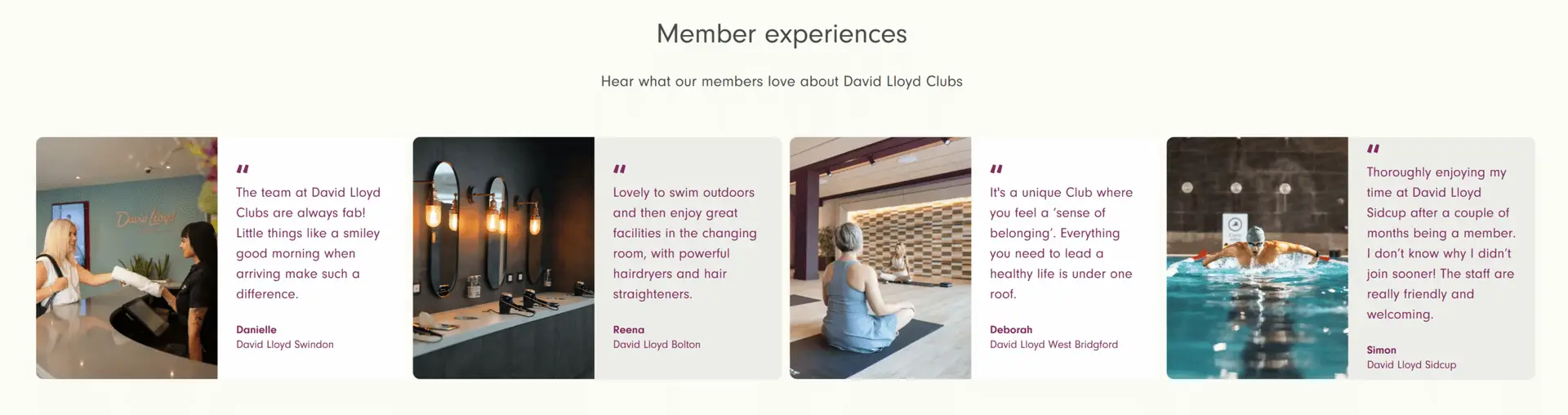
Real member experiences carry far more weight than marketing claims.
A genuine story about somebody building confidence, recovering fitness, or staying consistent is far more relatable than dramatic transformation language.
Community involvement matters as well.
If your gym supports local charities, collaborates with health professionals, or sponsors nearby events, mention it naturally throughout your website.
That local relevance strengthens both trust and SEO.
Top Tip
“If your gym already plays an active role locally, talk about it. Most businesses underestimate how much community involvement shapes trust.”
Content Clusters And Evergreen Strategies
Strong gym content works best when topics connect together naturally.
Instead of isolated blog posts, think about building related content around broader themes.
For example:
- Training after injury
- Working with a personal trainer during recovery
- Mobility classes in your area
- Beginner strength coaching
These connected topics help search engines understand your expertise more clearly.
They also keep readers exploring the site for longer.
Content Clusters
This structure is often called a content cluster.
In simple terms, it means building several useful pieces of related content around one broader topic.
Over time, that creates stronger topical authority.
Evergreen Content
Evergreen content stays useful year after year.
Topics like:
- staying motivated during winter
- how to start strength training
- gym confidence for beginners
continue attracting searches consistently.
Alongside this, seasonal content tied to January goals or summer training can help capture shorter-term spikes in demand.
The balance between both usually works best.
Technical SEO: Keeping Your Website Fit
Technical SEO is the quieter side of optimisation.
Most members will never notice it directly, but they absolutely notice the experience it creates.
A slow, broken, or awkward website damages trust quickly.
Site Speed
Large image files and embedded videos are common issues on gym websites.
Compress images properly and use modern formats like WebP wherever possible.
Hosting videos through YouTube or Vimeo instead of directly on the site also helps reduce load times.
Speed matters because most local fitness searches happen on mobile.
Usually while somebody is travelling, working, or comparing gyms quickly.
Mobile Responsiveness
Mobile usability needs to feel effortless.
Menus should be easy to tap.
Forms should be short.
Pages should load cleanly without awkward resizing.
If the mobile experience feels frustrating, people rarely stick around.
Security
HTTPS security is now basic expectation.
If users are entering payment details or booking sessions online, the site needs to feel secure.
Keep SSL certificates current and make sure booking systems function properly.
Structured Data And Site Health
Schema markup also helps search engines understand:
- reviews
- classes
- business details
- events
- opening hours
This can improve how your pages appear inside search results.
Beyond that, regular technical audits still matter.
Broken links, duplicate pages, plugin conflicts, or outdated metadata slowly chip away at performance over time.
Well-maintained websites send the same message as well-maintained gyms:
attention to detail.
The Role Of AI In Fitness Search
Search behaviour is changing quite quickly now.
AI-driven search tools and assistants are increasingly summarising information directly instead of simply listing websites.
That changes what good optimisation looks like.
Clarity matters more.
So does structure.
AI systems tend to favour businesses that explain things clearly and provide useful, current information.
If you want your gym to appear strongly in AI-generated search summaries, make key information very easy to find:
- opening hours
- pricing guidance
- class timetables
- booking methods
- facilities
- accessibility
- who the gym is designed for
- recent reviews
- genuine imagery
AI tools are also becoming much better at recognising vague marketing language.
Generic copy gets ignored.
Clear practical information performs better.
Voice search matters here too.
People increasingly search using spoken phrases like:
- “Find a gym with parking near me”
- “Best beginner gym nearby”
- “Call the nearest open gym”
That means accurate local information becomes even more important.
Top Tip
“Voice search still feels like it’s evolving, but local search behaviour is clearly moving towards conversational queries. Gyms with accurate, structured information are in a much stronger position long-term.”
Measuring Gym SEO Performance
Traffic alone doesn’t tell the full story.
A gym website could attract thousands of visitors and still struggle to generate memberships.

The real metrics usually look more like:
- trial bookings
- membership enquiries
- calls
- WhatsApp messages
- tour requests
- class bookings
Those are the numbers that matter.
It’s also important to look at user behaviour.
If people leave quickly, the issue is often clarity or design.
If they browse multiple pages but never enquire, your calls to action may not be strong enough.
Mobile performance deserves close attention too.
Many gyms discover their mobile conversion rate is far lower than desktop simply because forms are awkward or the layout feels cluttered.
Watch Out For Seasonal Trends
Gym demand shifts throughout the year.
January is the obvious peak, but interest often rises again before summer and after school holidays too.
Updating campaigns, refreshing imagery, and publishing useful content before those periods usually works better than reacting after demand spikes.
SEO also compounds over time.
Every review, service page, blog post, and local mention contributes gradually.
That’s why consistency matters far more than short bursts of activity.
How This All Ties Together
SEO for gyms is really about visibility at the exact moment people are ready to make a decision.
When somebody nearby decides they want to join a gym, your business needs to appear with enough trust signals to make the next step feel easy.
That means:
- genuine reviews
- current photos
- clear information
- useful service pages
- easy contact options
- a smooth mobile experience
Get those basics right consistently and SEO becomes much more than rankings.
It becomes a steady source of membership growth throughout the year.
If you want a strategy built around your gym, your local area, and the type of members you want more of, get in touch.